
Last updated November 22, 2026
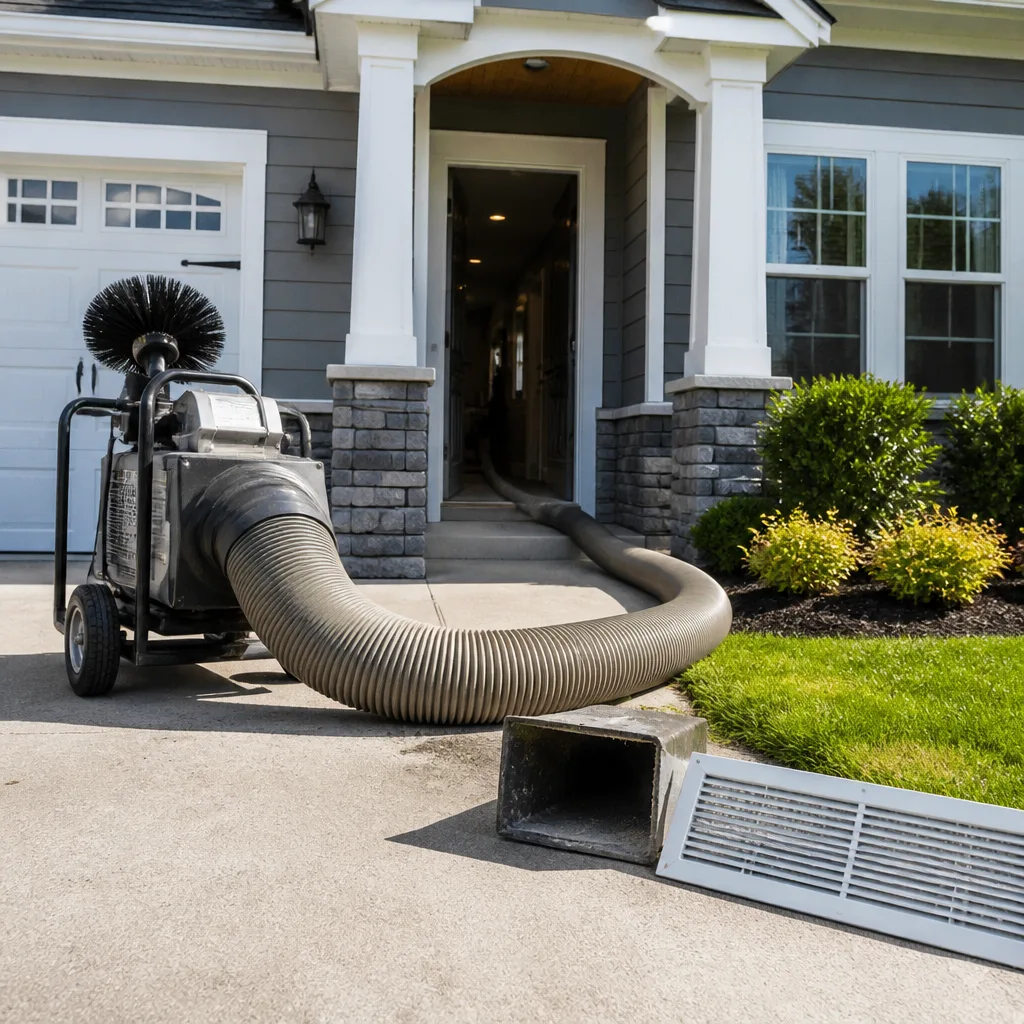 Whole-home duct cleaning
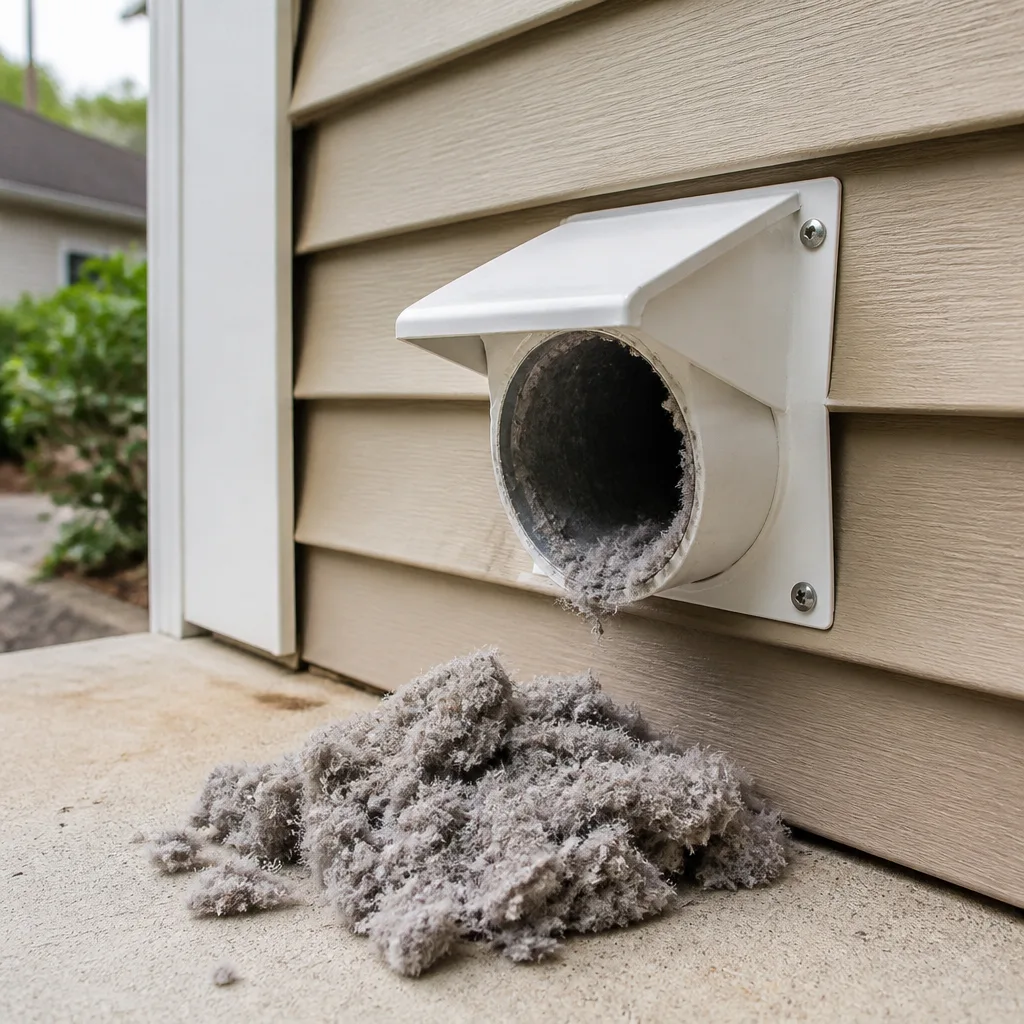 Dryer vent cleaning
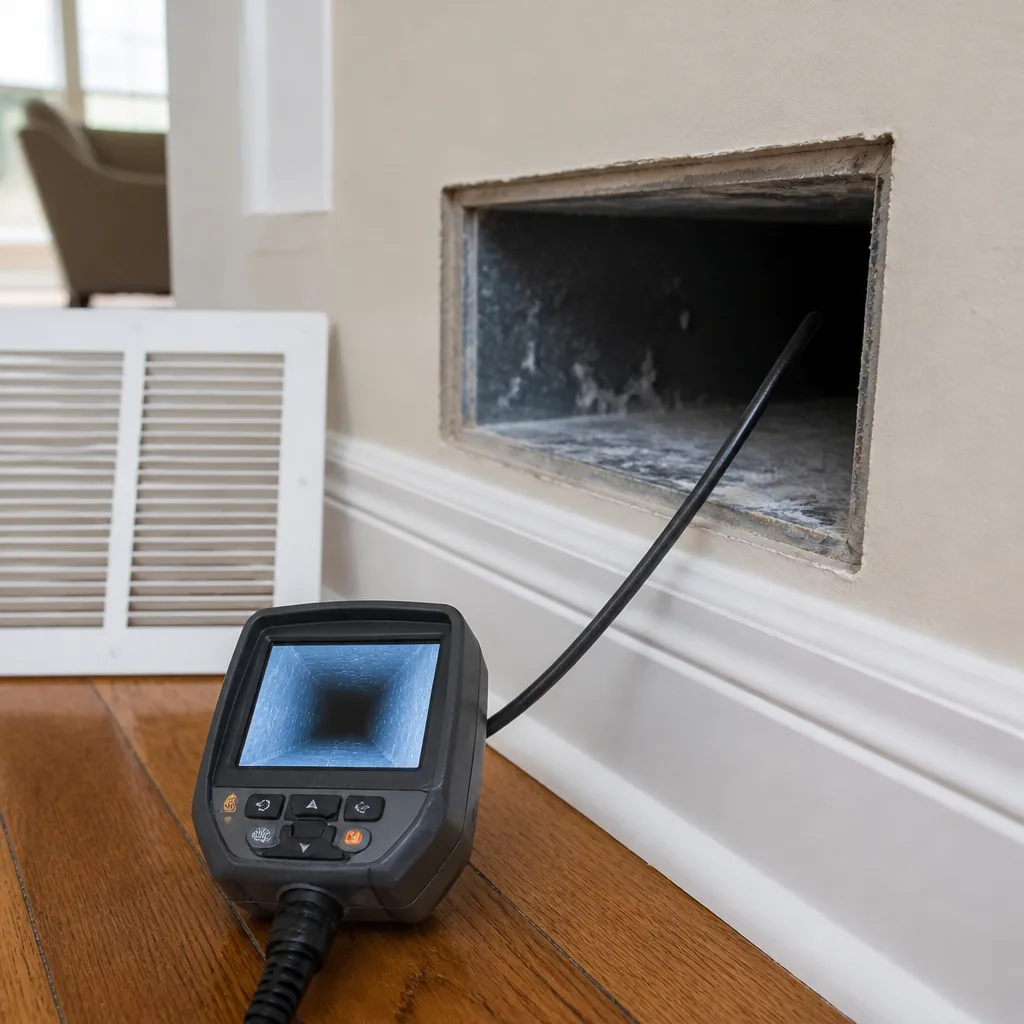 Camera inspection
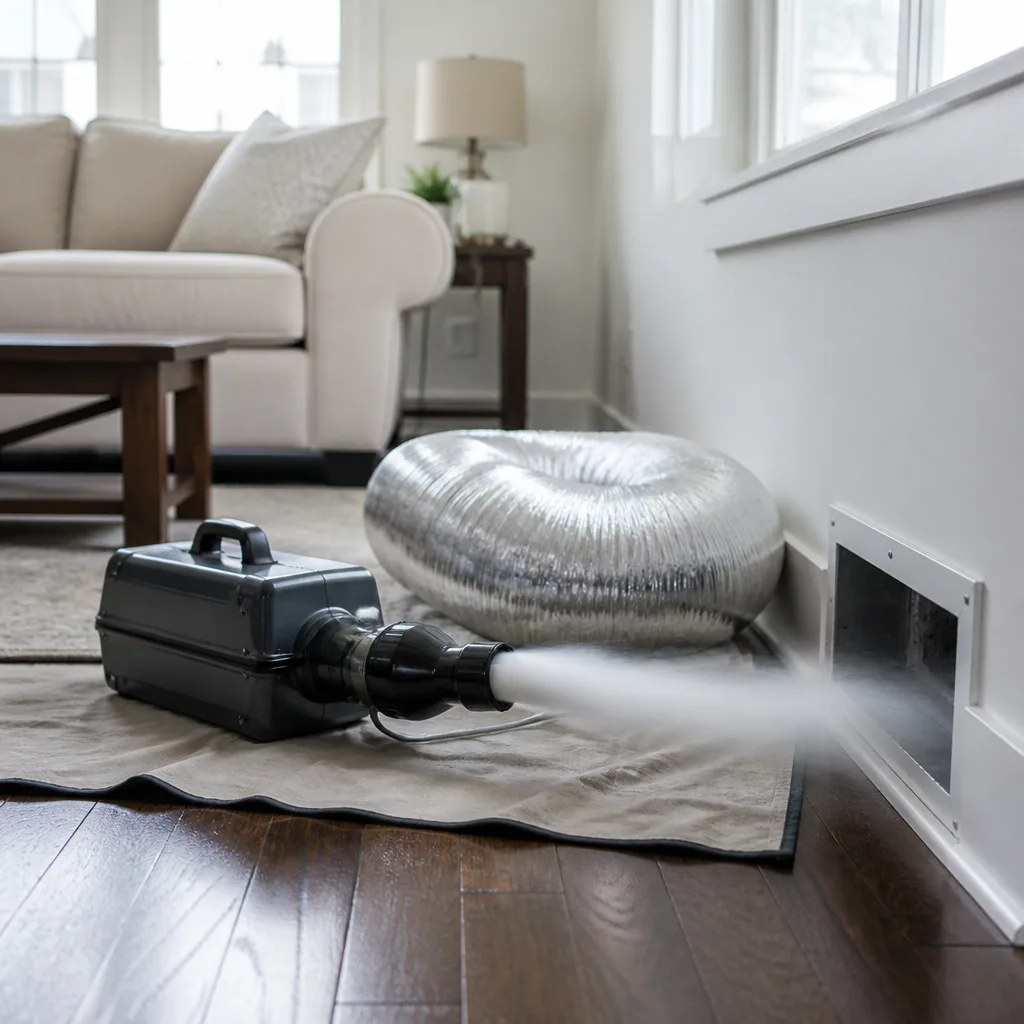 Sanitizing & deodorizing
Whole-system duct and dryer vent check with before-and-after photos - you see exactly what came out of your vents
That "$99 whole-house special" is a bait ad - the real number appears once they are in your hallway, or the "clean" is a shop-vac at the register. We photograph the inside of your ducts before and after instead.
DIY vs Professional Air Duct Cleaning: The Bay Ridge Homeowner’s Decision Guide
Most online guides to duct cleaning start with skill. Yours shouldn’t. The most popular DIY method out there – vacuum at the register while brushing inside the duct – doesn’t clean your system. It stirs contamination loose and lets your air handler push it back through every room. The reason isn’t that you’re doing it wrong; it’s that removing debris from a duct network requires holding the entire system under negative pressure at once, and no shop vac can do that. This guide explains the physics, shows what Bay Ridge homeowners can safely handle alone, and gives you a clear decision tree for when to call in professional equipment.
Quick Answer
True source removal in air ducts needs sustained negative pressure across the whole system plus mechanical agitation – a combination only professional rotary brush and vacuum equipment like Rotobrush or Nikro systems can deliver. A homeowner can manage register cleaning, surface vacuuming at accessible plenums, and dryer vent clearing, but anything involving contamination inside the trunk lines or branch ducts needs professional service. For most Bay Ridge homes older than a few decades with flex duct or loose joints, DIY work inside the system risks spreading debris rather than removing it.
Styles & brands we work with
- Whole-home duct cleaning
- Dryer vent cleaning
- Camera inspection
- Sanitizing & deodorizing
Table of Contents
- Why Negative Pressure Changes Everything
- What You Can Legitimately Do Yourself
- When DIY Makes Contamination Worse in Bay Ridge Homes
- The Decision Tree: Is Your Situation DIY-Appropriate?
- Cost-Benefit: Renting, Buying, or Hiring
- How to Evaluate Contamination Before You Decide
- The Dryer Vent Exception
- When to Call a Professional
Why Negative Pressure Changes Everything
Duct cleaning is a containment problem before it’s a scrubbing problem. When contamination in a duct breaks loose, it has two possible destinations: out of your house through a HEPA-filtered vacuum, or into the living space through every register, joint, and return grille. The only way to guarantee the first destination is to keep the entire duct network at lower pressure than the rooms around it, so air flows in at every opening rather than out.
That’s what “negative pressure” means in practice. A professional setup attaches a high-powered vacuum to the main trunk, often in place of the air handler, and then uses rotary brush agitation at each branch to knock debris loose. The vacuum holds the system under negative pressure the whole time, so anything dislodged gets pulled toward the collection point rather than toward your bedroom. Rotobrush and Nikro systems are built specifically for this – rotary brushes sized to the duct interior, paired with vacuums rated for sustained airflow against the static pressure of an entire house.
A shop vac can’t hold that differential. It moves maybe 100-200 cubic feet per minute at the hose end, then loses most of that through a single register opening. What it does move, it moves locally, and the air handler pulling return air through the rest of the system is often stronger than the vacuum you’re holding. That’s why vacuuming at the register while brushing inside sends dust into the room or back through the supply side. The vacuum loses.
At Abatement Technologies equipment goes a step further – filtration designed to capture fine particulate during the work so dislodged contaminants don’t recirculate through the indoor air while you’re cleaning. That’s the same containment standard used in mold and remediation contexts, and it’s why professional duct cleaning looks more like an industrial process than a household chore.
What You Can Legitimately Do Yourself
Plenty. The mistake in the DIY-versus-professional debate is treating it as all or nothing. There are real tasks a homeowner can do that improve air quality and reduce contamination load without touching the inside of the duct network.
- Register and grille cleaning. Remove supply and return grilles, wash them in the sink, and vacuum the immediate opening with a brush attachment. This is the single highest-value DIY task because grilles trap a disproportionate share of visible dust.
- Accessible plenum vacuuming. If you can safely reach the return plenum where it enters the air handler, gentle vacuuming of visible dust and debris near that opening is fine. Do not push anything deeper into the system.
- Filter replacement. A clean filter does more for indoor air than most duct cleaning. Change it on the schedule your HVAC manufacturer specifies, and don’t skip the MERV rating recommended for your unit.
- Dryer vent clearing. Pull the dryer out (with the power disconnected), disconnect the vent, and clear the accessible run with a vent brush. This is a genuine fire-safety task and one of the few places where DIY has a real payoff.
- Duct repair and sealing at accessible joints. Foil tape or mastic on a visibly loose joint at a floor register is a legitimate fix. It also prevents the debris you’re about to pull out from re-entering later.
Notice what’s not on the list: brushing the inside of branch ducts, running a shop vac into the trunk line, or attempting anything in a system where you can’t see the full run. Those tasks fall on the wrong side of the physics equation.
When DIY Makes Contamination Worse in Bay Ridge Homes
Bay Ridge has a specific housing profile that makes this more than a theoretical concern. The neighborhood’s pre-war and mid-century building stock includes a lot of converted heating systems, added central air retrofits, and flex duct runs that were installed in tight, hard-to-see spaces. Two conditions in that stock turn a well-intentioned DIY job into a contamination event:
- Damaged or aged flex duct. The inner liner on flex duct tears. When it does, agitation from a brush (or even an aggressive vacuum head) can open small holes and send the debris you dislodged into the joist bay or wall cavity, where it stays and keeps feeding back into your return air.
- Loose or unsealed joints. A joint that lets 10% of the air escape also lets dislodged contamination escape. In an older system, disturbing dust without sealing the joints first pushes the problem into the space around the ducts, not out of it.
- Systems behind finished basements or dropped ceilings. Many Bay Ridge homes have ducts run through spaces you can’t access. You can’t seal what you can’t reach, and you can’t see what a brush is doing in there.
- Recent renovation dust. Drywall dust and construction debris are more abrasive and clingier than ordinary household dust. That’s exactly the kind of contamination that benefits from source removal with containment equipment rather than a register-level pass.
- Mold or musty smells. If the smell indicates microbial growth, agitating without filtration spreads spores. That’s a professional job with proper containment, not a DIY task.
In short: in a modern, sealed, accessible system, a light DIY pass is harmless. In Bay Ridge’s older retrofitted stock, it’s often the opposite.
The Decision Tree: Is Your Situation DIY-Appropriate?
Use this numbered sequence to figure out whether your situation falls in the DIY column or the professional-service column. Answer honestly – the questions are ordered from easiest to most determining.
- Is the contamination visible at the registers only? If dust and grime are limited to grilles and the immediate opening, DIY cleaning is fine. If debris is visible inside the branch ducts, move to question 2.
- Do you know the age and type of your ductwork? Modern rigid metal duct with accessible joints and no visible liner damage falls on the DIY side. Flex duct older than roughly 15 years, or any flex duct you can’t fully inspect, falls on the professional side.
- Is there moisture, mold, pest activity, or a persistent musty odor? Any yes is a professional answer. Containment is required.
- Has there been a renovation or water event in the last two years? If yes, treat the system as contaminated until a professional inspects it.
- Can you access the main trunk line and every branch joint? If not, you can’t do the job safely even with rental equipment.
- Is anyone in the home sensitive – asthma, allergies, young children, or elderly residents? If the contamination load is meaningful and anyone is sensitive, professional removal with HEPA-filtered containment is the safer path.
Two or more professional-side answers mean the DIY route is likely to cost you more in damaged duct and re-cleaning than it saves. One answer means it depends on how much contamination you actually have. Zero answers means the light DIY pass described in the previous section is sensible.
Cost-Benefit: Renting, Buying, or Hiring
The honest math on DIY duct cleaning rarely closes the way homeowners expect. The costs that get skipped in the DIY-versus-professional comparison are the ones that don’t show up on a receipt.
- Equipment rental. A rotary brush machine and a duct-rated HEPA vacuum strong enough for a whole-house system aren’t items your local rental center carries. Consumer-grade tools rented at a hardware store move far less air than the job needs – you’re paying to borrow the physics problem, not solve it.
- Time. Even with the right equipment, a full house takes most of a day. With the wrong equipment, you’ll spend the same day doing an incomplete job.
- Damage risk. A torn flex liner or a brush caught on a corner is not cheap to fix. On older Bay Ridge systems, the probability of some damage from an amateur rotary brush pass is meaningful.
- Re-cleaning. If dislodged debris spread into the joist bay or wall cavity, the next professional cleaning is larger, not smaller. That’s the hidden cost of a bad DIY job.
- Professional service. One flat price per system, agreed before work starts, with before-and-after photos of the ducts themselves – that’s what a professional job should mean, and it removes the re-cleaning risk entirely.
Where DIY genuinely wins on cost: register cleaning, filter changes, and dryer vent clearing. Those tasks are cheap, quick, and effective. Where it loses: anything past the register opening.
How to Evaluate Contamination Before You Decide
Before you decide one way or the other, spend fifteen minutes with a flashlight. What you see determines what kind of help you actually need.
- Look at the return grille. A fine grey film on the grille itself is normal. A caked-on mat of dust and hair that’s clearly grown over years suggests the return trunk is carrying more than it should.
- Shine a light into a supply register. Visible dust film on the first few inches of the duct is normal. Visible debris, clumps, or a coating you can scrape is not.
- Check for streaks around the grille. Black or dark streaks radiating from the register edges can indicate air leaking past a bad seal – which means dust is also escaping into the room rather than traveling through the duct.
- Note smells. A musty smell that appears when the system runs is a health signal. It’s not something to clean around, it’s something to fix with containment.
- Look at the air handler and plenum. If you can see the return plenum, a light dust film is normal. Debris accumulation, pest evidence, or standing moisture are not.
- Consider recent history. Renovation, water intrusion, pest activity, or a heating system conversion within the past few years all increase contamination load independent of what you can see.
Compare the results against the decision tree. If you’re still unsure, the practical answer is that professional inspection with a free estimate costs you nothing and settles the question.
The Dryer Vent Exception
Dryer vents aren’t ducts in the same sense as HVAC runs, and the DIY rules change. The risk profile is different – lint accumulation in a dryer vent is a documented fire hazard, and clearing the accessible run is something a homeowner can do safely with basic tools. Detach the vent from the dryer, pull the dryer out with power disconnected, brush out the accessible run, and reattach and re-secure the connection.
Where this gets harder in Bay Ridge is the vent run through the wall and up to the roof or exterior termination. Long runs, bends, and hidden sections aren’t things you can clear from the dryer end, and they’re exactly where lint packs. If your vent run is longer than a few feet or has more than one bend, dryer vent cleaning with proper rotary equipment is a fire-safety decision rather than a housekeeping one.
When to Call a Professional
Call for professional air duct cleaning when any of the following is true: contamination is visible past the first few inches of the duct; there’s a persistent musty smell when the system runs; there was recent renovation, water damage, or pest activity; the ductwork is flex, aged, or inaccessible; or anyone in the home is sensitive to airborne particulates. Also call if you simply can’t tell – an honest inspection resolves the question, and half the homes we look at don’t need a full cleaning.
Air Duct Cleaning Bay Ridge offers free estimates in Bay Ridge – call (877) 938-5572. We answer 24/7. Fast dispatch from 7am to 7pm, Sunday through Friday.
See the difference
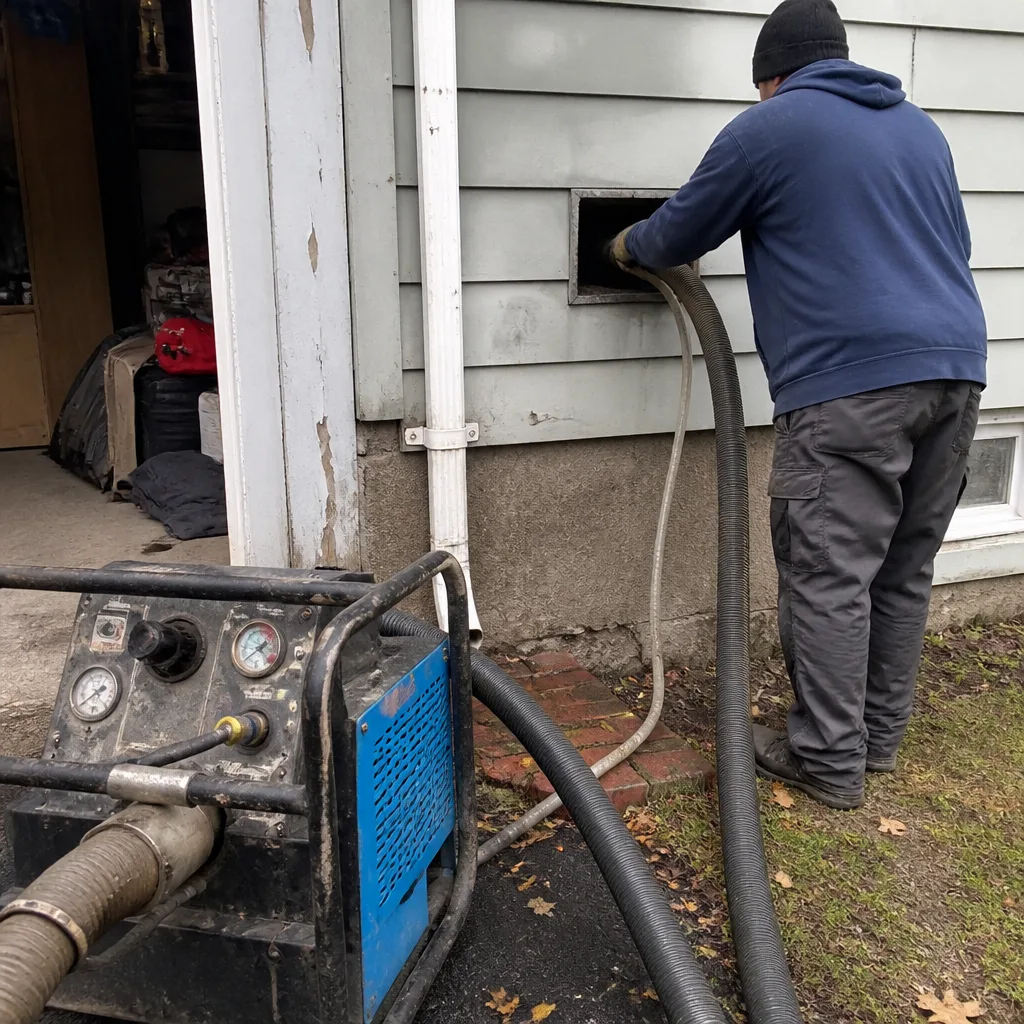 Before
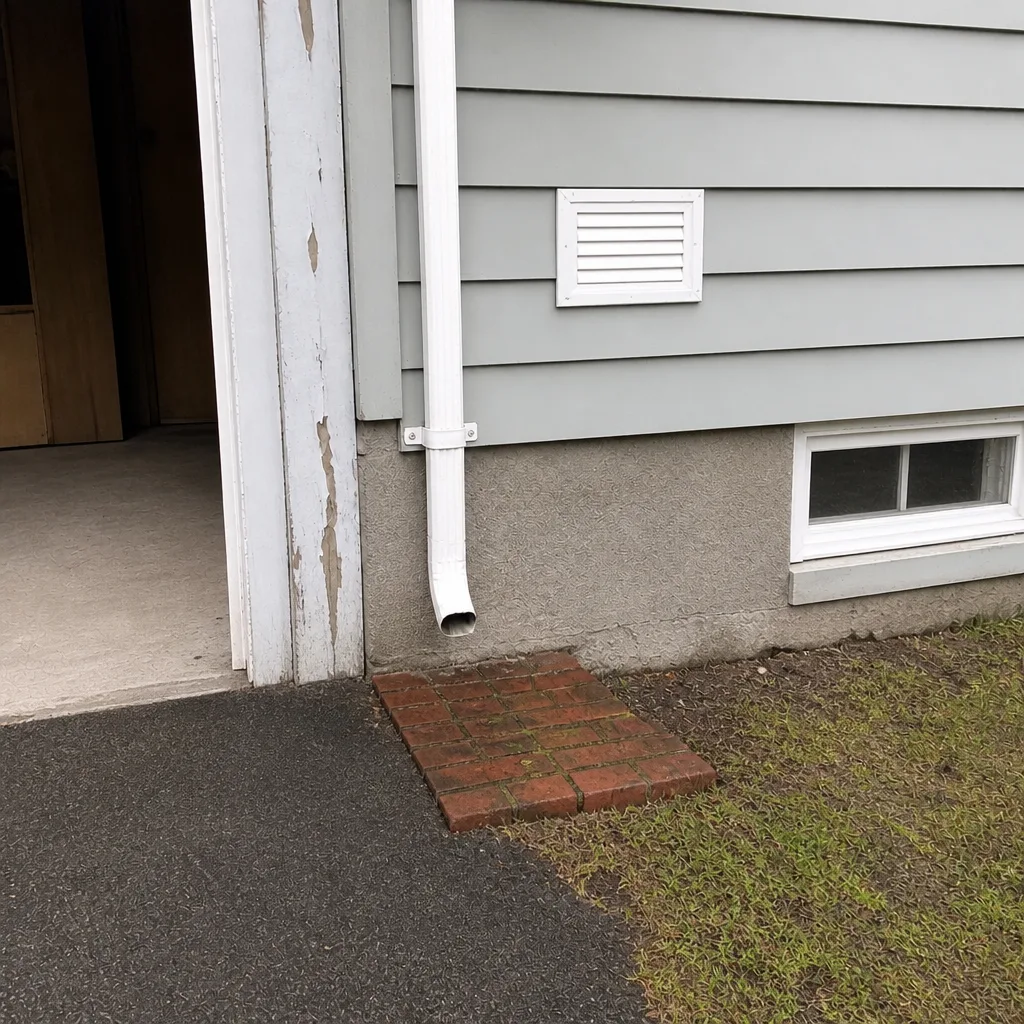 After
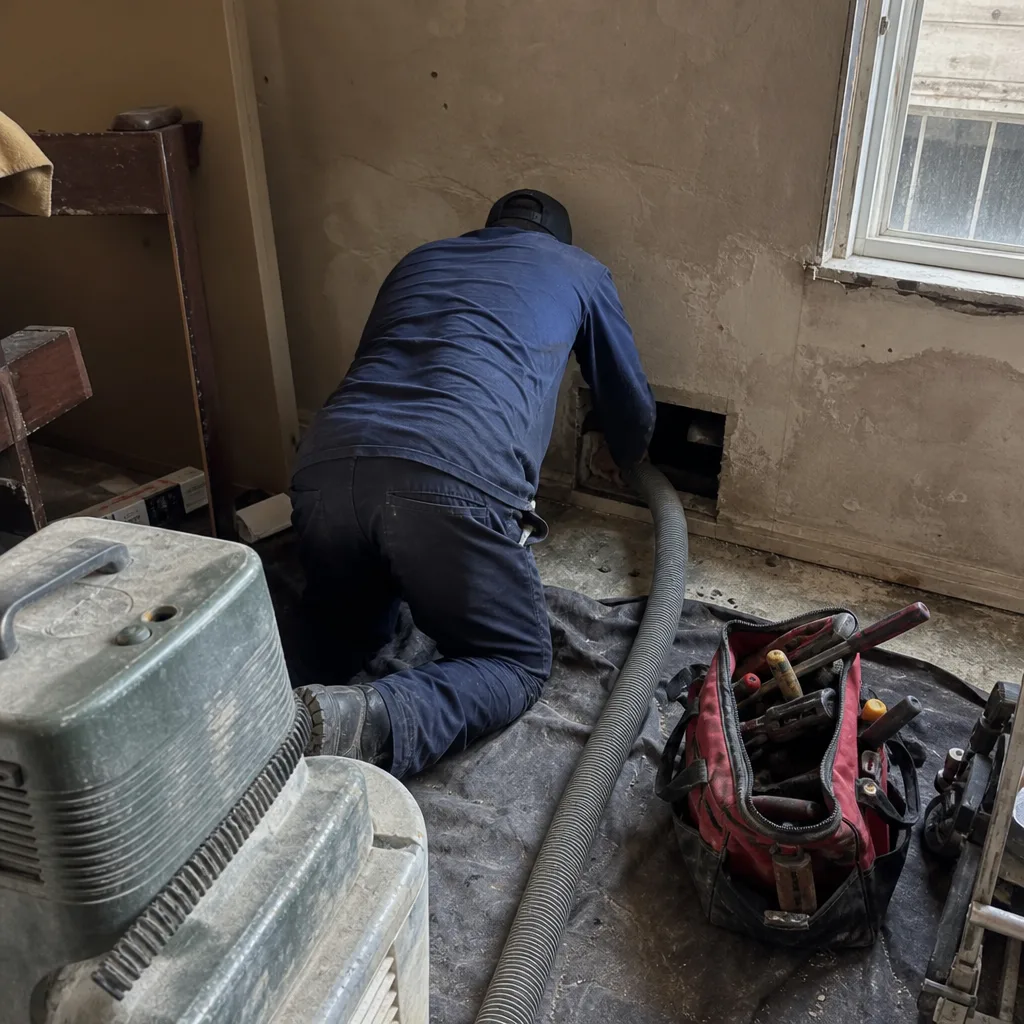 Before
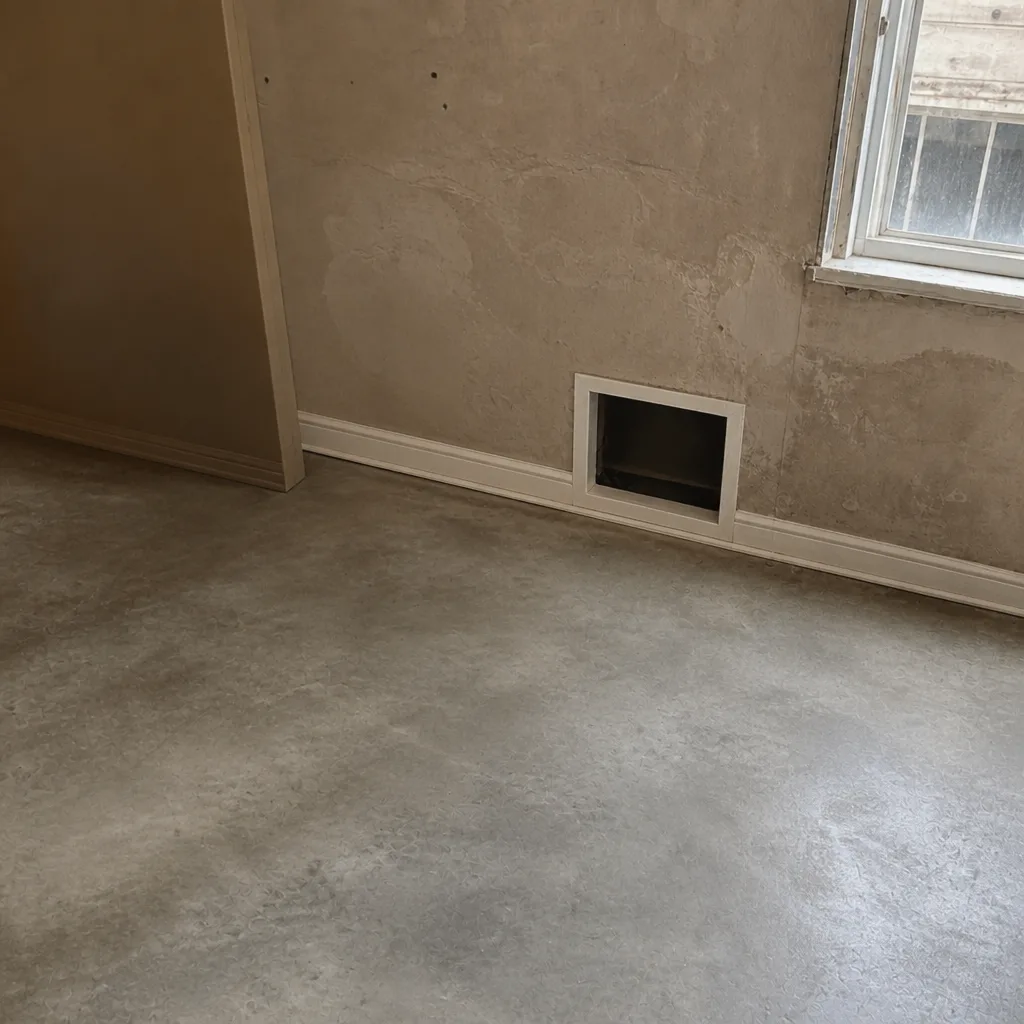 After
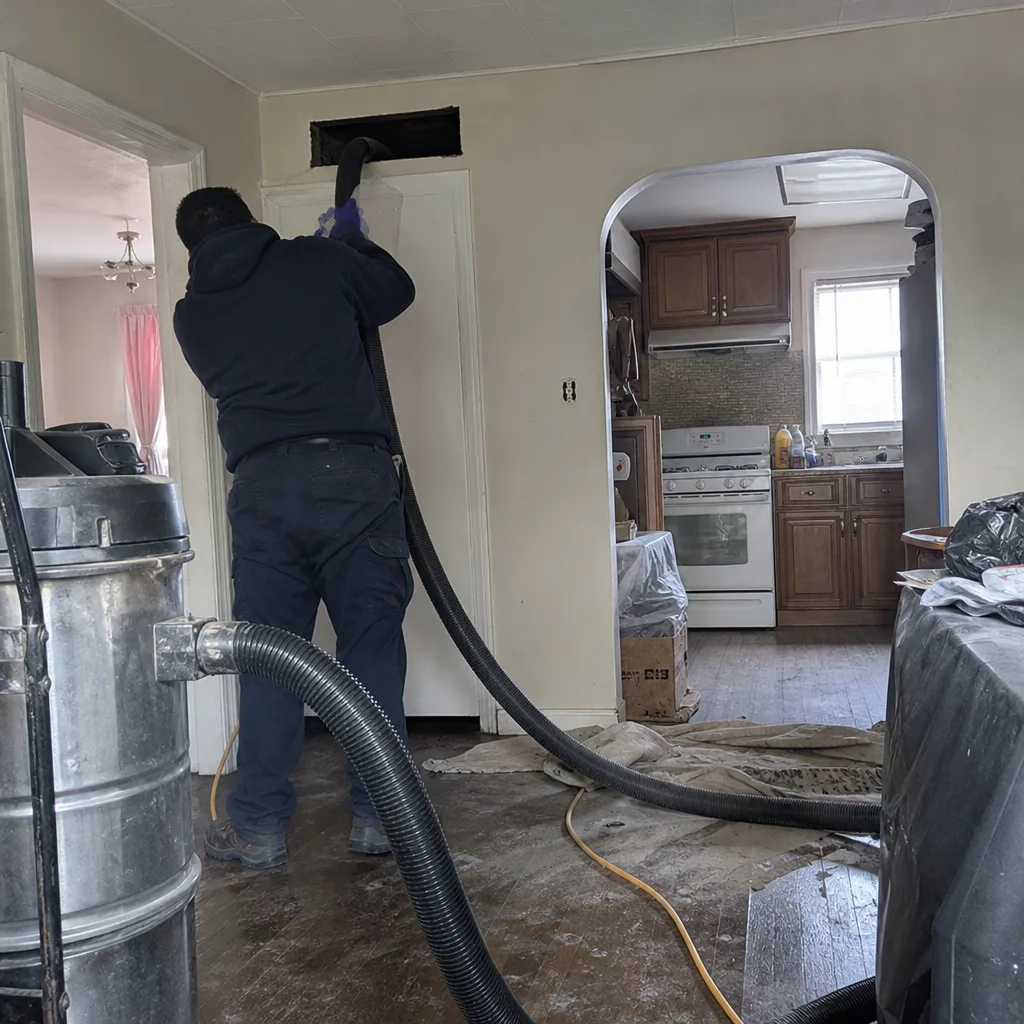 Before
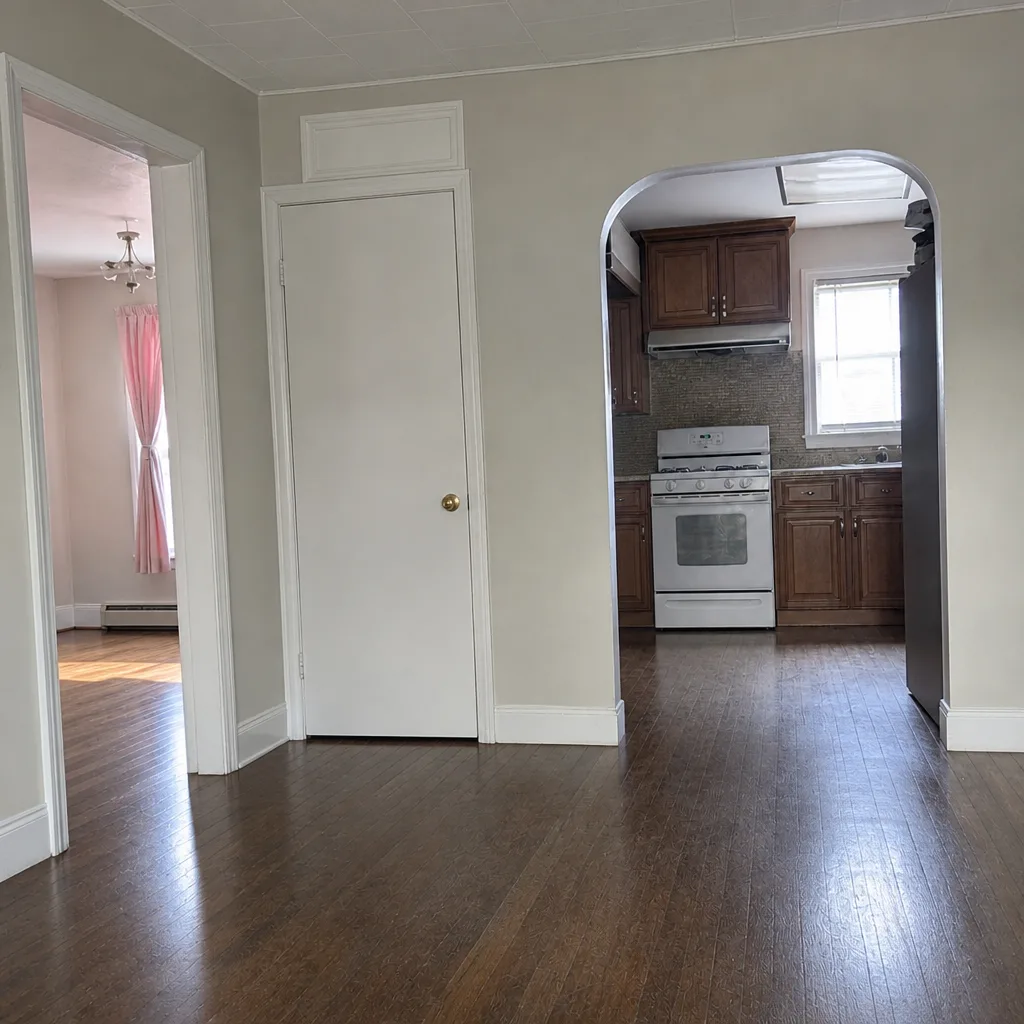 After
Common Mistakes to Avoid
- Running a shop vac into a branch duct. The vacuum is weaker than the air handler pulling return air, so it moves debris in the wrong direction. In a Bay Ridge home, that often means dust ends up in the joist bay instead of the canister.
- Brushing before sealing. Cleaning without repairing loose joints means the next few months of normal air movement re-contaminates the ducts you just cleaned. Clean, then seal – the order matters.
- Skipping the filter during DIY cleaning. A dirty filter will pass dislodged debris straight back into the system. Replace it the same day you clean anything.
- Treating a musty smell as a cleaning problem. Persistent odor suggests mold or moisture, and agitating it spreads spores. That job needs containment, not a brush.
- Assuming newer ductwork is automatically fine. Retrofit flex duct in older homes may be newer than the house but still poorly sealed. Newer doesn’t mean clean.
- Hiring on price alone. A quote well below the rest of the market usually means registers-only work with a shop vac, which is the exact failure mode this guide is about. Ask what equipment is used before you book.
- Ignoring the dryer vent because the HVAC is clean. Lint accumulation is a leading cause of residential fires, and it’s a separate system. Cleaning one doesn’t clean the other.
Frequently Asked Questions
You can clean registers, grilles, accessible plenum surfaces, and filters yourself; you generally cannot do true source removal inside branch and trunk ducts without professional equipment. The reason is containment: effective cleaning requires holding the whole system under negative pressure, and a consumer vacuum can’t do that.
Yes, in a light-cleaning situation – modern sealed ducts, no visible debris past the register, no odor, no recent renovation or water event. In that scenario, register and filter maintenance is the correct scope of work, and a full professional cleaning isn’t needed.
A rotary brush system sized to the duct interior, paired with a high-flow vacuum rated for whole-house static pressure, and – in the better setups – HEPA filtration to contain what’s dislodged. Rotobrush and Nikro systems are the standard rotary-and-vacuum combination, and Abatement Technologies filtration is used when containment matters, which is whenever dust, mold, or renovation debris is present.
Trained technicians use rotary brushes sized for the specific duct and adjust for duct material, which is the main protection against damage. The real damage risk on older Bay Ridge systems comes from amateur rotary brushing with the wrong head, which can tear the inner liner of older flex duct. Ask any provider how they size brushes for flex duct before you book.
Not necessarily. If your registers are clean, there’s no odor, no visible debris past the first few inches, and no recent renovation or moisture event, you likely don’t need a full cleaning. The visible condition of the registers is a reasonable first check; professional inspection settles it.
Cleaning removes contamination from inside the ducts; sealing closes the joints and liner damage that let contamination back in – and that waste conditioned air year-round. In a Bay Ridge home with visible leaks at joints, cleaning alone will need repeating sooner than cleaning followed by proper duct sealing.
The Bottom Line
The DIY-versus-professional question is decided by equipment physics, not skill. A shop vac at the register can’t hold a duct system under negative pressure, so a “DIY cleaning” past the register opening redistributes contamination rather than removing it. What you can legitimately do: registers, filters, accessible plenum surfaces, and dryer vent clearing. Everything inside the branch and trunk ducts needs professional rotary and vacuum equipment, and in Bay Ridge’s older flex-duct and retrofitted homes, amateur agitation often makes things worse. Evaluate with a flashlight, run the decision tree, and if the answer is “professional,” a free estimate settles it quickly.
Call (877) 938-5572 for a free estimate. We answer 24/7. Fast dispatch from 7am to 7pm, Sunday through Friday. We operate professional-grade Rotobrush and Nikro equipment with Abatement Technologies filtration, and we supply and install Honeywell air quality products when filtration needs upgrading. From Air Duct Cleaning Bay Ridge onward, our five services cover the full air pathway – air duct cleaning, dryer vent cleaning, HVAC cleaning, duct repair and sealing, and air quality and sanitizing – so clean ducts stay clean after we seal them. Our technicians have up to 15 years of experience, and we work from written estimates one flat price per system, before work starts, with before-and-after photos of your own ducts.
Written by the team at Air Duct Cleaning Bay Ridge.