
Abatement Technologies Air Duct Cleaning in Bay Ridge: A Homeowner’s Guide
If a duct cleaning company mentions Abatement Technologies equipment, that’s either a sign they’re serious about containment, or a marketing term being applied to a standard truck-mount. Here’s how to tell which one you’re dealing with. Abatement Technologies builds negative air machines and HEPA filtration units for mold and hazardous-material remediation, so when that class of equipment shows up on a residential duct job in Bay Ridge, it should mean the technician is treating contamination as a containment problem, not just a cleaning job. If you’d rather not sort this out yourself, call (877) 938-5572 and we’ll walk you through it.
What does Abatement Technologies actually make, and what problem does it solve?
Abatement Technologies manufactures negative air machines, HEPA filtration units, and containment systems for remediation contractors. The core idea is simple: when you disturb contamination, you capture it at the source and filter the exhaust so it never re-enters the space you’re working in. Negative air pressure keeps the surrounding rooms at a slightly higher pressure than the work zone, which means air flows into the containment rather than out of it. That’s the whole game in mold and hazmat work, and it’s why restoration crews use this equipment rather than a shop vac.
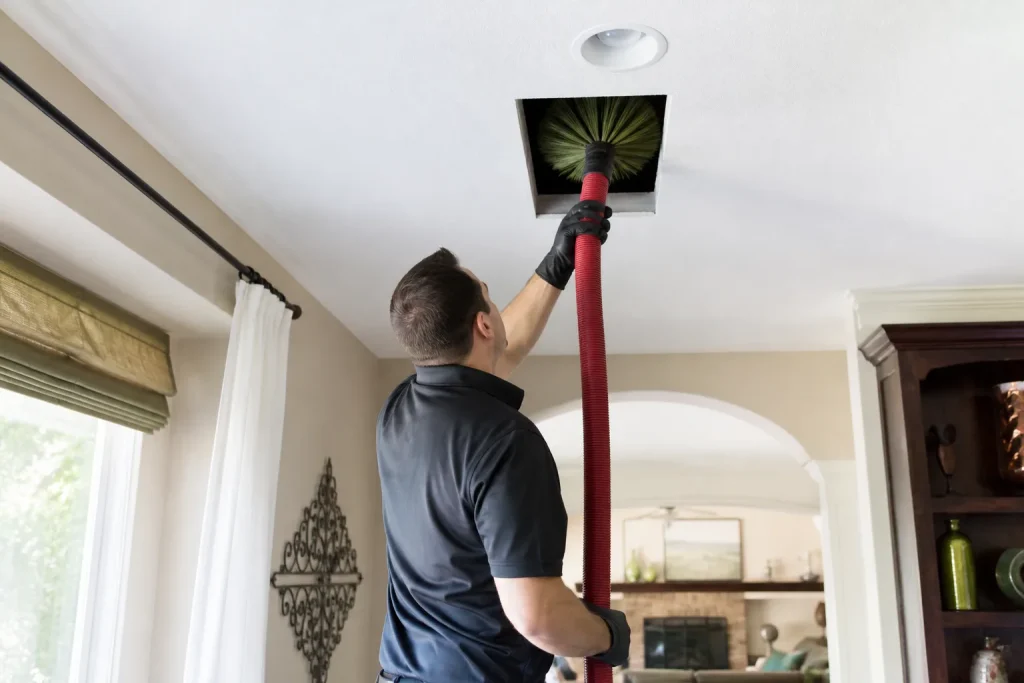
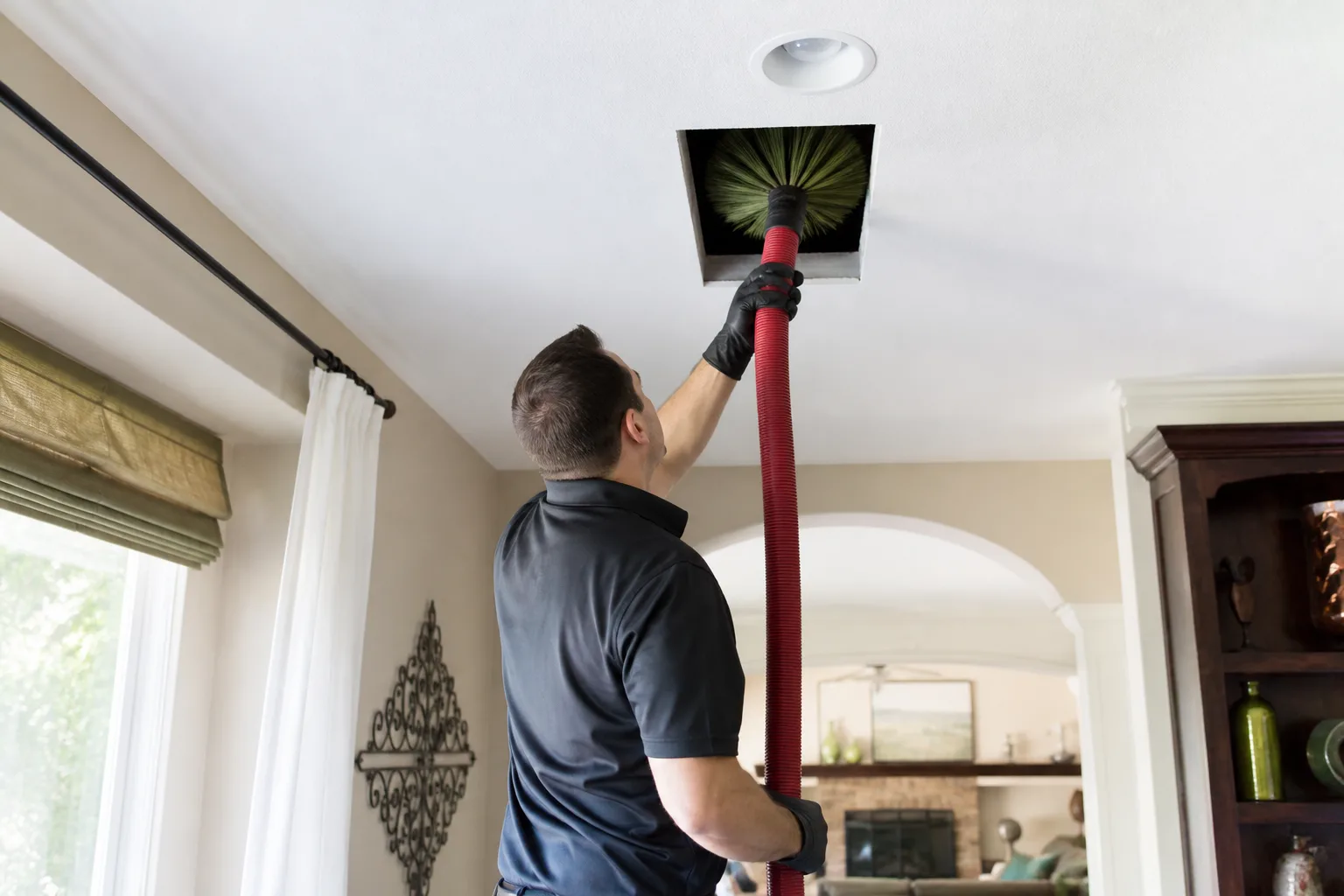
In a standard air duct cleaning job, a rotary brush system paired with a high-powered vacuum does most of the work. Rotobrush and Nikro systems are built for exactly that: agitating debris off duct walls and pulling it into a HEPA-filtered vacuum. What Abatement Technologies adds is a second layer of control. Instead of relying on one vacuum at the register, containment equipment manages airflow direction across the whole system, filters what’s exhausted, and prevents cross-contamination between zones. Professional-grade equipment, not improvised tools, is the difference between cleaning a duct and cleaning an air system without releasing what you loosened.
The reason this matters in Bay Ridge is that the housing stock is old. Plenty of homes here have ductwork that’s been retrofitted, patched, or run through spaces that were never designed for it. When contamination is straightforward dust and debris, a standard rotary brush and vacuum is the right call. When there’s microbial growth, smoke residue, or suspect insulation involved, the equipment class changes the process.
When is remediation-grade equipment actually necessary in a Bay Ridge home?
Remediation-grade containment is legitimately necessary in a Bay Ridge home when there’s confirmed microbial growth in the ductwork, post-flood moisture intrusion, post-fire smoke particulate, or asbestos-containing insulation near the system. In each case, the contamination is a hazard you need to contain, not just a mess you need to remove. That’s a different job than routine cleaning.
Here’s what typically puts a Bay Ridge home in that category:
- Confirmed mold or musty microbial growth inside ducts. A musty smell that returns after cleaning usually means the source wasn’t addressed. Containment plus HEPA filtration keeps spores from spreading to other rooms during the work.
- Storm-related moisture intrusion in basement systems. Bay Ridge basements take on water during heavy rain, and duct runs that pass through those spaces can hold moisture long enough for growth to set in.
- Older homes with vermiculite insulation near ductwork. Vermiculite insulation in older homes can contain asbestos. If ductwork runs through or alongside it, disturbed fibers become a real hazard, and the work needs containment and air monitoring protocols, not a standard cleaning pass.
- Post-fire smoke particulate. Smoke residue settles into duct surfaces and recirculates for months. Cleaning without containment can push soot back into living space.
None of these situations calls for a step-by-step DIY approach, and we’d never recommend one. If you suspect mold, asbestos, or smoke contamination in your ducts, the right move is a professional assessment first. Call (877) 938-5572 and we’ll help you figure out what class of equipment your job actually needs.
How does containment equipment change the cleaning process?
Containment equipment changes the cleaning process by controlling airflow direction, filtering the exhaust, and preventing cross-contamination between rooms, not by adding more suction. A standard job relies on a vacuum at one end and agitation at the other. A containment job manages the pressure differential across the whole system so loosened contaminants travel into the capture zone instead of drifting into the room.
Practically, that means three things change:
- 1
Airflow direction is set before cleaning starts. The technician seals openings, sets negative pressure in the work zone, and confirms airflow before any brush touches a duct wall.
- 2
Exhaust is HEPA-filtered. Air leaving the work zone passes through HEPA filtration rather than recirculating into the home.
- 3
Zones are isolated. Rooms not being cleaned are kept separate, so a basement system doesn’t contribute contaminants to a first-floor run during the same visit.
This is the same standard used in mold and hazmat remediation, applied to the residential duct system. It’s not glamorous work, but it’s the difference between cleaning a system and cleaning a system without making the air worse in the process. On a routine air duct cleaning job in Bay Ridge without known contamination, a Rotobrush or Nikro rotary brush and vacuum does the work well. The containment layer is for the cases where the contamination itself is the hazard.
How do you tell real containment from marketing?
You tell real containment from marketing by asking three questions: what equipment is on site, what the exhaust filtration is, and what protocols are followed. A company that names Abatement Technologies on its website should be able to answer those questions without hesitation. If the answer is vague, the brand name was probably borrowed.
Ask these directly:
- “What equipment will actually be in my home?” You want specific brand names and models. Rotobrush and Nikro are the rotary brush and vacuum systems used by certified duct cleaning professionals. Abatement Technologies is the containment and HEPA filtration layer. A truck-mount alone is not containment.
- “How is the exhaust filtered?” HEPA filtration on the exhaust is the point. If the answer is “it’s a really strong vacuum,” that’s not containment.
- “What’s the containment protocol?” Negative pressure, sealed zones, and airflow control are the ingredients. Ask how the technician confirms negative pressure before starting.
- “What’s the before-and-after documentation?” Photos of your own ducts before and after cleaning are the baseline. No photos, no proof.
One flat price per system, agreed before work starts, is the other half of this. If a quote is per-vent or per-register, the final invoice is a moving target. Whole-system pricing with a written estimate is what a straight job looks like. For more on how we structure that, see our air duct cleaning in Bay Ridge page. Abatement Technologies equipment used properly signals a technician treating contamination as a containment problem. The same brand name slapped on a standard vacuum with no protocol behind it signals the opposite.
What does repair and sealing have to do with contamination in Bay Ridge?
Duct repair and sealing address the root cause of contamination re-entry and energy loss that cleaning-only companies ignore. Clean ducts without sealing leaks and loose joints, and debris finds its way back in through the same gaps you just cleaned past. In older Bay Ridge homes, those gaps are common: sagging duct runs, disconnected joints, and joints that have lost their mastic over time.
The logic is clean ducts, then seal them. Cleaning the system removes the buildup. Sealing the leaks keeps the system from pulling in unfiltered air from basements, attics, and wall cavities from that point forward. You’ll also notice the difference on heating and cooling. Our HVAC cleaning service covers the air handler, coils, and blower alongside the ductwork, because contamination upstream of the ducts re-contaminates the ducts. A full air pathway approach covers cleaning, sealing, and air-quality upgrades in one visit rather than three separate ones.
On the air-quality side, we supply and install Honeywell and Aprilaire products, which means filtration and humidity control can be upgraded in the same visit as the cleaning. A system that pulls in humid basement air without adequate filtration will keep struggling regardless of how often it’s cleaned.
When should you call a professional?
Call a professional when you smell mustiness that returns after cleaning, see visible debris at the registers, notice uneven airflow room to room, or suspect moisture intrusion near the ductwork. Any of those signals means a standard vacuum won’t solve the underlying problem. Suspected mold, asbestos, or smoke contamination should be assessed before any cleaning starts, not after.
We answer 24/7. A call outside dispatch hours is booked into the next opening, Sunday through Friday, 7am to 7pm. There’s no after-hours surcharge in the sense that matters; the price is set per job by the written estimate either way. Our technicians have up to 15 years of experience, and we use Rotobrush, Nikro, and Abatement Technologies equipment rather than a shop vac with a longer hose. If your system involves microbial growth, smoke residue, or suspect insulation, that equipment and protocol matter more than the quote.
Related services in Bay Ridge
Dryer vent fires are a separate and serious risk often overlooked by HVAC-only contractors, so dryer vent cleaning is a standalone service here regardless of what else your system needs. Duct repair and sealing, HVAC cleaning, and air-quality upgrades round out the full pathway when a system warrants more than a cleaning pass.
The Bottom Line
Abatement Technologies equipment means something specific: containment, negative air pressure, and HEPA-filtered exhaust during remediation-grade work. In a Bay Ridge home, that class of equipment is warranted when there’s confirmed microbial growth, post-flood moisture, post-fire smoke, or asbestos-containing insulation near the ducts. For routine cleaning, a Rotobrush or Nikro systems approach is the right tool. The tell between real capability and a marketing line is the protocol behind the name: what equipment is on site, how the exhaust is filtered, how zones are isolated, and whether before-and-after photos of your own system come with the job.
If you’re in Bay Ridge and need help sorting out which kind of job you’re dealing with, Air Duct Cleaning Bay Ridge offers free estimates. Call (877) 938-5572. We answer 24/7. Fast dispatch from 7am to 7pm, Sunday through Friday.
Frequently Asked Questions
Abatement Technologies equipment is used for containment and HEPA filtration during duct cleaning, so loosened contaminants are captured rather than recirculated. It’s the same class of equipment used in mold and hazmat remediation. In a residential duct context, it’s warranted when there’s confirmed mold, post-flood moisture, smoke residue, or asbestos-containing insulation near the system.
No. Routine cleaning of dust and debris is handled well with a rotary brush and high-powered vacuum system, which is what Rotobrush and Nikro equipment is built for. Containment equipment is for situations where the contamination itself is a hazard, not for every job. Call (877) 938-5572 and we’ll help you figure out which category your home falls into. Estimates are free.
Ask what equipment will be in your home, how the exhaust is filtered, and what the containment protocol is. A company using it correctly will name the equipment and describe negative pressure, sealed zones, and HEPA filtration without hesitating. A company borrowing the brand name will give a vague answer. Ask for before-and-after photos of your own ducts as well. Call (877) 938-5572 to talk through what a job like yours involves.
Older Bay Ridge homes with vermiculite insulation near ductwork need a professional assessment before any cleaning starts, because that insulation can contain asbestos and disturbed fibers are a health hazard. That’s not a situation to handle with a standard cleaning pass or any DIY approach. Containment and air monitoring protocols apply. Call (877) 938-5572 for a free estimate and we’ll help you plan the right approach.
Written by the team at Air Duct Cleaning Bay Ridge.
Need Air Duct Cleaning Help?
Call Air Duct Cleaning Bay Ridge - the local pro we connect you with is licensed and insured, with free written estimates in Bay Ridge.
(877) 938-5572