
Emergency Air Duct Cleaning Near Me: What Bay Ridge Homeowners Should Do First
Running your HVAC system after a basement flood to “dry things out” is one of the most common ways contamination gets pulled into ductwork. Here’s what to do instead, before you call anyone. In our experience, the homeowner who stabilizes the source first, documents the damage second, and calls a duct specialist third ends up with a smaller repair, a cleaner system, and far fewer fights with an insurance adjuster than the one who picks up the phone in a panic.
Why the Order of Operations Matters More Than Speed
Emergency air duct cleaning in Bay Ridge NY isn’t really about how fast a van arrives. It’s about whether the work happens in the right sequence. Get the order wrong and you can push mold spores, soot, or rodent waste deeper into a system that was only partly affected. Do it in order and the contamination stays contained.
The correct sequence runs like this:
- Shut down the system. Turn the thermostat to off. Don’t run the fan to “clear the air.”
- Contain the source. Stop the water, seal the gap, remove the dead animal, whatever the underlying event requires.
- Document everything. Photos, notes, and a written timeline before anyone touches the system.
- Get a remediation assessment. Decide what level of response the situation actually needs.
- Clean the system last. Only once the source is stable does cleaning make sense.
Skip step two and a cleaning crew can vacuum contaminants out of one duct run while the wet drywall in the next room keeps feeding moisture back in. Skip step three and you may have no record of what was damaged before the cleanup. We’ve watched homeowners lose legitimate insurance claims because the photographic evidence didn’t exist.
The Three Emergency Triggers We See Most in Bay Ridge
Bay Ridge is a neighborhood of older housing stock, rowhouses sharing walls, and basement-level duct penetrations that were installed decades before anyone worried about air sealing. That combination produces three recurring emergencies.
Sewer backup into basement ductwork
Older lateral lines in Bay Ridge can back up during heavy rain, and when they do, the mess often reaches the basement where ducts run low. A Category 3 water event (that’s the technical term for water carrying sewage) needs source containment and disinfection before any HVAC component goes back into service. Running the system to dry things out just spreads the problem.
Smoke from a neighboring rowhouse fire
When a fire happens next door, smoke travels through shared wall cavities, attic spaces, and any connected duct paths. Homeowners often don’t notice the smell until days later. Soot particles are small enough to settle deep inside a system, and the odor doesn’t always show up immediately.
Rodent infiltration through basement duct penetrations
Mice and rats find their way into duct chases through gaps that older homes have plenty of. Droppings, nesting material, and the smell that comes with it are a genuine air quality issue. The fix starts with sealing the entry points, not just vacuuming the ducts, which is why air duct cleaning works best when it’s paired with repair and sealing.
In each case, the pattern is the same: the source needs to be addressed before the ducts get cleaned.
What to Photograph Before Anyone Touches the System
Documentation is the part homeowners skip, and it’s the part that saves the most money. Take photos before the first technician, remediation contractor, or plumber arrives. An iPhone works fine; you don’t need anything fancy.
Capture the following:
- Wide shots of the affected area showing the relationship between the water or damage and the duct registers.
- Close-ups of any visible moisture, staining, mold growth, soot film, or rodent evidence.
- The date and time stamps enabled on every photo.
- Register faces, grilles, and any exposed duct runs in the affected zone.
- Your thermostat setting and a photo of the system label showing make and model.
- A short written note describing when you first noticed the problem and what you did in response.
Keep a copy of every photo somewhere off your phone, ideally in cloud storage. Insurance adjusters and remediation contractors both need this record. A well-documented file in Bay Ridge saves arguments later about whether damage pre-existed or came from the event.
When It’s a True Emergency vs. Urgent-but-Scheduled
Not every bad smell needs an emergency call. Some do. Here’s the rough dividing line.
Treat it as an emergency if:
- Water from a sewer backup or flood is currently in contact with ductwork or HVAC equipment.
- Smoke or soot from a recent fire is present in the living space.
- You can see or smell rodent evidence in more than one room.
- Anyone in the home has asthma, COPD, or a compromised immune system.
Schedule it, but don’t wait long, if:
- You notice a musty smell but no active moisture.
- Your system is running fine but hasn’t been cleaned in a long time.
- There was a past water event that has since dried out fully.
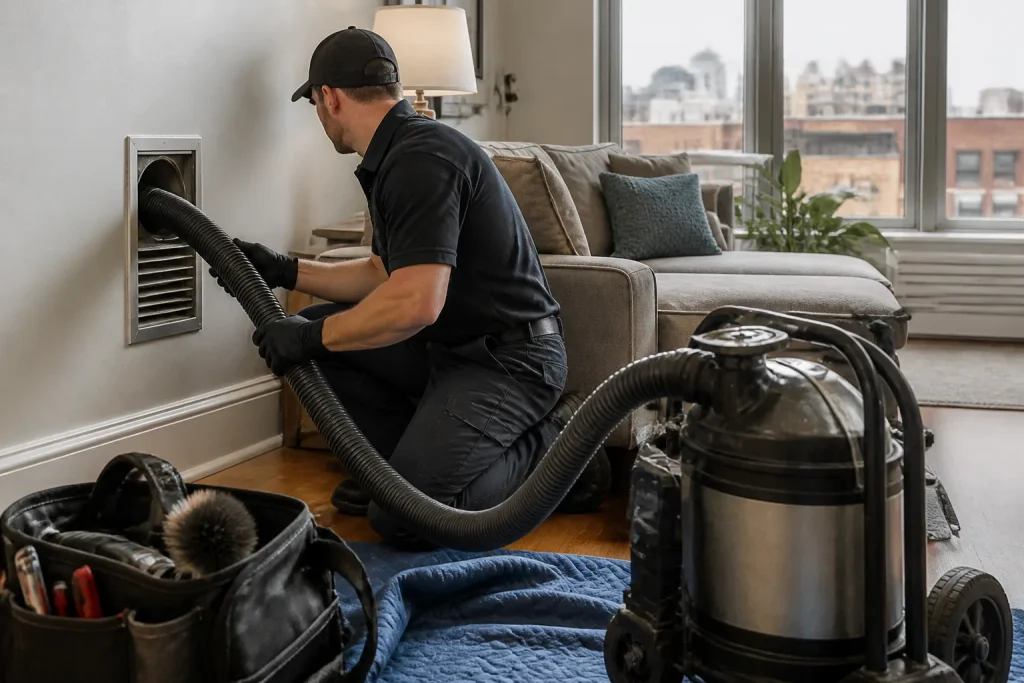
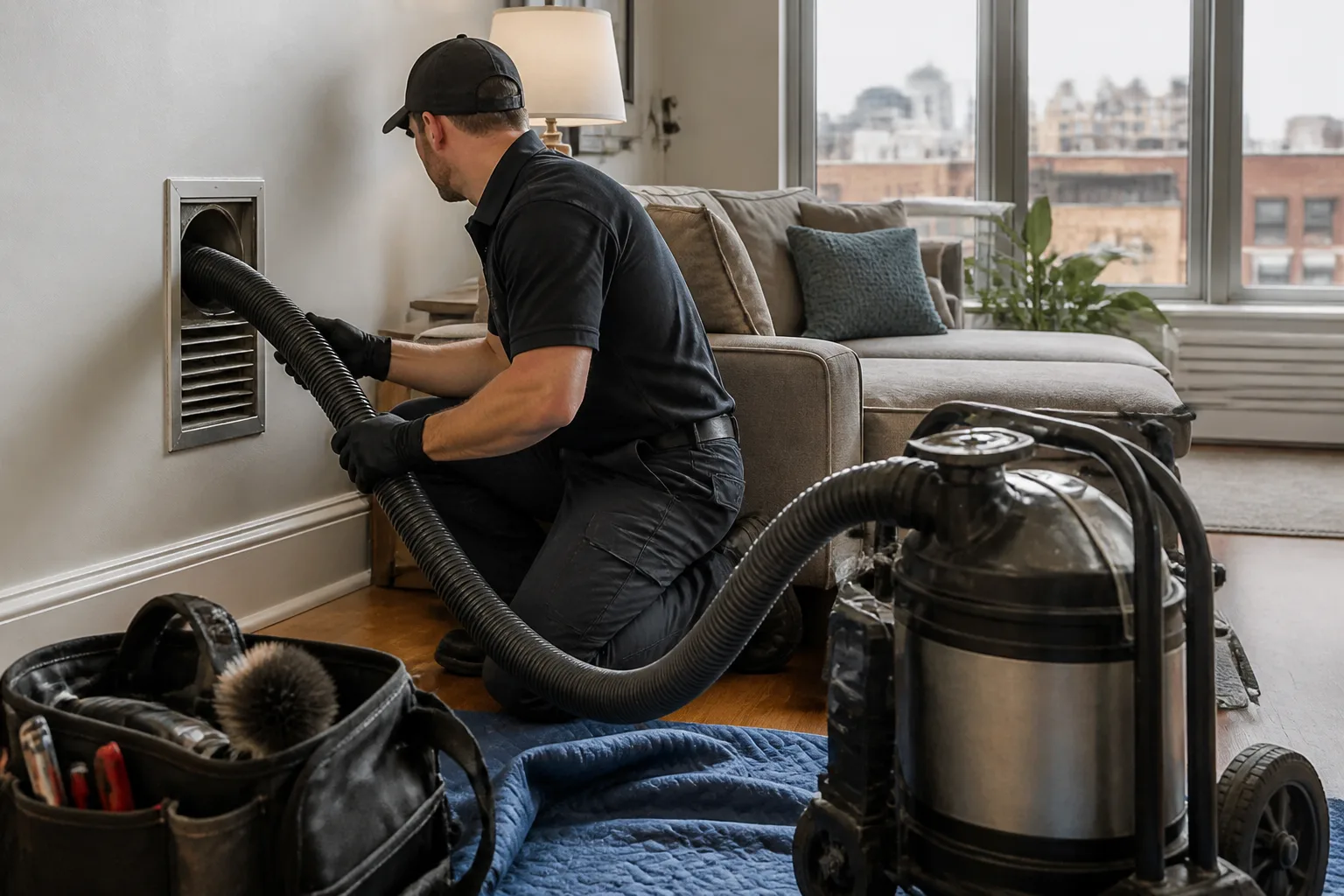
What “emergency” service actually delivers is a combination of fast arrival and, more importantly, the right equipment. A shop vac and goodwill don’t cut it. The pros who can genuinely respond to an emergency show up with containment and filtration gear that keeps dislodged contaminants from blowing back into the room. We run Rotobrush and Nikro rotary brush systems and Abatement Technologies filtration equipment, which is the standard we’d want in our own homes after an event like the ones above.
Questions to Ask Any Company Claiming Emergency Availability
Before you book, ask these questions. Anyone who can answer them clearly is worth considering. Anyone who dodges deserves a second call.
- What equipment will you bring? Look for named professional systems (Rotobrush, Nikro, Abatement Technologies). “High-powered vacuums” is vague.
- How do you contain contaminants during cleaning? A proper containment protocol with negative air and filtration prevents cross-contamination between rooms.
- Are you also certified or experienced for the underlying event? Sewer backups, smoke damage, and rodent intrusions each have their own remediation standards. A duct cleaning company that isn’t comfortable with the underlying event is going to miss half the problem.
- Will you assess the system before cleaning? Good crews inspect first, clean second. If they start cleaning on arrival without diagnosis, ask why.
- What’s included in the estimate? Per-vent pricing hides surprises. A flat price per system based on a written assessment is the honest approach.
- Can you also repair and seal leaks and gaps? Cleaning without sealing just means the same dirt comes right back in.
For related work on the same visit, ask about HVAC cleaning and dryer vent cleaning. A system-wide inspection after a water or smoke event often reveals a dryer vent packed with lint, which adds fire risk to a house that’s already had one scare.
Related Services in Bay Ridge
If you’re sorting out an emergency duct situation, the smart move is to look at the full air pathway rather than one duct run in isolation. Cleaning is the start; sealing the gaps where dirt got in is the finish. A proper air duct cleaning Bay Ridge visit can address both, plus any registers, grilles, and dryer vent issues found along the way. If you want to upgrade filtration after the cleanup, we supply and install Honeywell and Aprilaire products, so the same visit that cleans the system can leave you with better filtration for the next event that comes along.
What happens when you call
- 1
A real person answersNo phone trees – you reach a local pro.
- 2
You get an upfront price rangeHonest numbers before anyone is dispatched.
- 3
A background-checked tech heads outLicensed & insured, dispatched right away.
- 4
You approve before work beginsNothing starts until you say go.
The Bottom Line
The order matters: shut down the HVAC, contain the source, document the damage, get an assessment, then clean. In Bay Ridge, that sequence is what separates a fast recovery from an expensive one. If you’re dealing with an active water event, a neighbor’s fire, or a rodent problem in your ducts, we’re happy to help you sort out what level of response makes sense. Air Duct Cleaning Bay Ridge offers free estimates. Call (877) 938-5572. We answer 24/7. Fast dispatch from 7am to 7pm, Sunday through Friday. Written estimates set the final price, and we provide before-and-after photos so you can verify the work.
Frequently Asked Questions
Pricing runs per system, based on the written estimate, not per vent. Typical ranges depend on the size of the system and the level of contamination. Emergency response itself doesn’t add a surcharge; the price is set by the scope of work. Call (877) 938-5572 for an exact quote. Estimates are free.
No. Running the fan after a water event pulls moisture and contaminants through every connected duct run, spreading the problem instead of solving it. Shut the system down and contain the source first. Call (877) 938-5572 if you’re not sure what to do next.
Cheap quotes often skip containment, use consumer-grade vacuums instead of Rotobrush or Nikro equipment, and price per vent so the final invoice sneaks up on you. A proper estimate is flat per system and includes the containment and filtration gear to do the job safely. Call (877) 938-5572 for a quote that shows you exactly what you’re getting.
We take before-and-after photos of your own ducts and provide them at the end of the job. That’s the simplest way to verify the work. Call (877) 938-5572 to set up an estimate.
Written by the team at Air Duct Cleaning Bay Ridge.
Need Air Duct Cleaning Help?
Call Air Duct Cleaning Bay Ridge - the local pro we connect you with is licensed and insured, with free written estimates in Bay Ridge.
(877) 938-5572