
Last updated November 22, 2026
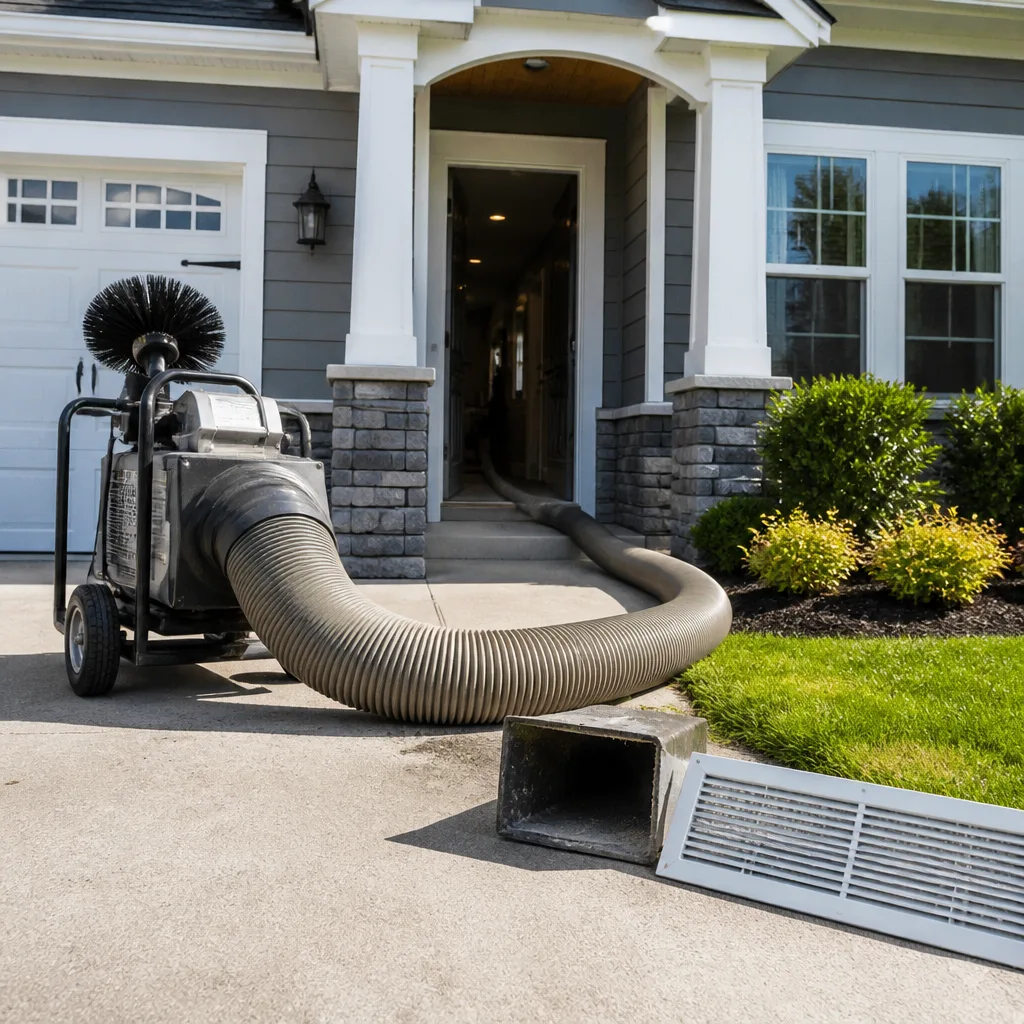 Whole-home duct cleaning
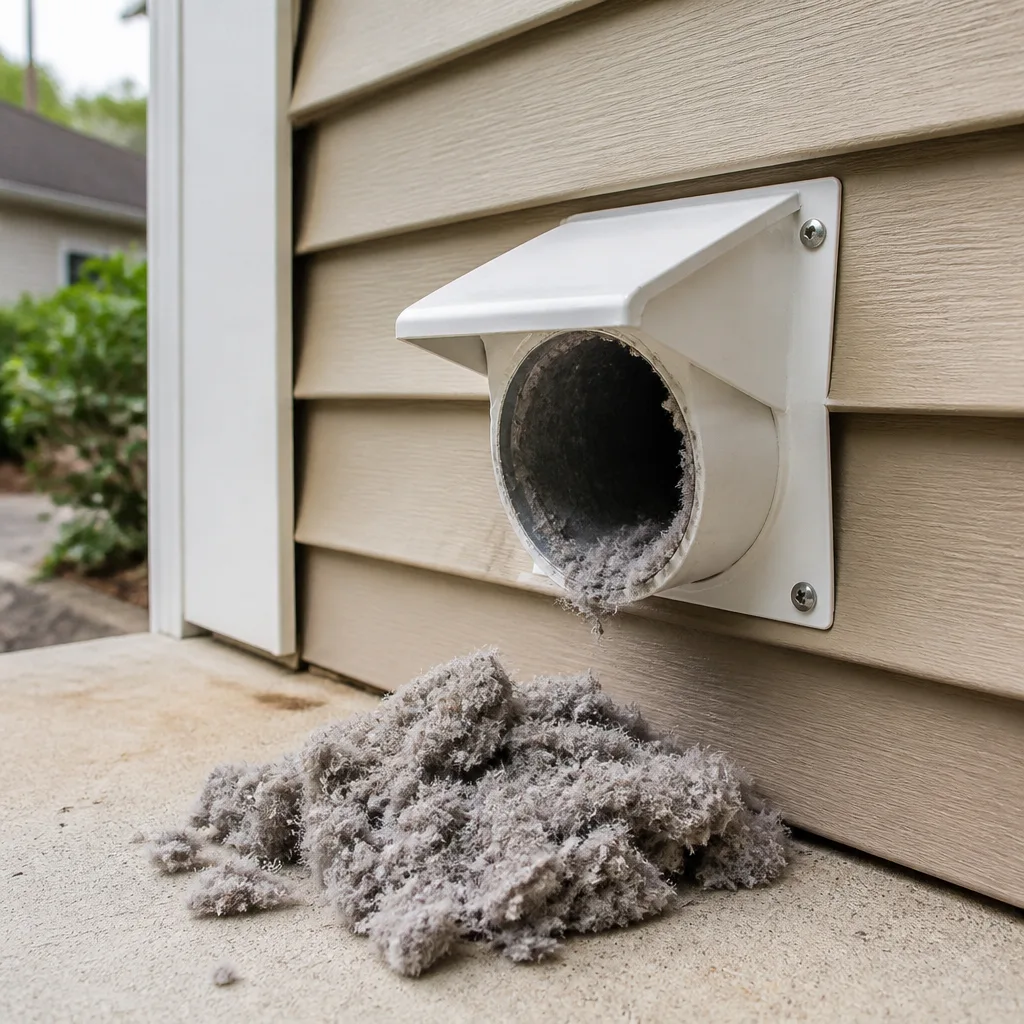 Dryer vent cleaning
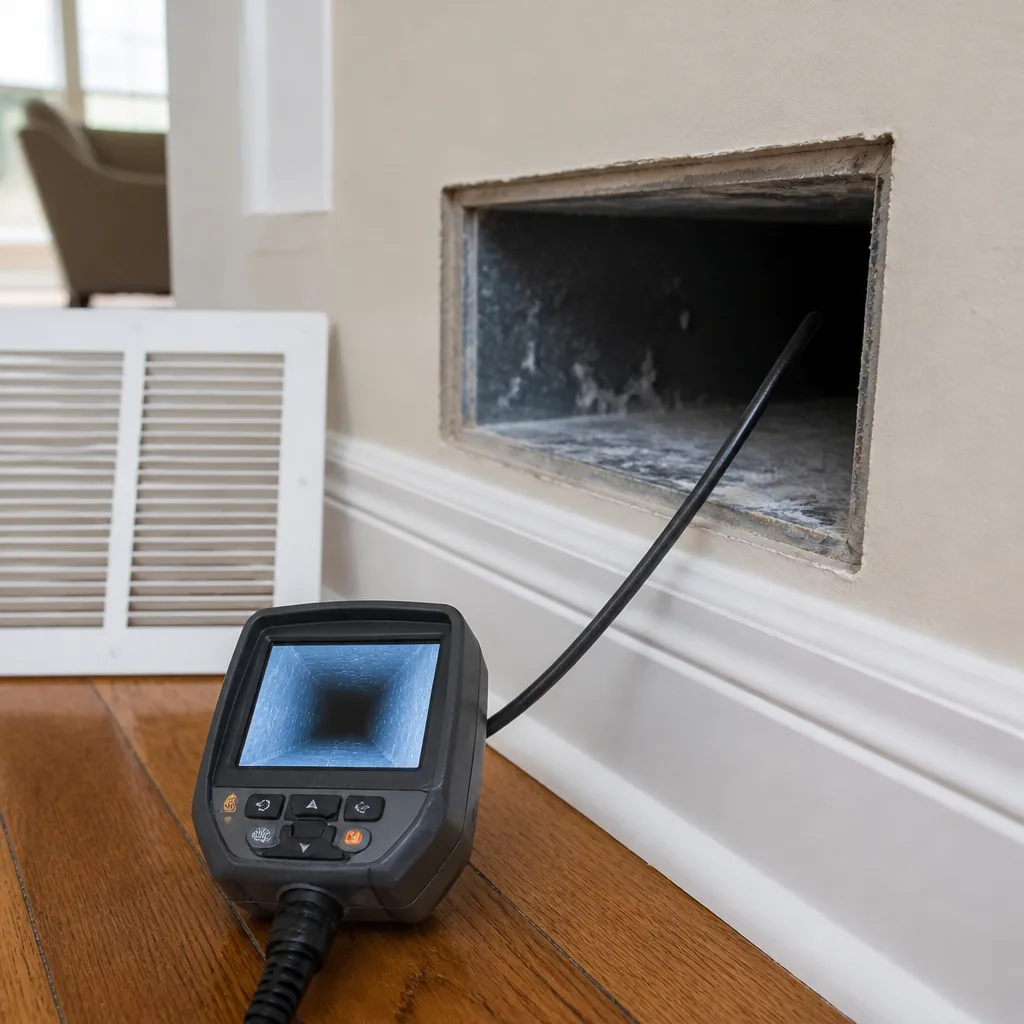 Camera inspection
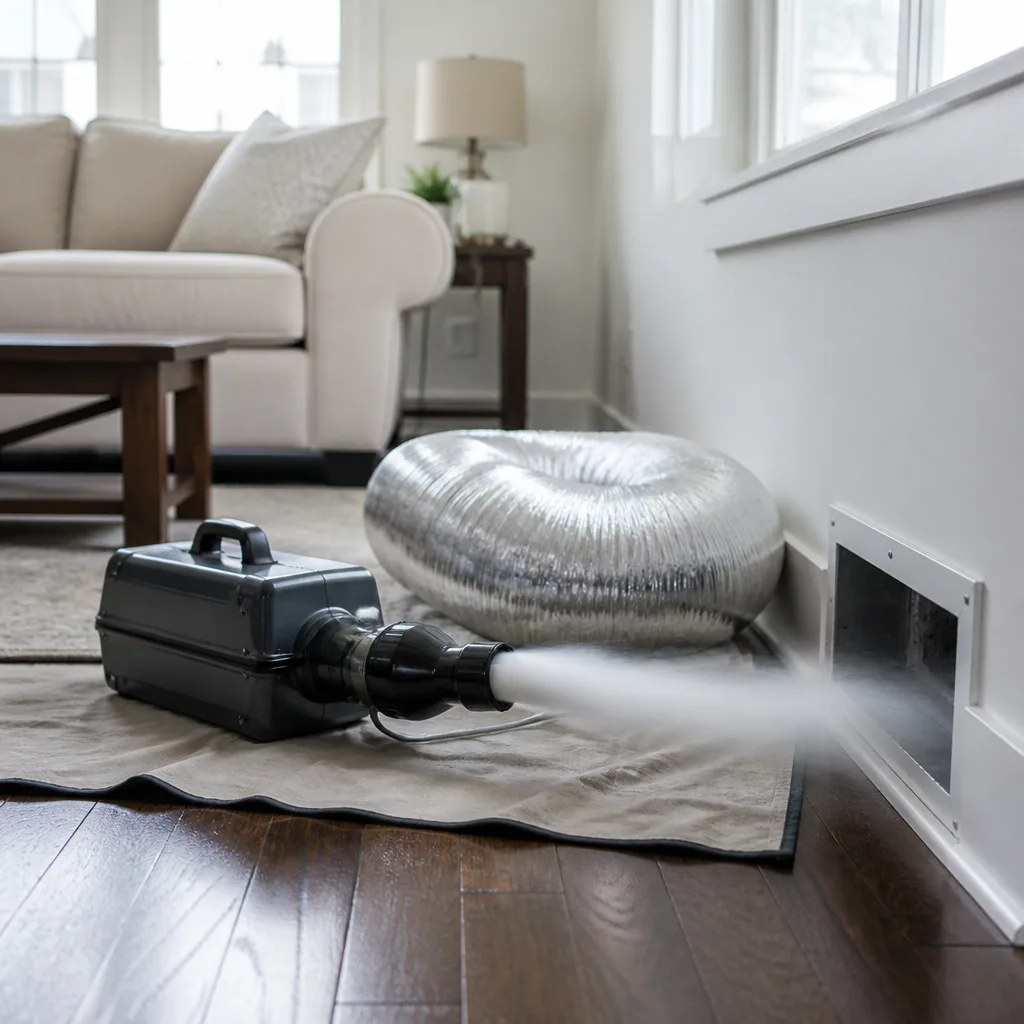 Sanitizing & deodorizing
Whole-system duct and dryer vent check with before-and-after photos - you see exactly what came out of your vents
That "$99 whole-house special" is a bait ad - the real number appears once they are in your hallway, or the "clean" is a shop-vac at the register. We photograph the inside of your ducts before and after instead.
Air Duct Cleaning Warning Signs: A Bay Ridge Homeowner’s Reference Guide
Visible dust blowing from your vents isn’t an early warning sign. It’s a late one. By the time you can see particulate coming out of a supply register, the contamination event that caused it has been building for months inside the system, quietly coating the plenum, the branch runs, and the coil. The signals that actually matter are subtler: a bedroom that runs warmer than the rest of the house, a filter that clogs two months early, a smell you notice only when the heat first kicks on. This guide walks through the system-level warning signs we look for in Bay Ridge homes, why older housing stock produces them more often, and what each one tells you about what’s happening inside your ducts.
Quick Answer
Air duct cleaning warning signs in a Bay Ridge home usually show up as system behavior rather than visible mess: uneven airflow between rooms, filters loading faster than their rated life, recurring odors tied to a specific season or mode, static pressure problems that mimic equipment failure, and dust reappearing on surfaces within days of cleaning. Any one of these is worth an inspection. Two or more together usually means the duct system itself is the problem, not the furnace or the AC.
Styles & brands we work with
- Whole-home duct cleaning
- Dryer vent cleaning
- Camera inspection
- Sanitizing & deodorizing
Table of Contents
- Airflow Asymmetry: Why One Room Is Always Off
- Reading Odor Profiles by Contamination Type
- Filter Loading Rate as a Diagnostic Tool
- Post-Renovation Warnings in Bay Ridge’s Older Housing Stock
- HVAC Performance Signs That Trace Back to Ducts
- Static Pressure and What It Reveals
- How to Verify the Work Was Actually Done
- The Dryer Vent Is Part of the System
Airflow Asymmetry: Why One Room Is Always Off
A bedroom that runs consistently three to five degrees warmer than the hallway in summer, or colder in winter, is one of the most reliable duct warning signs there is. Homeowners usually assume the system is undersized or that the room needs its own zone. Often neither is true. When one branch of the duct system is restricted, the air that room needs gets diverted to the paths of least resistance, so other rooms over-perform while that one starves. The furnace or air handler is running fine. The delivery is broken.
In Bay Ridge, the pattern shows up most often in homes where a duct run was rerouted decades ago to accommodate a renovation, or where flex duct was pinched through a tight joist bay. Older two- and three-family rowhouses along the Ridge also tend to have long, low-clearance runs to rear extensions, which makes them sensitive to even modest accumulation inside the duct.
Here’s how to tell the difference between a duct obstruction and an equipment sizing problem:
- Check the register, not the room. Hold a tissue to the supply grill in the affected room. If it barely moves while other rooms pull it tight, the restriction is on that branch.
- Compare with the return. A strong return pull and a weak supply in the same room is a classic partial blockage signature.
- Look for the damper. Many older systems have manual dampers in the branch. If someone closed one during a past heating season and never reopened it, that’s your answer before you spend a dollar.
- Test with the system on and doors open. Closing bedroom doors pressurizes the room and can mimic a duct problem in tight homes.
If the damper is open, the register is clear, and the room still under-performs, you’re looking at a duct-level issue and an inspection is the next step. air duct cleaning is one remedy, but a proper inspection first tells you whether you’re dealing with debris, a disconnected joint, or a collapsed run. Cleaning alone won’t fix a duct that’s come apart in the wall cavity.
Reading Odor Profiles by Contamination Type
Odors are the most underused diagnostic signal in residential duct work. Homeowners describe them vaguely (“it smells a little off when the heat comes on”), but the specific character of the smell usually points to a specific category of contamination. Learning to read the profile helps you know whether you’re looking at a cleaning job or something more serious.
- Musty, wet-cardboard, basement-like. Biological growth. Usually means moisture is present in the system somewhere – a damp return, condensation at the coil, or a duct run through a humid crawl space. Cleaning without addressing the moisture source just resets the clock.
- Acrid, hot-plastic, metallic-burning. Electrical or heat-exchanger related. This is not a duct cleaning issue. Stop running the system and have the equipment inspected by a qualified technician before anything else.
- Earthy, animal, slightly sweet. Pest intrusion. Rodents and insects find their way into duct systems surprisingly often, especially in older Bay Ridge homes where foundation and rim joist gaps are common. A cleaning without sealing those entry points is a temporary fix.
- Chemical, sharp, glue-like. Off-gassing from insulation or construction materials. Newer foam insulation, adhesives, or sealed duct liner can all produce this. It often appears in homes that were renovated within the last few years.
The pattern matters as much as the smell. An odor that only appears when the heat first comes on in fall points to contamination sitting on the heat exchanger or in the supply plenum. An odor that’s present in cooling season points toward the coil and the wet side of the system. Both are worth an inspection, and both tell a competent technician where to look before anything gets touched. If the odor is acrid or smells like burning, treat it as an equipment issue first.
Filter Loading Rate as a Diagnostic Tool
Most homeowners treat the filter as a maintenance item. It’s actually one of the most useful diagnostic instruments in the house. A filter has a rated life printed on the packaging, typically 30, 60, or 90 days depending on the MERV rating and household conditions. What you’re measuring is how fast yours fills relative to that rating.
A filter that’s clogged solid in half its rated life is not causing a problem – it’s reporting one. Something upstream is loading the return air with particulate at an abnormal rate. The usual culprits:
- Duct leakage on the return side, pulling attic, crawl space, or wall cavity air into the system
- Ongoing construction or renovation dust that bypassed any temporary containment
- A failing filter rack or gap around the filter slot, letting unfiltered air past the edge
- Accumulated debris inside the return ducts themselves, which re-suspends with every cycle
Here’s the practical method. Log the date you install a new filter, and note the date it looks visually loaded. Do that three times and you have a baseline. If your filter consistently loads in half its rated window, you have a documented system issue worth investigating, and that log is exactly the kind of evidence a technician can work from.
There’s a secondary point worth being clear about. Installing a higher-MERV filter to compensate for a loading problem is a common mistake. A denser filter on a system with an already-restricted duct path raises static pressure and can make the airflow problem worse. Fix the source first. Then choose filtration deliberately.
Post-Renovation Warnings in Bay Ridge’s Older Housing Stock
Bay Ridge’s housing was largely built in the early-to-mid twentieth century, with a mix of brick rowhouses, detached frame homes, and two- and three-family buildings that have been renovated in layers over decades. That age matters after a renovation because the debris profile is different from a newer home. You’re not just dealing with modern drywall dust. You’re dealing with plaster particulate, historic paint debris that may contain lead, and the fine mineral dust that comes out of old masonry when a wall gets opened.
Duct filters are not rated for that material. Standard residential filters catch the coarse fraction and let the rest through. What bypasses the filter settles inside the return plenum, on top of the coil, and along the branch runs. Weeks later the homeowner starts noticing symptoms.
Watch for these post-renovation warning signs, especially in older Bay Ridge homes:
- Dust settling on horizontal surfaces faster than normal. Within days of cleaning a room, a new film appears. That’s particulate continuing to circulate.
- A fine, chalky deposit on registers and returns. Plaster and drywall dust has a characteristic pale film. If you see it on the return grill, it’s almost certainly inside the duct.
- New or worsening allergy symptoms in one or two household members. Particulate that bypassed the filter isn’t the same particle size the occupants were previously exposed to.
- An odor that appeared after demolition, not before. Often points to debris in the return system combined with residual moisture from patching compounds.
- Visible disturbance at duct joints. Older duct work sometimes comes apart during a renovation, especially where walls were opened.
If your home was built before 1980 and has been renovated recently, a professional inspection is worth it. If the property predates 1978 and paint was disturbed during the work, that’s a specific concern worth raising with a licensed contractor before touching the duct system, because lead-bearing dust needs to be handled with proper containment, not just vacuumed with a shop vac. The equipment matters here. Abatement Technologies air filtration equipment, the kind used in mold and hazmat remediation settings, is what a proper containment setup looks like during duct work. Anything less is recirculating the problem.
HVAC Performance Signs That Trace Back to Ducts
Plenty of furnaces and AC units get replaced for problems that actually live in the duct system. When the ductwork is restricted, the equipment has to work harder to move the same volume of air, and that manifests as behavior that looks like equipment failure.
The three most common patterns:
- Short cycling. The system brings a room to temperature quickly, shuts off, then comes back on a few minutes later. On the heating side it’s often caused by a supply restriction forcing the furnace into high-limit trips. On the cooling side it can be low airflow across the coil, causing the coil temperature to dive and the system to protect itself.
- Coil icing. Ice forms on the indoor coil in summer because the refrigerant is doing its job while the airflow to carry the cooling away is insufficient. Homeowners usually call this a refrigerant problem. Sometimes it is. Often it’s a duct restriction upstream.
- High-limit trips and rising energy bills. Restricted ductwork forces longer runtimes and higher blower speeds. If your bills climbed without a rate change, the duct path deserves a look.
We see these patterns regularly when a homeowner has already had the equipment diagnosed and the technician said everything was within spec. When the mechanicals check out and the symptoms persist, that’s the signal to look beyond the box. HVAC cleaning addresses the coil and the air handler side. Cleaning the ducts addresses the delivery side. They belong together, not as separate jobs done months apart.
Static Pressure and What It Reveals
Static pressure is the measurement a duct cleaning technician takes to understand how hard the blower is working to push air through the system. A clean, properly sized duct system moves air at a comfortable pressure. A restricted one forces the blower to work harder, and the number tells you roughly how much.
You probably won’t own a manometer. That’s fine. What you can observe at home is the practical consequence of high static pressure:
- Weak airflow at the register furthest from the air handler. The room at the end of the line is where restriction shows up first.
- Noisy registers. Whistling or roaring at a supply grill under normal operation suggests the air is forcing its way through a narrow path.
- A blower that never seems to run at a steady state. It ramps up, seems to settle, then ramps again. That’s the system fighting itself.
- Uneven temperature between floors. In Bay Ridge’s multi-floor rowhouses, an upper floor that runs hot all summer is a static pressure story as often as it’s an insulation story.
A professional assessment measures actual static pressure before and after work, which serves two purposes. It confirms what the problem is, and it gives you a verifiable before-and-after. That number is the difference between a job that was documented and a job that was claimed.
How to Verify the Work Was Actually Done
The duct cleaning trade has a reputation problem, and you should treat that seriously. The most common complaint isn’t that the work was poor. It’s that the work wasn’t done at all, or was done with a shop vac for thirty minutes and billed like a full system job. Here is how to know the difference.
- Equipment should be visible and professional-grade. Rotary brush systems like Rotobrush and high-powered vacuum equipment like Nikro are purpose-built for duct work. If the technician arrives with a consumer vacuum and a coiled hose, that tells you a lot.
- Before-and-after photos are the standard. You should see what the inside of your ducts looked like before the work and after. Not stock images. Yours.
- Containment should be in place during the job. If the technician opens a return without running filtration and negative pressure, dust is going into your living space, which is worse than it living in the duct.
- The price should be one flat number per system, agreed before work starts. Teaser pricing that grows once the technician is on-site is the industry’s oldest bait-and-switch. A written estimate protects you.
- The scope should be defined in writing. Which runs are being cleaned, whether the plenum is included, whether the coil is being cleaned separately. If that’s not on paper, ask for it.
If you’re comparing bids, the cheap ones tend to be cheap for a reason. A whole-system cleaning involves setup, containment, equipment, and time. A number that seems dramatically lower than the rest usually reflects a dramatically smaller job. Ask specifically what’s included and what isn’t. The quote that itemizes it is the one you want.
The Dryer Vent Is Part of the System
Most of this guide is about supply and return ductwork, but the dryer vent is the part of the indoor air pathway that carries the highest documented safety risk in a home. Lint accumulation in a dryer vent is a leading cause of residential fires, and the warning signs are recognizable if you know what to look for.
Here’s what to watch for:
- Clothes taking two cycles to dry, or feeling hot but not dry
- The dryer itself getting noticeably hot to the touch on top
- A burning or warm-lint smell during operation
- Visible lint collecting around the exterior vent flap
- A vent run that has a sag or a long horizontal stretch, which traps lint in ways a short vertical run doesn’t
In Bay Ridge multi-family buildings, dryers are often tucked into interior closets with long, twisting vent runs that were installed for convenience rather than airflow. Those are the runs that accumulate fastest. dryer vent cleaning is a standalone service for a reason. It’s a fire-safety issue first and an appliance-performance issue second, which is why we treat it as part of the same indoor air pathway rather than a separate add-on.
Common Mistakes to Avoid
- Reading visible dust as the early signal. Visible dust at a vent means contamination is already well established. If that’s what triggered the call, the job is likely larger than it appears, so plan for a full-system cleaning rather than spot treatment.
- Using a higher-MERV filter to solve a loading problem. It worsens static pressure on a system that’s already restricted. Diagnose the source first, then choose filtration.
- Cleaning before sealing. In Bay Ridge’s older homes, unsealed duct joints are common, especially in wall cavities. Cleaning without sealing means the same contamination returns within a year or two. Clean, then seal.
- Treating a smell as a cleaning issue when it’s an equipment issue. An acrid, hot, or burning smell needs a technician on the equipment first, not a duct cleaning.
- Choosing a quote on price alone. The cheapest bid is usually the smallest scope, and duct work is difficult for a homeowner to verify after the fact. Ask for the written scope and before-and-after photos.
- Skipping the dryer vent because the HVAC works fine. The two are separate systems with separate risks. A healthy HVAC tells you nothing about your dryer vent.
- Assuming the equipment is fine because it was recently serviced. A tune-up doesn’t measure static pressure or inspect duct interiors. If your symptoms persist after service, ask specifically about the duct path.
See the difference
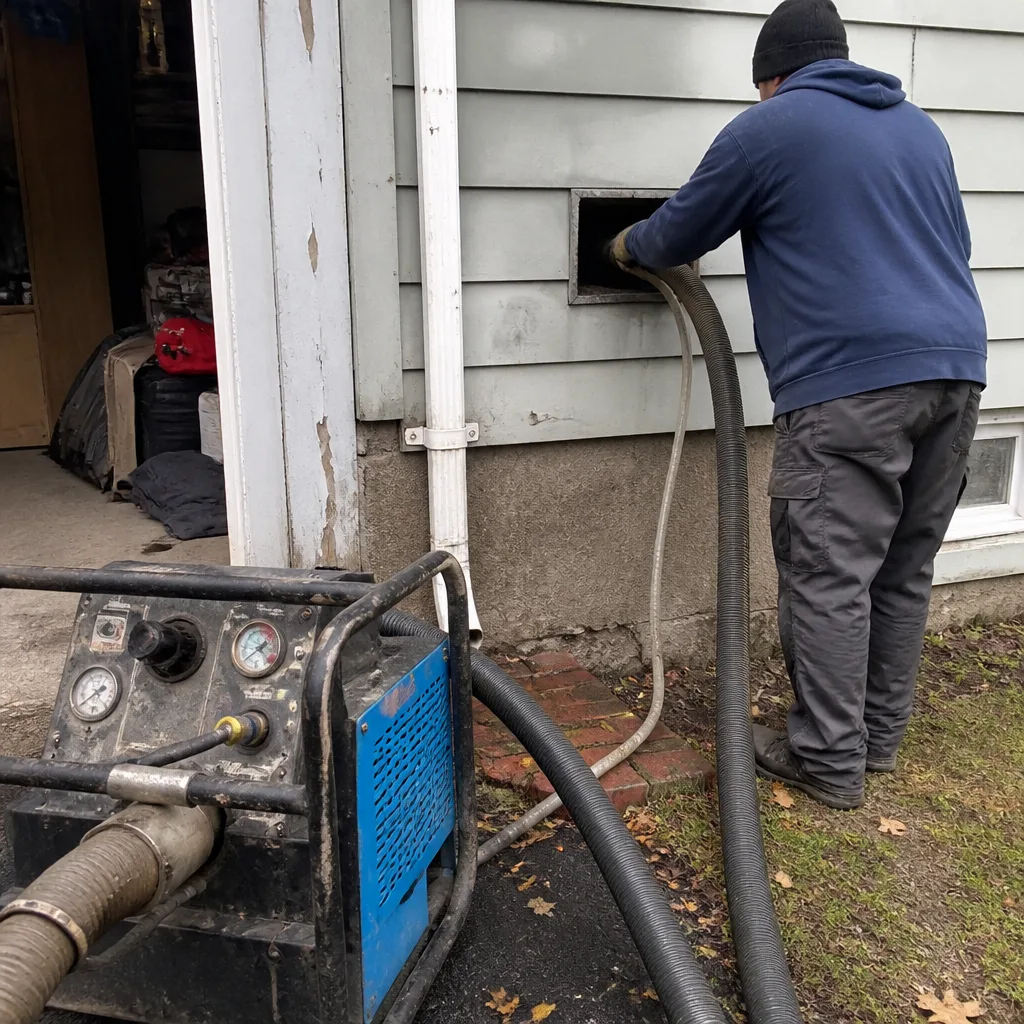 Before
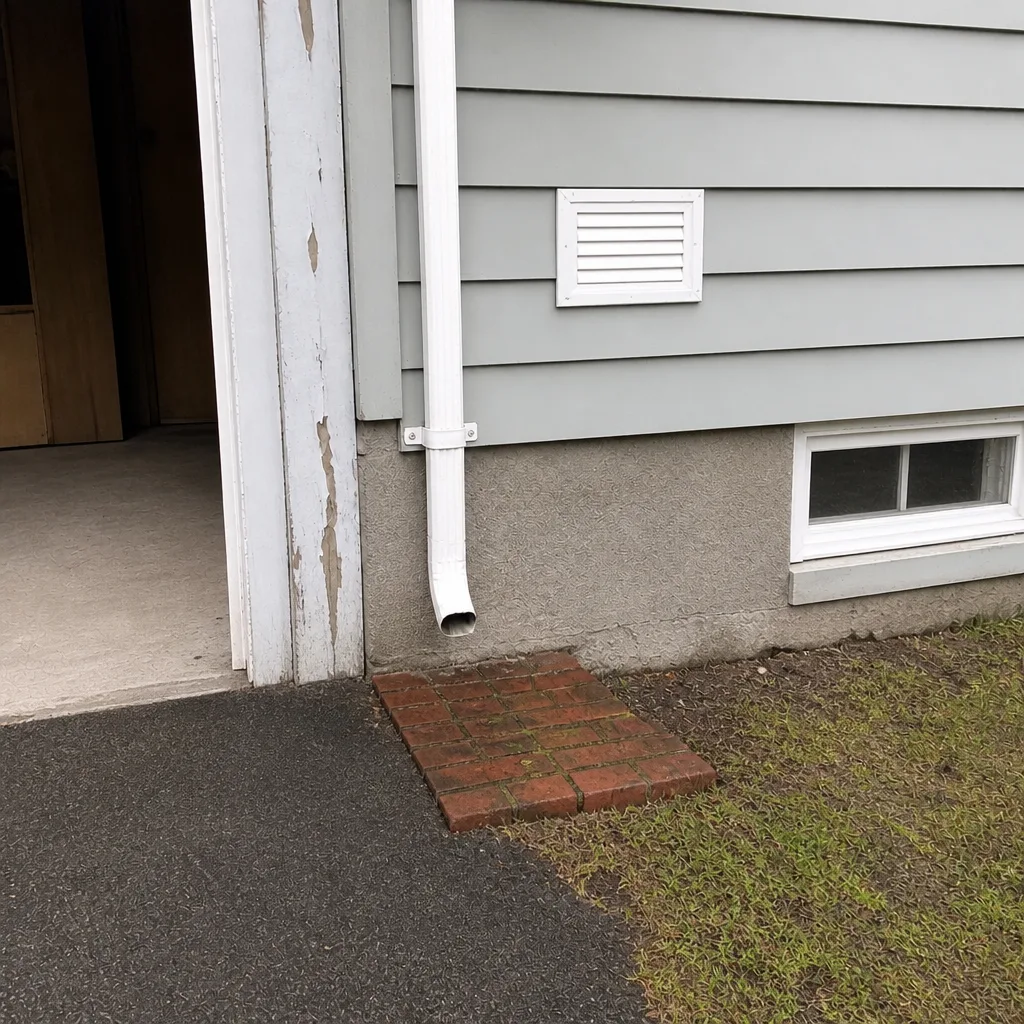 After
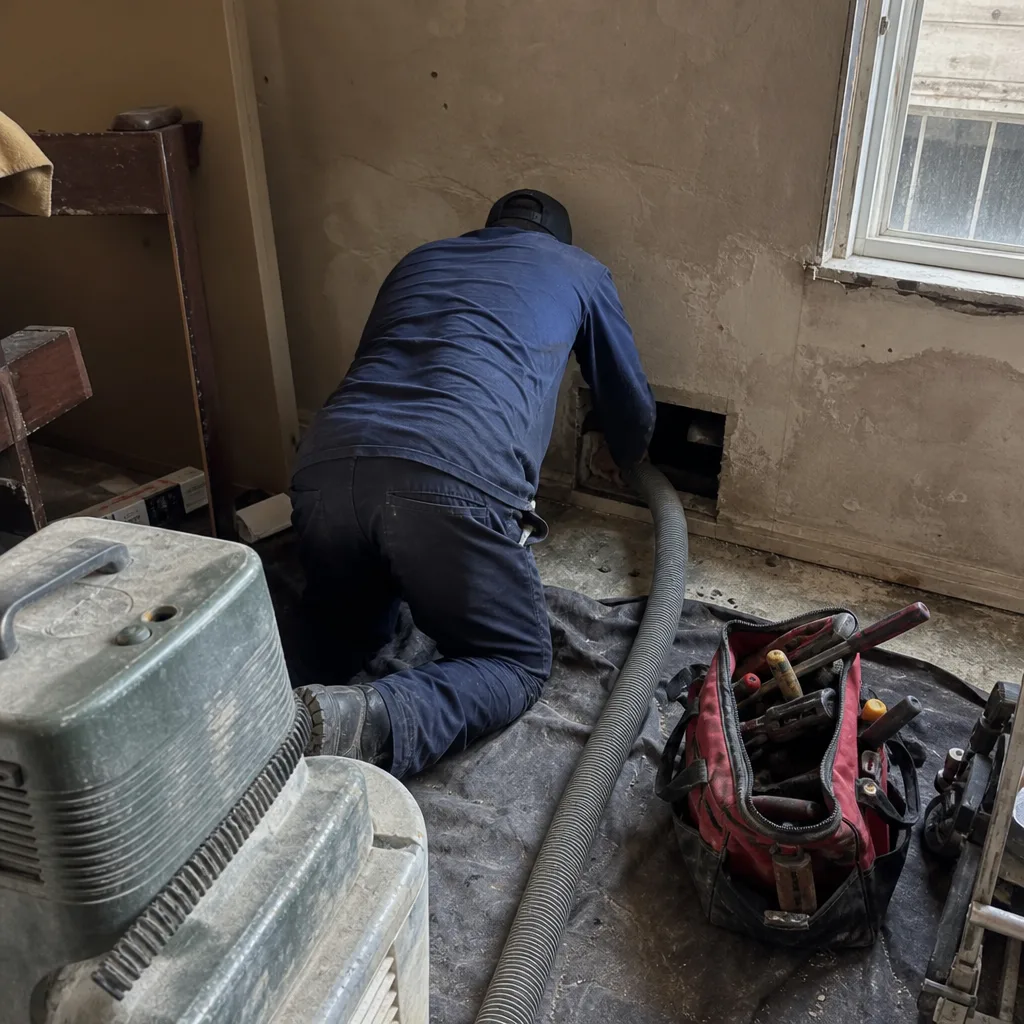 Before
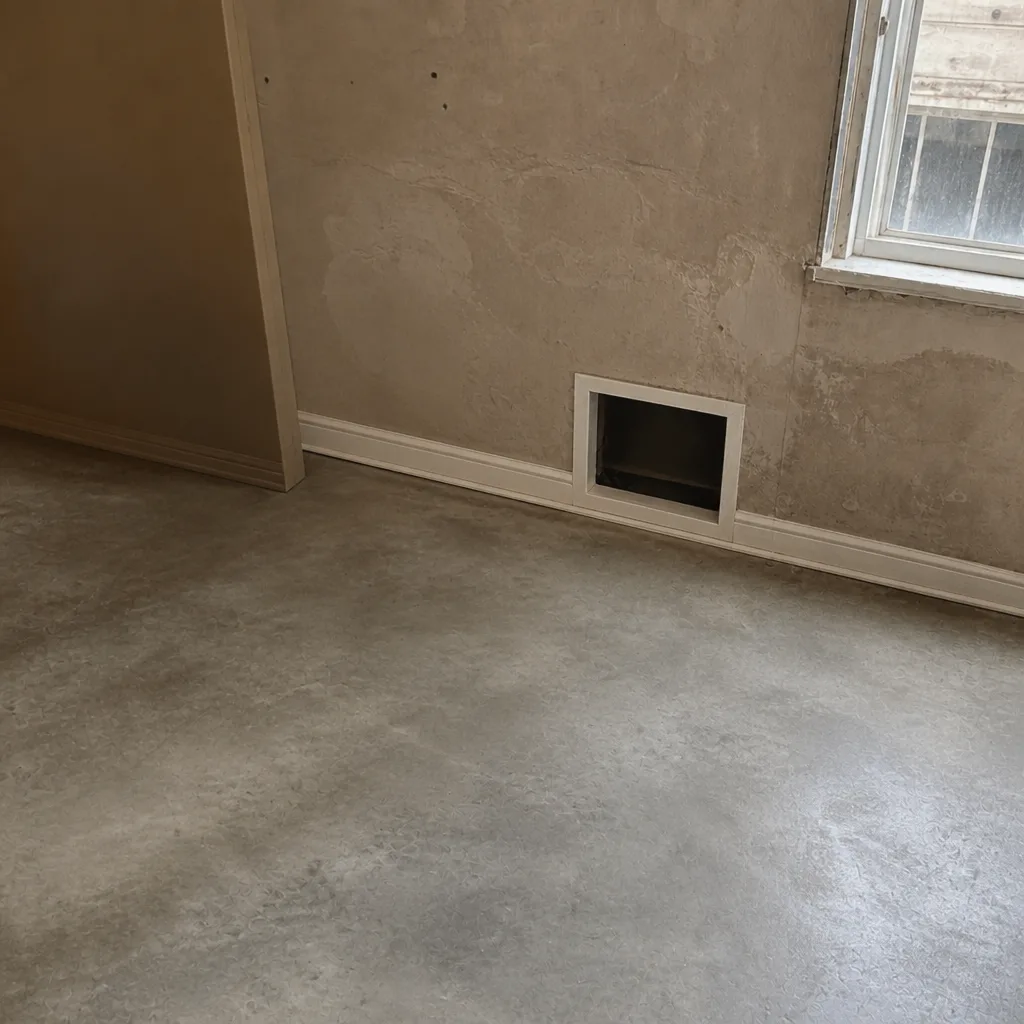 After
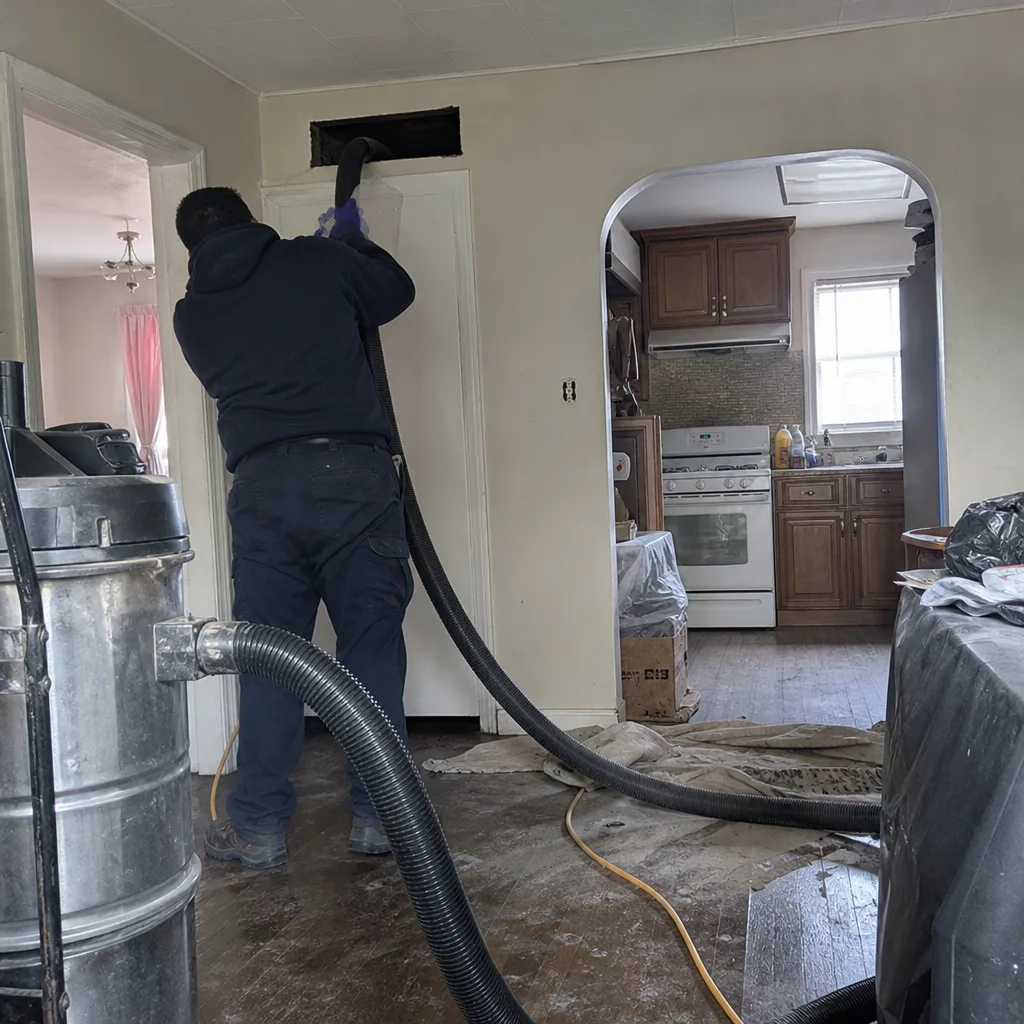 Before
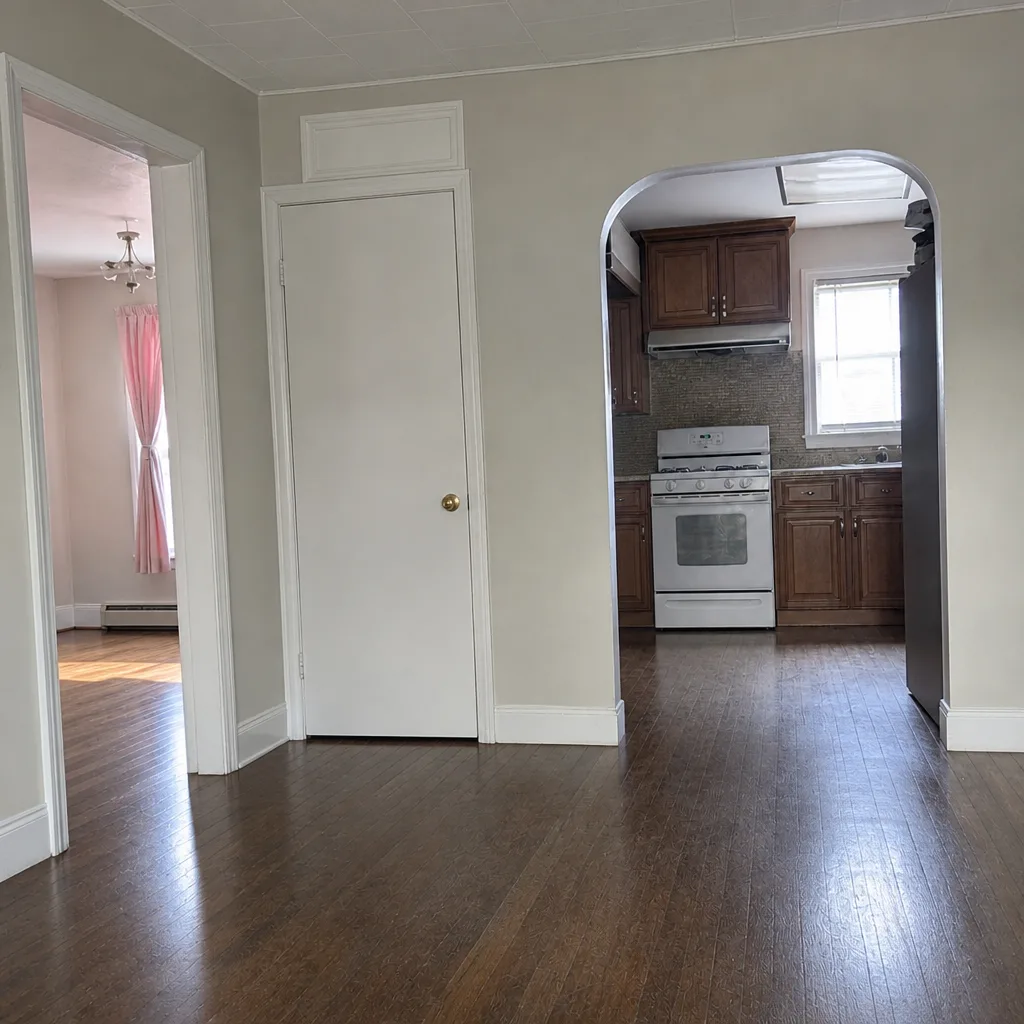 After
When to Call a Professional
Call a professional when two or more warning signs sit together, when an odor is tied to a specific mode or season, when a filter logs consistently at half its rated life, or when you’re post-renovation in a pre-1980 Bay Ridge home. Call sooner if the dryer vent is part of the picture, since lint accumulation carries fire risk that’s not worth deferring. For a full-system inspection and cleaning, our team uses Rotobrush and Nikro rotary brush and vacuum systems, plus Abatement Technologies filtration during service so dislodged contaminants are captured instead of recirculated. We also install Honeywell and Aprilaire filtration and humidity control as part of the same visit when the system calls for it. Air Duct Cleaning Bay Ridge offers free estimates in Bay Ridge – call (877) 938-5572. We answer 24/7. Fast dispatch from 7am to 7pm, Sunday through Friday.
Frequently Asked Questions
Air duct cleaning in Bay Ridge is priced per system, not per vent, with a typical range based on the size of the home and the number of runs. Whole-system cleaning for a standard rowhouse is usually in the mid-hundreds, with larger multi-family buildings priced higher. The written estimate sets the final price, and we agree on that number before any work starts. Call (877) 938-5572 for an exact quote – estimates are free.
The cheapest quotes are cheaper because they cover less work. A low number is usually a per-vent teaser price that grows once the technician is on site, or it covers a spot vacuum with no containment and no verification. Ask for the written scope, the equipment being used, and before-and-after photos. If a bid doesn’t include all three, the price isn’t comparable.
Ask for before-and-after photos of your own ducts, taken during the job. A professional setup includes visible rotary brush and vacuum equipment and containment filtration running during the work, so the process itself is observable. If the technician arrives with a shop vac and can’t show you the inside of the duct before and after, you don’t have proof the work happened.
Most homes go three to five years between cleanings, but the honest answer is that the interval depends on your home. A Bay Ridge rowhouse with recent renovation, pets, or a heavy-allergy household may need it sooner. A home with a documented filter loading problem needs it now, not on a schedule. Watch your warning signs rather than the calendar.
Airflow asymmetry usually means a duct obstruction on that branch, not an equipment sizing problem. Check the register pull with a tissue, confirm the manual damper is open, and compare the return pull in that room to the supply. If the register is weak and the return is strong, the restriction is inside that run and an inspection is the next step.
Cleaning alone rarely fixes a musty smell permanently, because musty usually means moisture is present somewhere in the system. Cleaning removes the biological growth that’s there now. The source – a damp return, coil condensation, or a duct routed through a humid crawl space – has to be addressed or the growth returns. That’s why we pair cleaning with sealing and, when appropriate, sanitizing treatments that use Guardsman-brand products.
The Bottom Line
The warning signs that matter in a Bay Ridge home are the system-level ones: uneven airflow between rooms, filters loading early, odors tied to a mode or season, static pressure symptoms that mimic equipment failure, and dust that reappears within days of cleaning. Visible dust at the vent is the late signal. Catch the early signals and you’re looking at a cleaning and seal, not a replacement. When two or more of these signs show up together, get an inspection. The equipment and the verification matter as much as the price. Clean ducts, then seal them, and you’ve addressed the root cause rather than the symptom.
Call (877) 938-5572 for a free estimate. We answer 24/7. Fast dispatch from 7am to 7pm, Sunday through Friday.
Written by the team at Air Duct Cleaning Bay Ridge.