
Last updated November 22, 2026
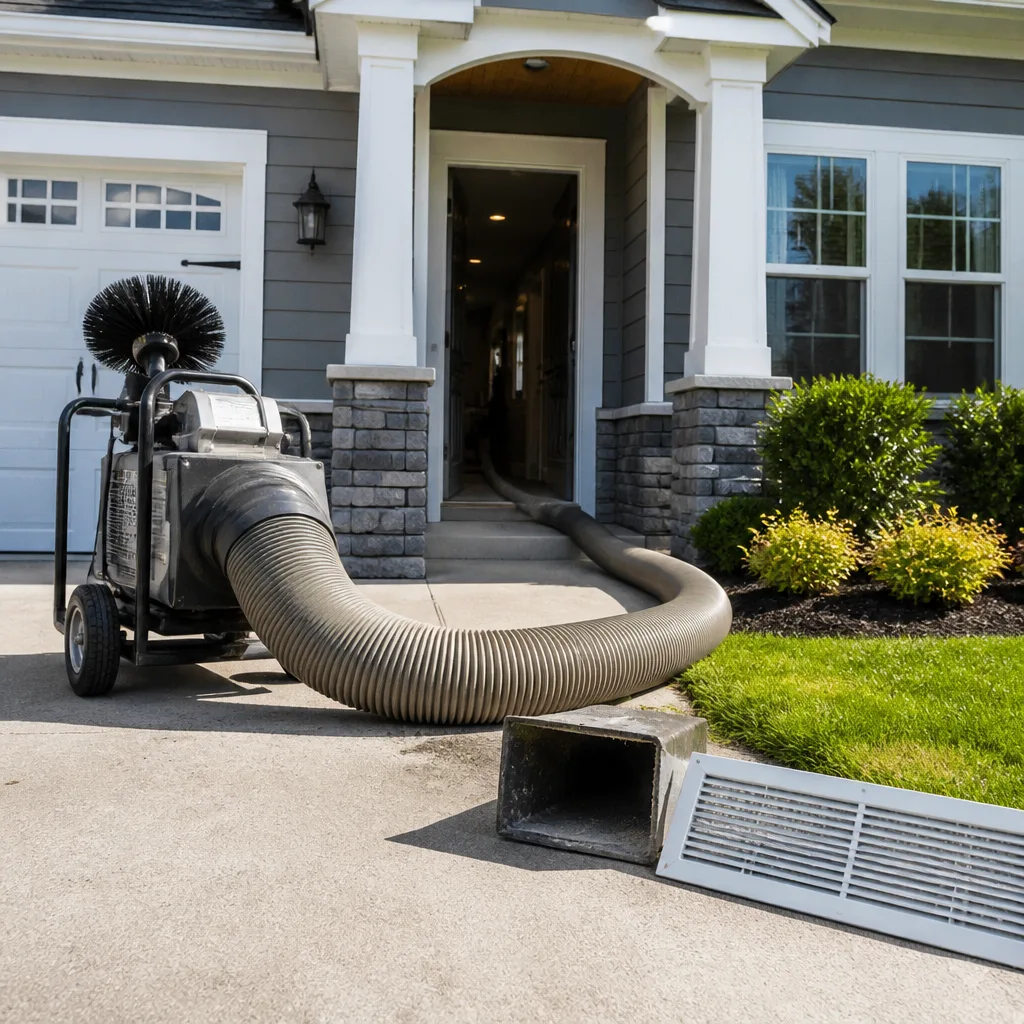 Whole-home duct cleaning
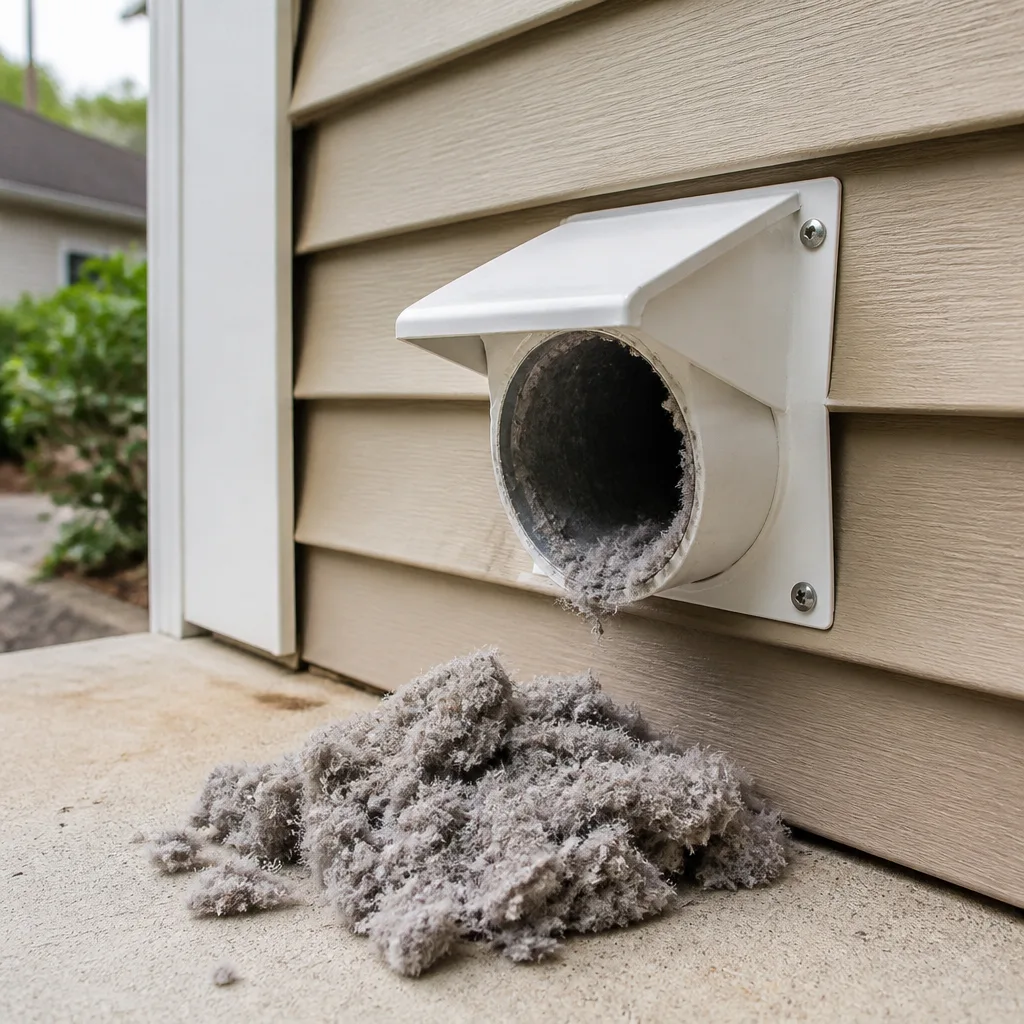 Dryer vent cleaning
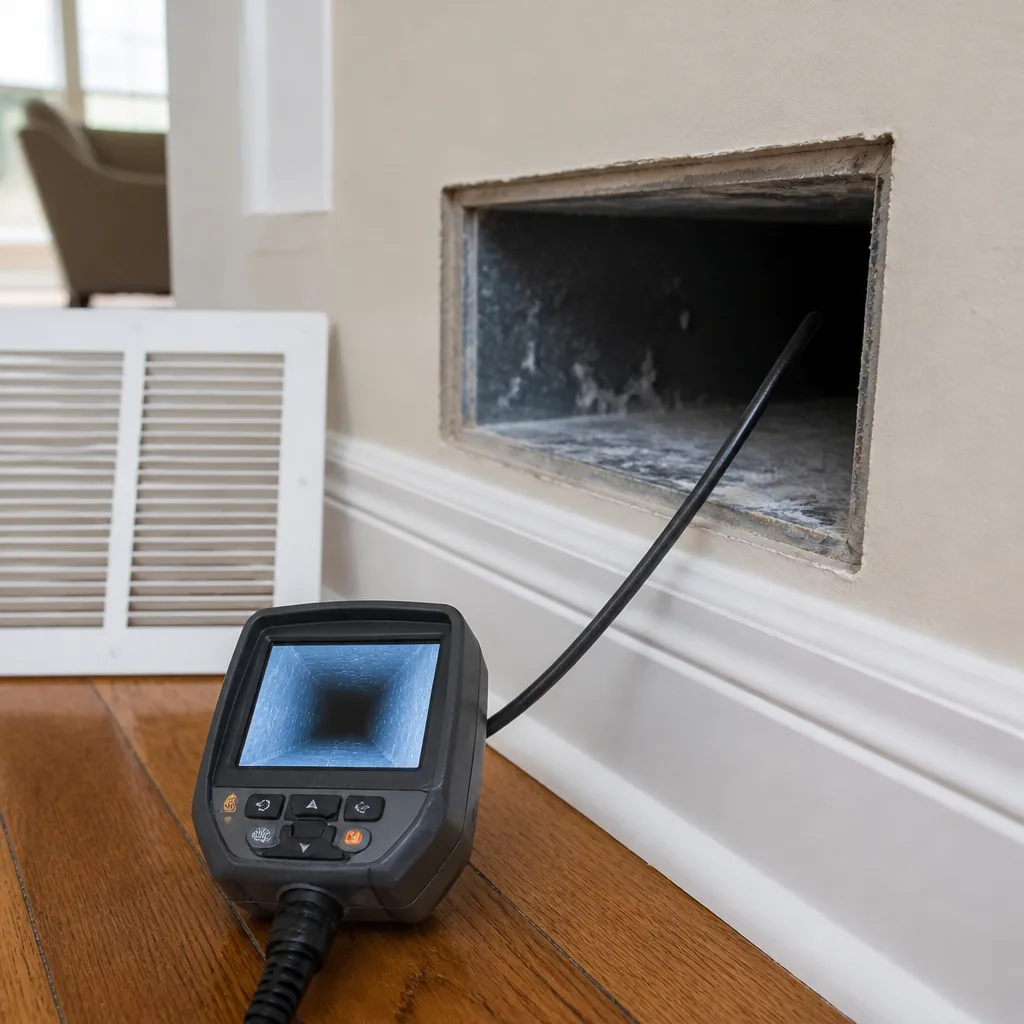 Camera inspection
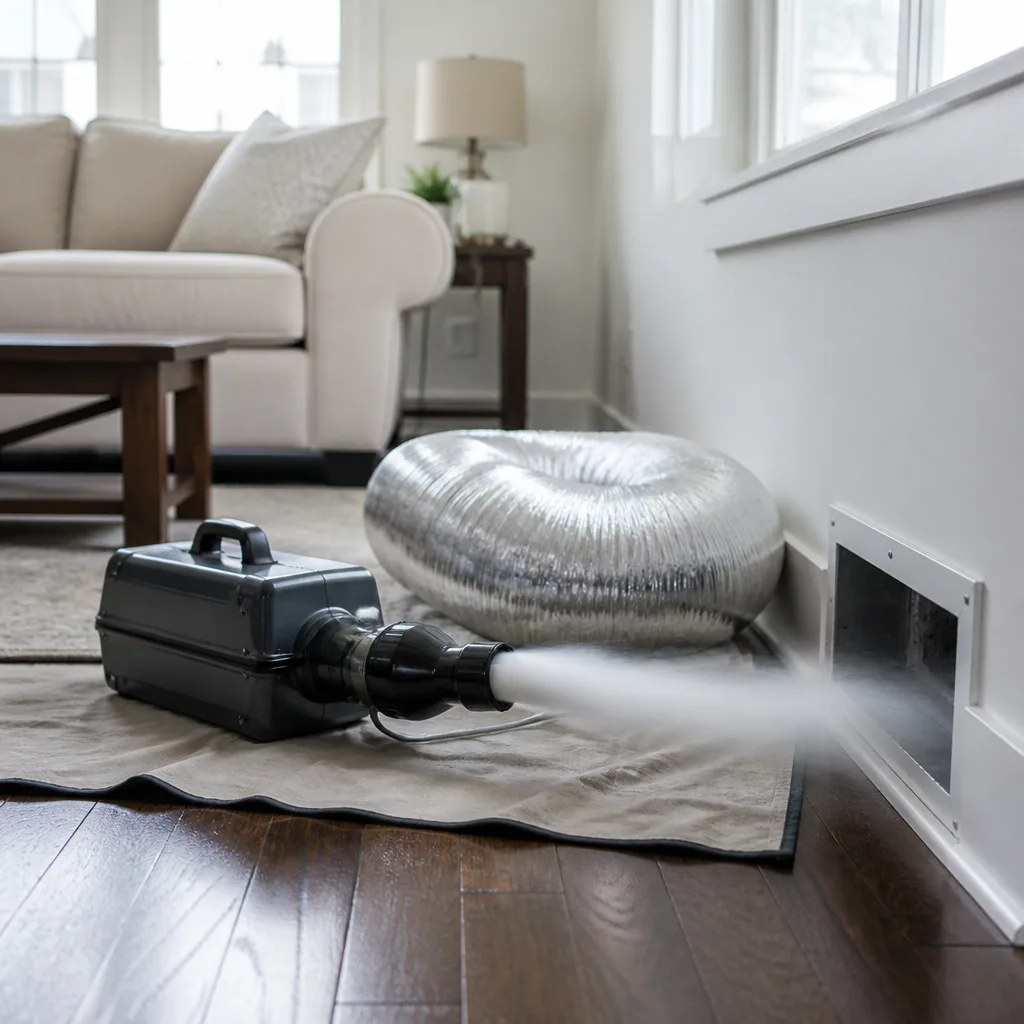 Sanitizing & deodorizing
Whole-system duct and dryer vent check with before-and-after photos - you see exactly what came out of your vents
That "$99 whole-house special" is a bait ad - the real number appears once they are in your hallway, or the "clean" is a shop-vac at the register. We photograph the inside of your ducts before and after instead.
Air Duct Cleaning Emergency Preparedness Guide for Bay Ridge Homes
After a kitchen fire, most Bay Ridge homeowners focus on the visible smoke damage on walls and ceilings. Meanwhile, the HVAC system ran during or after the event and pushed soot and combustion particulate into every duct-connected room in the house. That’s the contamination problem nobody sees coming. We’ve walked into Bay Ridge homes where the kitchen looked restored but the supply registers were still dusting black film across the living room every time the heat cycled. What follows is the protocol we walk homeowners through before an emergency happens: how flooding, fire, smoke, and mold events interact with your duct system, when to shut the system down, how to sequence cleaning against other restoration work, and how to document everything for an insurance claim. Bay Ridge sits on block after block of attached brick housing with finished basements and boiler-fed radiators or forced-air retrofits, and each of those details changes what an emergency does to your ductwork.
Quick Answer
The core answer: after any flood, fire, smoke, or mold event in a Bay Ridge home, the duct system should be inspected, cleaned, and sealed before normal occupancy resumes, and that work should come after structural drying and surface cleaning – not before. Shut off the HVAC immediately when water is present or when smoke or soot is still airborne, document conditions with photos and airflow readings for your insurer, and only hire restoration help that provides written scope, equipment lists, and verifiable contractor reports. Duct contamination after a major event is not a routine housekeeping issue; it’s a restoration step that determines whether damage stays contained or spreads through the whole house.
Styles & brands we work with
- Whole-home duct cleaning
- Dryer vent cleaning
- Camera inspection
- Sanitizing & deodorizing
Table of Contents
- Why Ducts Are the First Vector in a Home Emergency
- Post-Flood Protocol for Bay Ridge’s Basement-Heavy Housing
- Fire and Smoke Events: The Contamination Sequence
- Mold Remediation Trigger Points in Ductwork
- Documenting Duct Condition for Insurance Claims
- Vetting Emergency Contractors Under Pressure
- Treating Your Ducts as One Connected Air Pathway
- Building a Pre-Emergency Duct Preparedness Plan
Why Ducts Are the First Vector in a Home Emergency
Your duct system is a distribution network with a blower at one end and a dozen or more openings at the other. When something goes wrong in the house – water intrusion, smoke, fine particulate, mold spores – that network is the fastest way for contamination to reach rooms that were never directly affected. A basement flood in Bay Ridge doesn’t need to touch the second-floor bedrooms to put moisture into their air supply; a humid crawl of basement air drawn into a return can carry spores into every register on the floor above.
This is why treating ducts as an afterthought is so costly. The visible damage gets fixed, the house passes a walkthrough, and then weeks later the smell returns or a family member’s allergies worsen. We’ve seen this pattern repeatedly in Bay Ridge because the neighborhood’s housing stock concentrates so much below-grade space. Finished basements are common, mechanicals often live in that same space, and the supply and return runs frequently share corridors with laundry, boilers, and storage. When one of those spaces floods or smolders, the duct system is the room that never got inspected.
Three things make duct contamination distinctive:
- It’s invisible. Dust film, soot staining, or mold growth inside a duct run won’t show up in a room walkthrough. Only camera inspection and register-side observation reveal it.
- It recirculates. Unlike a wall that can be wiped down, a duct run keeps moving air past contaminated surfaces and depositing it in living spaces every time the system cycles.
- It’s a system, not a room. Cleaning one register doesn’t fix the trunk line feeding it. Full airway accountability is the only thing that actually restores the system.
If you haven’t had your system inspected in recent memory, the emergency guide below matters even more. Routine air duct cleaning is not the same as post-emergency restoration, but it establishes a baseline of what your ducts looked like in good condition – which is exactly what an adjuster wants to see when you file a claim.
Post-Flood Protocol for Bay Ridge’s Basement-Heavy Housing
The single hardest decision after a Bay Ridge basement flood is whether running the HVAC accelerates drying or accelerates contamination. The answer depends on where the water went, not how much water there was.
If water reached the mechanicals – the air handler, the boiler, the ductwork itself – shut the system down at the breaker immediately. Do not run it to “dry things out.” A system that’s wet on the inside will move humid air through the entire house, and if basement floodwater (which can carry sewer backflow in many Bay Ridge blocks) touched the duct interior, running the blower is how that contamination reaches the bedroom air supply. The rule is blunt: no HVAC operation until a professional has confirmed the ducts are dry and clean.
If water stayed outside the duct system and the mechanicals are dry, running the system on fan-only can help dry the structure – but only with exterior windows managed properly and only after the ducts themselves are confirmed dry. Humidity drawn into a return from a wet basement and pushed through cool duct interiors is exactly how condensation and mold begin inside a metal run.
Here’s the protocol we walk Bay Ridge homeowners through:
- Kill power to the HVAC at the breaker if water is anywhere near the air handler, boiler, or duct joints. Note the time.
- Photograph everything – water line on the basement wall, register faces, air handler cabinet, and any visible contamination at the return grille.
- Extract standing water and start structural drying with dehumidifiers and air movers. This comes before duct work, always.
- Call your insurer and describe the duct system as a separate line item. Flooded ductwork is a claim category many homeowners forget to mention.
- Schedule a post-drying duct inspection once the structure reads dry. Moisture meters and camera inspection come first; cleaning comes after.
- Clean, then seal. Cleaning without sealing leaves gaps and joints that allow re-entry; HVAC cleaning without duct repair leaves the same problem.
Bay Ridge’s attached housing adds one more wrinkle: shared wall cavities between rowhouses. If your neighbor’s basement flooded and yours didn’t, moisture can still migrate through adjoining framing. A humidity reading in your duct returns is worth taking after any neighboring water event.
Fire and Smoke Events: The Contamination Sequence
Fire and smoke are harder than water because the contamination is airborne and cumulative. A kitchen fire that gets knocked down in ten minutes can still distribute three distinct contamination layers through a duct system:
- Soot – fine particulates that attach to duct walls, register faces, and the inside of the air handler. Soot deposits are acidic and will pit metal over time.
- VOCs and combustion byproducts – invisible, odor-bearing compounds that soak into porous surfaces and recur after surface cleaning if the ducts are left alone.
- Suppression agent residue – dry chemical or water-mist powders leave a fine alkaline film that clings to duct interiors and reacts with moisture.
The sequencing matters more than the cleaning method. Duct cleaning must come after structural drying and surface cleaning, not before. If you clean ducts first while soot is still settling on walls and ceilings, the newly cleaned system simply gathers it again. If you clean surface and structure first, the ducts get cleaned once and stay clean.
Here’s the sequence we recommend for a Bay Ridge home after a fire event:
- Ventilate and dry the structure. Firefighting water often causes as much humidity load as the flood scenario above.
- Complete surface soot removal on walls, ceilings, and contents – professional remediation, not a shop vac and a sponge.
- Inspect the air handler and coil for soot film. A coil that’s been circulated with combustion particulate often needs cleaning beyond what a filter change can address.
- Clean the entire duct system with rotary brush and vacuum equipment. Consumer vacuums don’t move enough air through a duct run to dislodge adhered soot.
- Install containment filtration during the work so dislodged contaminants don’t drop back into the rooms you just cleaned. Abatement Technologies air filtration equipment is what we use for this stage.
- Sanitize the duct interior with a product formulated for HVAC surfaces – Guardsman treatments are part of our standard post-fire protocol.
- Replace the filter and confirm airflow before returning the system to normal operation.
If the fire was in or near the HVAC closet, ask for a camera inspection of the trunk line before assuming the system is restorable. Soot can pool in horizontal runs where ductwork sags.
Mold Remediation Trigger Points in Ductwork
Not every humidity event requires mold remediation of the ducts. But there are clear trigger points where cleaning alone is not sufficient, and Bay Ridge’s basement-heavy housing crosses them more often than you’d think.
The threshold isn’t a single number – it’s a combination of three markers:
- Sustained elevated humidity. When relative humidity in the duct system stays high for an extended stretch after a water event, condensation begins to form inside cooler runs. That moisture is the growth condition.
- Visible growth on registers or the air handler cabinet. Spots, staining, or discolored film inside the return plenum or around a register frame are the first visible indicators.
- Musty odor recurring after surface cleaning. If the smell comes back every time the system runs, the source is inside the duct run, not the room.
When any of those three are present, duct cleaning alone gets the visible layer out but doesn’t address the growth substrate. The scope has to expand:
- Containment – seal the duct system at registers during remediation so airborne spores don’t migrate to freshly cleaned rooms.
- Filtration during the work – HEPA-grade filtration at the negative pressure side of the work zone.
- Mechanical cleaning of every run – rotary brush and high-powered vacuum, not surface spraying.
- Antimicrobial treatment of the cleaned duct interior, followed by moisture sealing.
- Repair and sealing of gaps – a duct that leaks at a joint re-contaminates the same run in a single heating season.
Bay Ridge’s summer humidity plus the standard practice of venting a basement dryer into the same below-grade zone can push a duct system over the growth threshold without any obvious water event. If the basement smells damp and the dryer runs daily, mold inspection should be part of a routine air duct cleaning Bay Ridge assessment, not a fallback after visible growth appears. Dryer vents are a separate but parallel risk; see our dryer vent cleaning page for how lint and moisture interact in that same below-grade space.
Documenting Duct Condition for Insurance Claims
Adjusters don’t pay for a claim they can’t see. Duct work gets undervalued in restoration claims because homeowners submit a photo of a flooded basement and assume the duct contamination is obvious. It isn’t – not to a claims adjuster reviewing fifty files that week. What gets a duct line item approved is evidence with structure.
Here’s what an adjuster actually needs, based on the reports we’ve seen approved versus denied:
- Before-cleaning photographs of the interior duct runs – not just the register faces. Camera inspection images showing soot, moisture, or growth inside a trunk line are the strongest single evidence item.
- Register-by-register photographs with labels – supply and return, each one identified by room. Adjusters use these to compare visible damage against the claim description.
- Airflow readings before and after – a measurable change supports both the contamination claim and the restoration scope.
- Moisture meter readings with date and location noted, especially for a post-flood claim.
- HVAC equipment model and serial numbers – these tie the duct system to the system the claim lists.
- A contractor report with equipment listed – specify the rotary brush and vacuum equipment, containment filtration, and any sanitizing product used. Vague reports get questioned; specific reports move.
- A written cleaning scope that separates cleaning, sealing, and air quality work as line items.
One practical note: adjusters respond well to consistency. If your scope of work references a “full duct cleaning” but the contractor report only documents half the runs, the claim gets questioned. The full air pathway – supply, return, air handler interior, and any duct repair and sealing – has to be documented as a single system-wide scope.
Vetting Emergency Contractors Under Pressure
After a weather event in the Bay Ridge area, out-of-state and out-of-neighborhood crews appear quickly. Some are legitimate; some aren’t. The difference usually comes down to what they can show you in writing before they ask for a deposit. Here are the questions that separate the two, and the answers that should raise flags.
- “Can you show me your equipment list?” Legitimate duct work runs on rotary brush and high-powered vacuum systems. A crew showing up with a shop vac and a mop isn’t doing duct work – they’re doing surface work.
- “What filtration do you use during the cleaning?” Containment is not optional. If they can’t name the HEPA-grade filtration they run during service, contamination is going into your rooms during the work.
- “Can I see a camera inspection of my ducts before you quote?” A quote for duct cleaning without an inspection is a guess. A quote after inspection is a scope.
- “Is the estimate written, and is the price per system or per vent?” Per-vent pricing is a common way cheap quotes turn into large invoices once the technician is inside. One flat price per system, agreed before work starts, is the standard a legitimate company holds.
- “What’s the address on your insurance certificate?” Local professional, local paper trail.
- “Can I see the before-and-after photos of the work?” A contractor who doesn’t document their own work – or who won’t share photos of your ducts once cleaned – is not someone you want inside your system.
- “Will you provide a written contractor report?” If the answer is a verbal summary, the answer is no.
One more question we recommend: “What’s your plan for the air handler itself?” A crew that cleans duct runs but leaves the air handler interior and coil untouched has only done part of the job. The systems we run – Rotobrush, Nikro, Abatement Technologies – are the same class of equipment used in remediation contexts precisely because full-system cleaning is not a job for lighter tools. Our technicians have up to 15 years of experience with those systems, and the questions above are the ones we expect homeowners to ask us just as much as anyone else.
Treating Your Ducts as One Connected Air Pathway
An emergency forces the point that duct cleaning companies avoid: the duct system is one pathway, from intake to exhaust, and it either gets restored as a whole or it doesn’t. Cleaning a contaminated trunk line without sealing the joints that let air bypass the filter puts the dirt back in the same run. Cleaning the ducts without looking at the coil leaves the biological load in the air handler. Cleaning the air handler without addressing the dryer vent that’s been feeding lint and moisture into the basement leaves the moisture source in place.
That’s why our work is scoped as five connected services:
- Air duct cleaning – the whole trunk system, supply and return, with rotary brush and vacuum equipment.
- Dryer vent cleaning – addressed as a standalone fire-risk reduction, and treated as part of the air pathway, not a separate convenience.
- HVAC cleaning – the air handler, coil, and plenum, where contamination concentrates and re-enters the ducts.
- Duct repair and sealing – closing gaps and joints so the cleaned system stays clean and the energy loss stops.
- Air quality and sanitizing – filtration and humidity products that layer onto a restored system, from Honeywell and Aprilaire, installed in the same visit.
After an emergency, this sequence matters. Clean first. Then seal. Then upgrade filtration if the home’s air quality history calls for it. In Bay Ridge, where basement finishing and boiler closets put the air handler within a few feet of moisture sources, we typically recommend sealing and filtration upgrades together as the last step of post-emergency work rather than cleaning as a standalone line item.
Building a Pre-Emergency Duct Preparedness Plan
You can’t prevent a basement flood or a kitchen fire, but you can make sure the recovery doesn’t get derailed by ductwork. A preparedness plan is worth putting together now, in a calm week, while you have time to get quotes and read equipment lists.
- Locate your HVAC shutoff. The breaker box label, the disconnect at the air handler, and the boiler switch should all be known to every adult in the household.
- Photograph your system in good condition. Register faces, air handler label with model and serial, and duct access points. These become the “before” in a claim.
- Schedule a baseline duct inspection with camera documentation. This is the single most useful piece of preparation because it establishes what your ducts looked like when dry and clean.
- Keep filter sizes written down and a spare on hand. After an emergency, filter changes happen more often than usual, and a wrong-size filter compromises the air handler.
- Know your insurer’s duct claim line item before you file. Call and ask how they handle duct contamination after water and fire events.
- Save the equipment questions from the vetting section above. Having them already in hand keeps a panicked day from turning into a bad hiring decision.
- Plan for dryer vent cleaning on a schedule. Bay Ridge’s below-grade laundry rooms concentrate lint in a small space, and a blocked dryer vent compounds any fire event that does occur.
A preparedness plan is not a maintenance contract and it doesn’t change what an emergency will cost. What it does is give you a documented baseline, a known list of questions, and a call list that isn’t being assembled in the middle of a crisis.
Common Mistakes to Avoid
- Running the HVAC to “dry out” a flooded basement. If water reached the duct system, running the blower pushes contaminated air through the entire house. Shut it off at the breaker first, then dry the structure.
- Cleaning ducts before structure is dry. Post-fire and post-flood, ducts cleaned first simply gather the soot or moisture still settling in the rooms. Sequence drying and surface cleaning first, duct cleaning second.
- Accepting a per-vent quote. Per-vent pricing is the most common bait-and-switch format in duct work. Ask for one flat price per system, in writing, before work starts.
- Skipping camera inspection before the quote. A quote without inspection is a guess. Camera images are also what your adjuster will ask for, so getting them early helps twice.
- Treating sanitizing as a substitute for cleaning. Spraying a duct run doesn’t remove soot, moisture, or mold substrate. Sanitizing is a step after mechanical cleaning, not a replacement for it.
- Ignoring the air handler. Many Bay Ridge homes have an air handler within a few feet of a basement moisture source. Cleaning the ducts and skipping the coil leaves the bigger contamination load in place.
- Hiring on price and a folding sign. After a weather event, out-of-area crews appear fast. The vetting questions above are the fastest filter – if a crew can’t name their equipment, don’t let them in.
See the difference
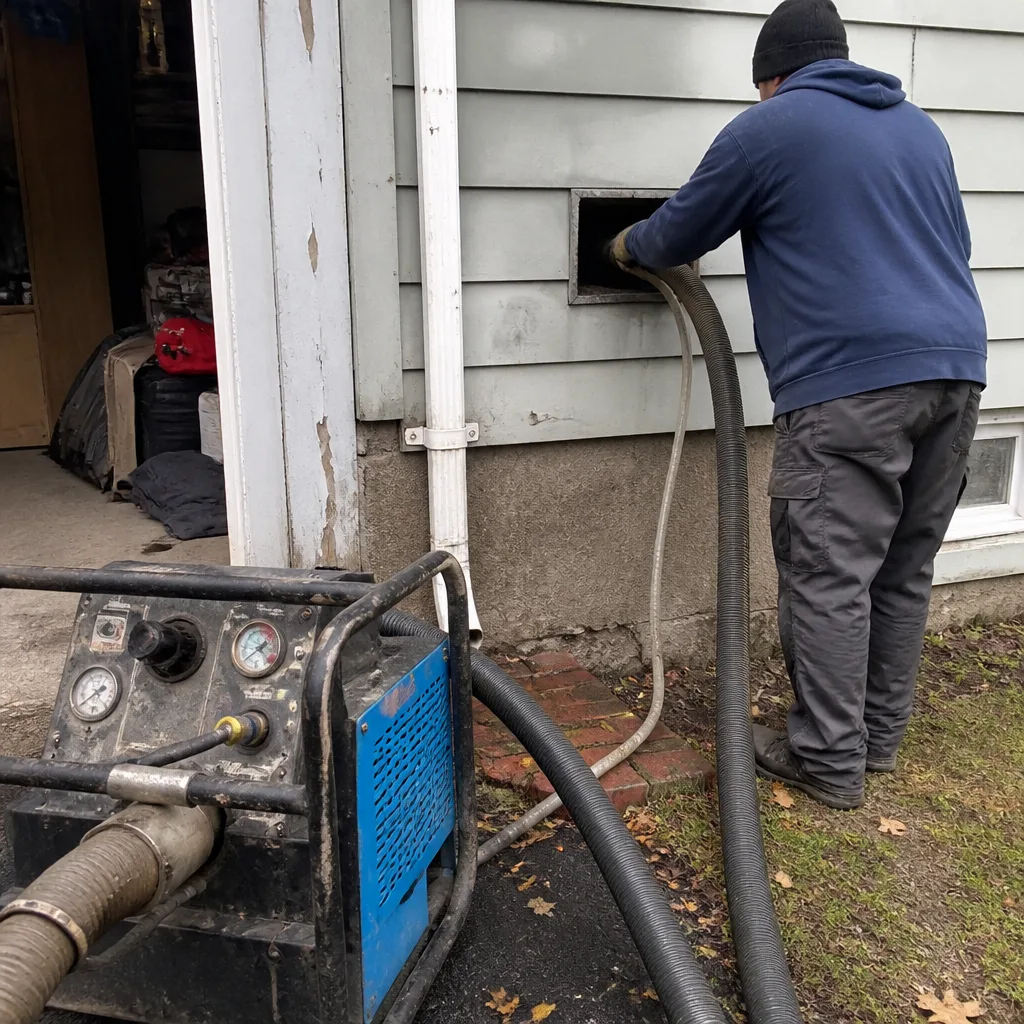 Before
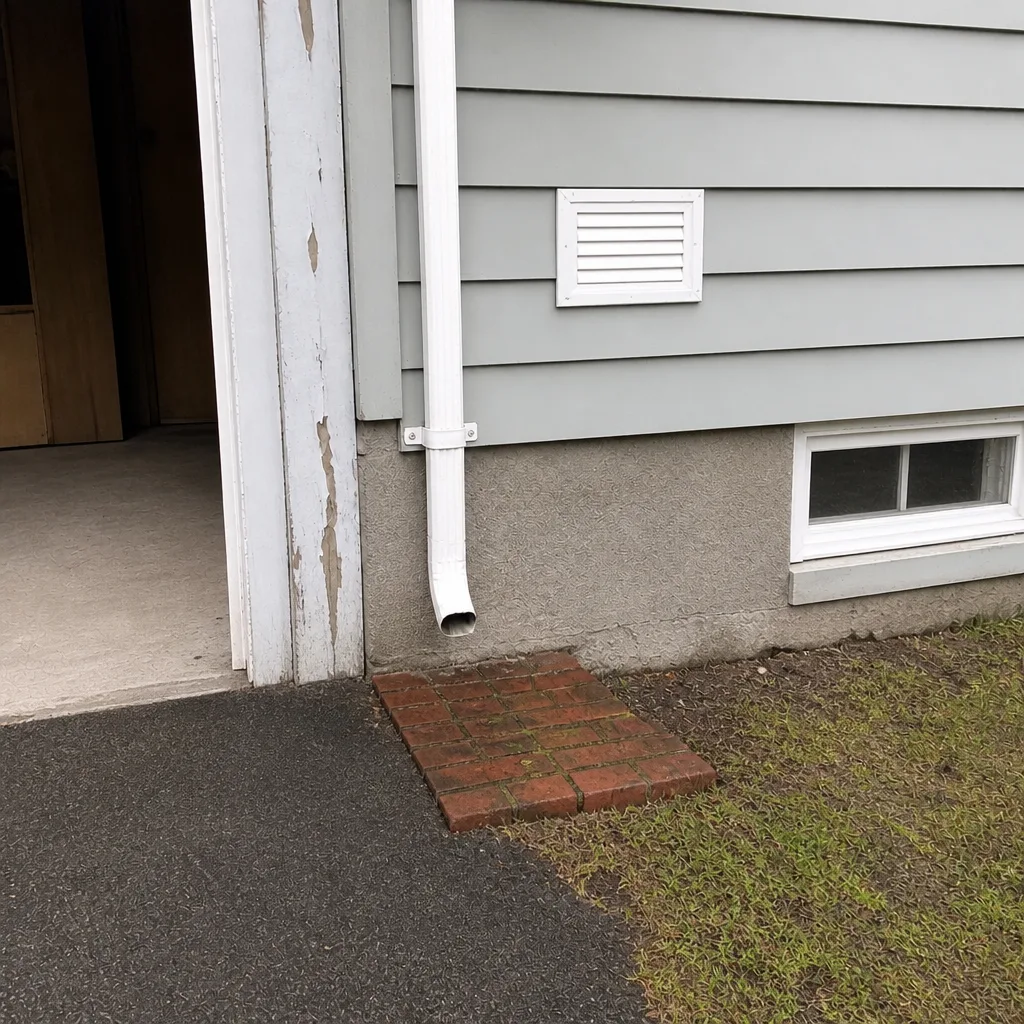 After
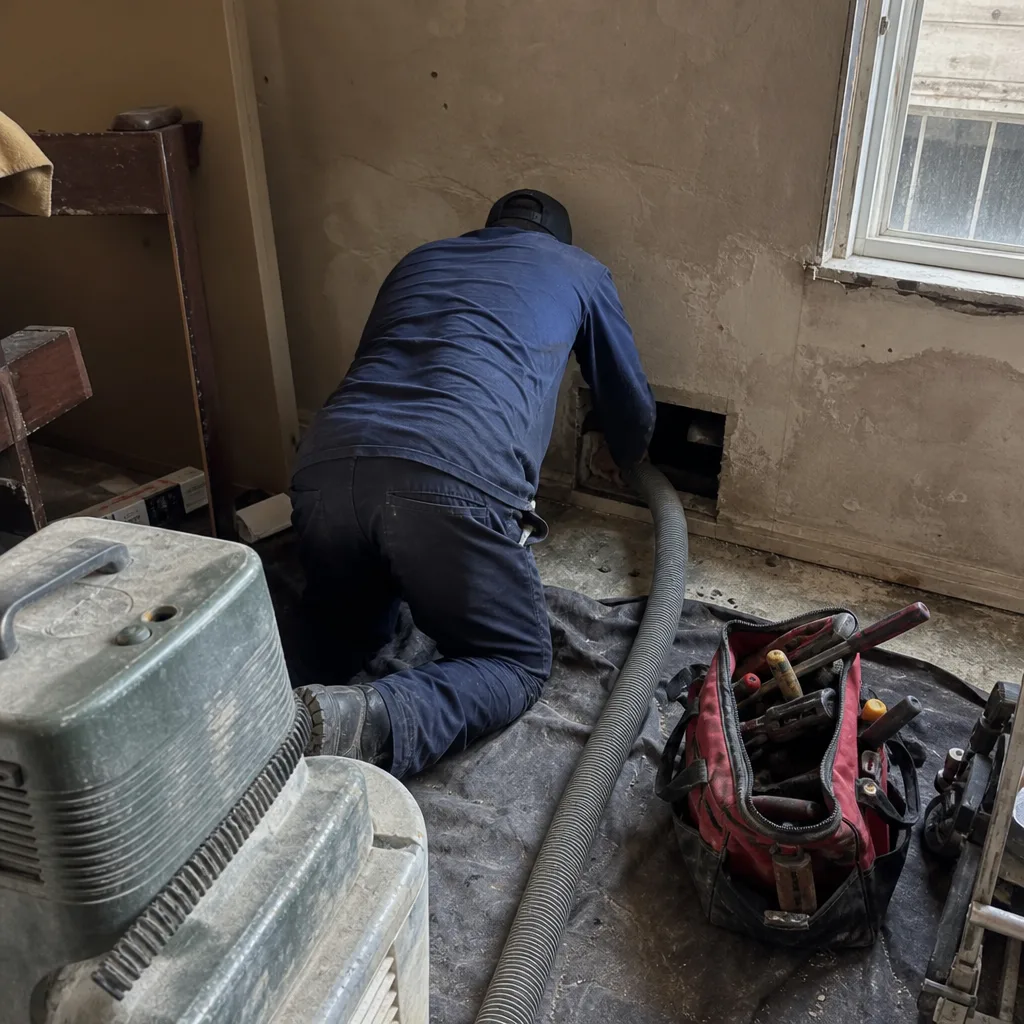 Before
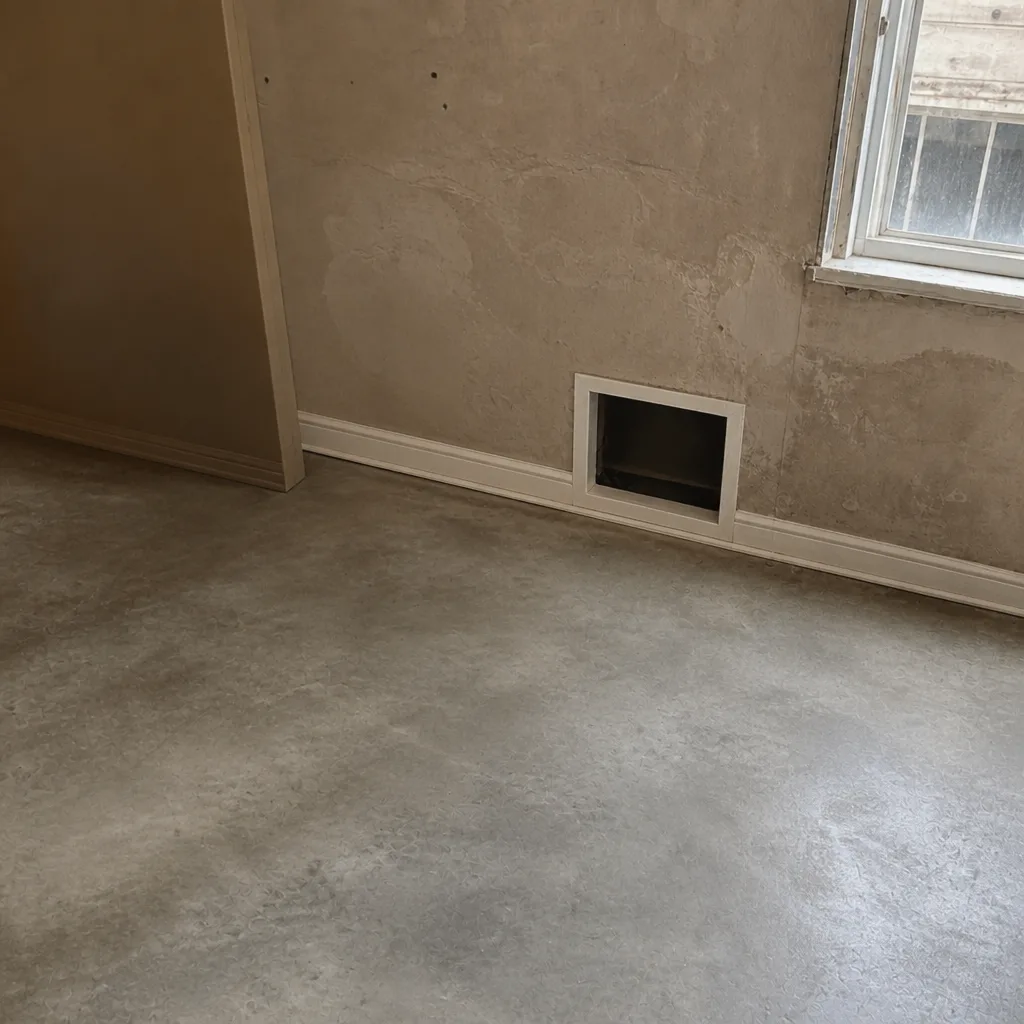 After
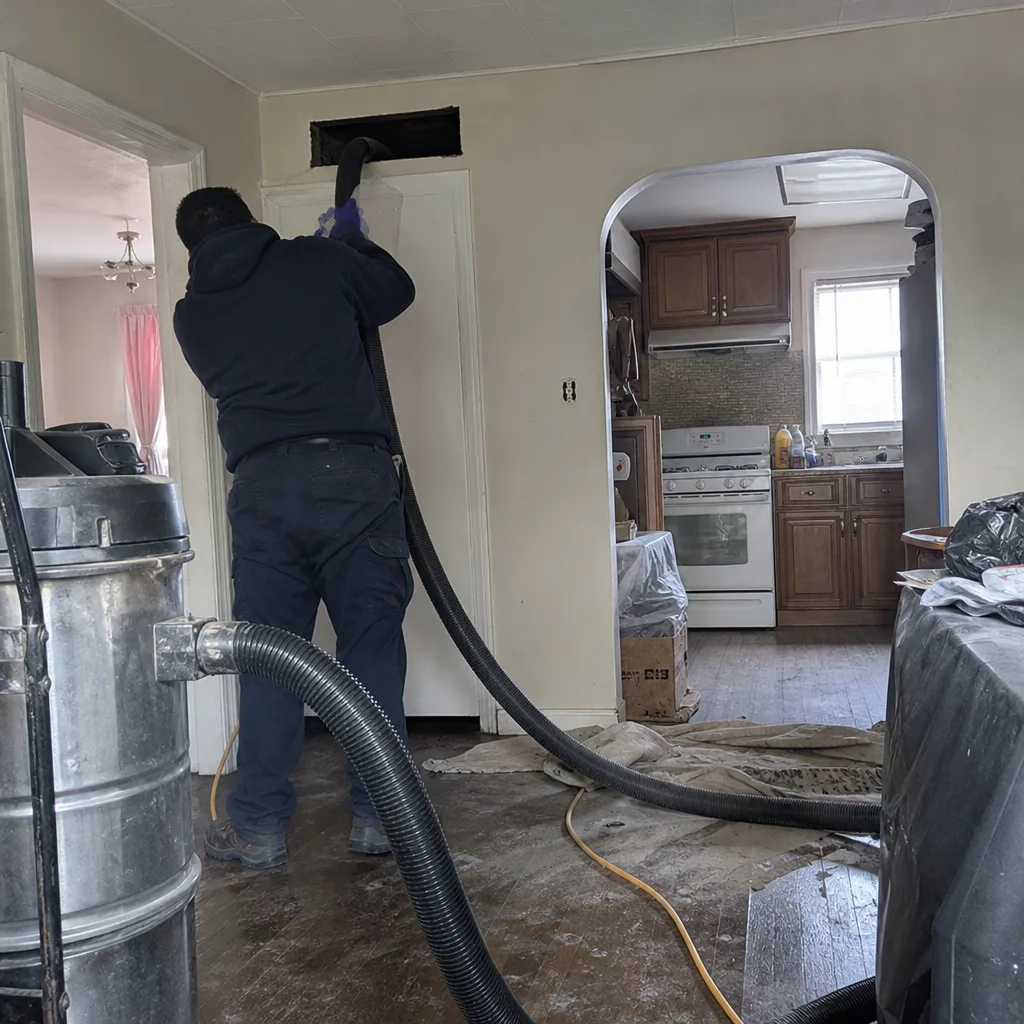 Before
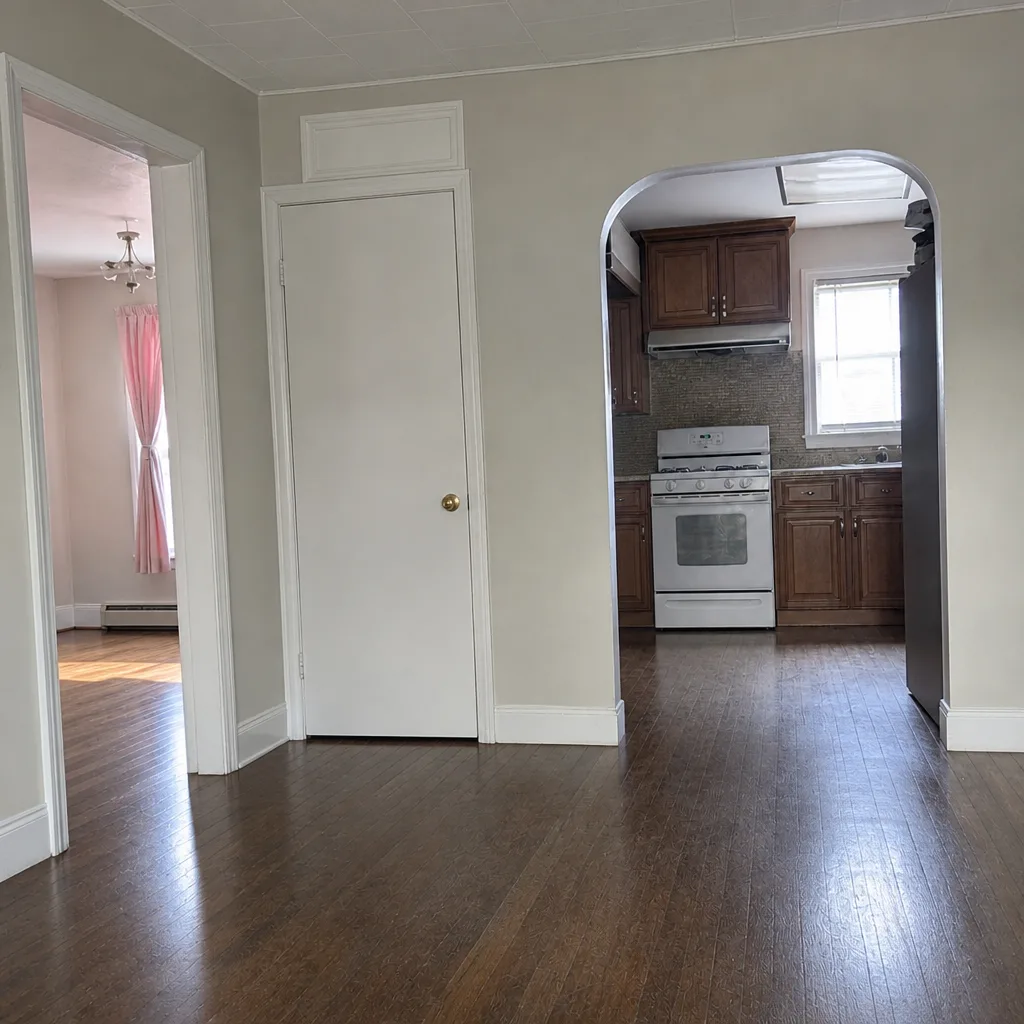 After
When to Call a Professional
Call a professional duct cleaning and restoration team any time water reached the ductwork or the air handler, whenever smoke or soot circulated through the system during a fire event, when musty odor recurs after surface cleaning, or when a humidity event has pushed basement readings high enough that mold growth is possible. We’re also called when a homeowner isn’t sure what happened – the “we don’t know if the ducts are affected” scenario is a legitimate reason to schedule an inspection rather than guess. Air Duct Cleaning Bay Ridge offers free estimates in Bay Ridge – call (877) 938-5572. We answer 24/7. Fast dispatch from 7am to 7pm, Sunday through Friday. If you’re calling outside dispatch hours, your request is booked into the next opening, Sunday through Friday, 7am to 7pm. A written estimate gives you a flat price per system before any work starts, with before-and-after photos of your own ducts when the job is complete.
Frequently Asked Questions
Ducts should be inspected once the structure reads dry on a moisture meter, and cleaned shortly after. Running the HVAC before that point pushes moisture through the system. Structural drying comes first, duct inspection second, cleaning third – typically within the same restoration window. Call (877) 938-5572 for a free estimate.
Coverage depends on your policy and on whether the contamination is tied to a covered event. Duct cleaning is often covered as part of a water or fire claim when documented properly – camera images, register-by-register photos, airflow readings, and a written contractor report. Call your insurer early and ask about the duct line item specifically. Call (877) 938-5572 for pricing on a documented scope.
Low quotes are usually per-vent teaser pricing that grows once the technician is inside, or they reflect surface cleaning rather than full-system cleaning. The difference is in the equipment and the scope. A legitimate quote covers the whole system at one flat price, includes camera inspection, and specifies rotary brush and vacuum equipment and containment filtration. Per-vent pricing is the format to walk away from. Call (877) 938-5572 for a flat quote with no per-vent pricing.
You should see the before-and-after photos of your own ducts, the equipment list, and a written report after the work. A crew that won’t share photos of your own system hasn’t given you a way to verify the work. Ask for the photos and the report before you pay. Call (877) 938-5572 for an estimate that includes both.
No. Running the fan after a fire pushes soot and combustion particulate from the affected room into every duct-connected room in the house. Shut the system off, ventilate manually with windows and fans where safe, and let a professional inspect the ducts once soot has been removed from surfaces. Call (877) 938-5572 for a post-fire inspection.
For most Bay Ridge homes, cleaning every few years is reasonable, with more frequent cleaning after any major event, renovation, or recurring musty odor. Basement humidity in attached housing pushes the recommended interval shorter than in drier climates. The right answer is inspection-driven rather than calendar-driven. Call (877) 938-5572. We answer 24/7, with fast dispatch from 7am to 7pm, Sunday through Friday.
The Bottom Line
Emergency preparedness for your duct system comes down to a short list. Know where your HVAC shutoff is. Shut the system down the moment water or smoke reaches it. Sequence structural drying and surface cleaning before duct cleaning, never after. Document everything with camera inspection and labeled photographs, because that’s what actually approves a claim. And vet contractors with equipment questions, not price comparisons – per-vent quotes are the format that turns cheap into expensive. Bay Ridge’s basement-heavy, attached-rowhouse housing makes each of these steps matter more than in a typical suburban home, because the duct system and the moisture sources sit close together. Whether you’re planning ahead or recovering from an event, we’re one call away. Air Duct Cleaning Bay Ridge offers free estimates and one flat price per system, agreed before any work starts, with before-and-after photos of your own ducts when the job is done.
Call (877) 938-5572 for a free estimate. We answer 24/7. Fast dispatch from 7am to 7pm, Sunday through Friday.
Written by the team at Air Duct Cleaning Bay Ridge.