
Last updated November 22, 2026
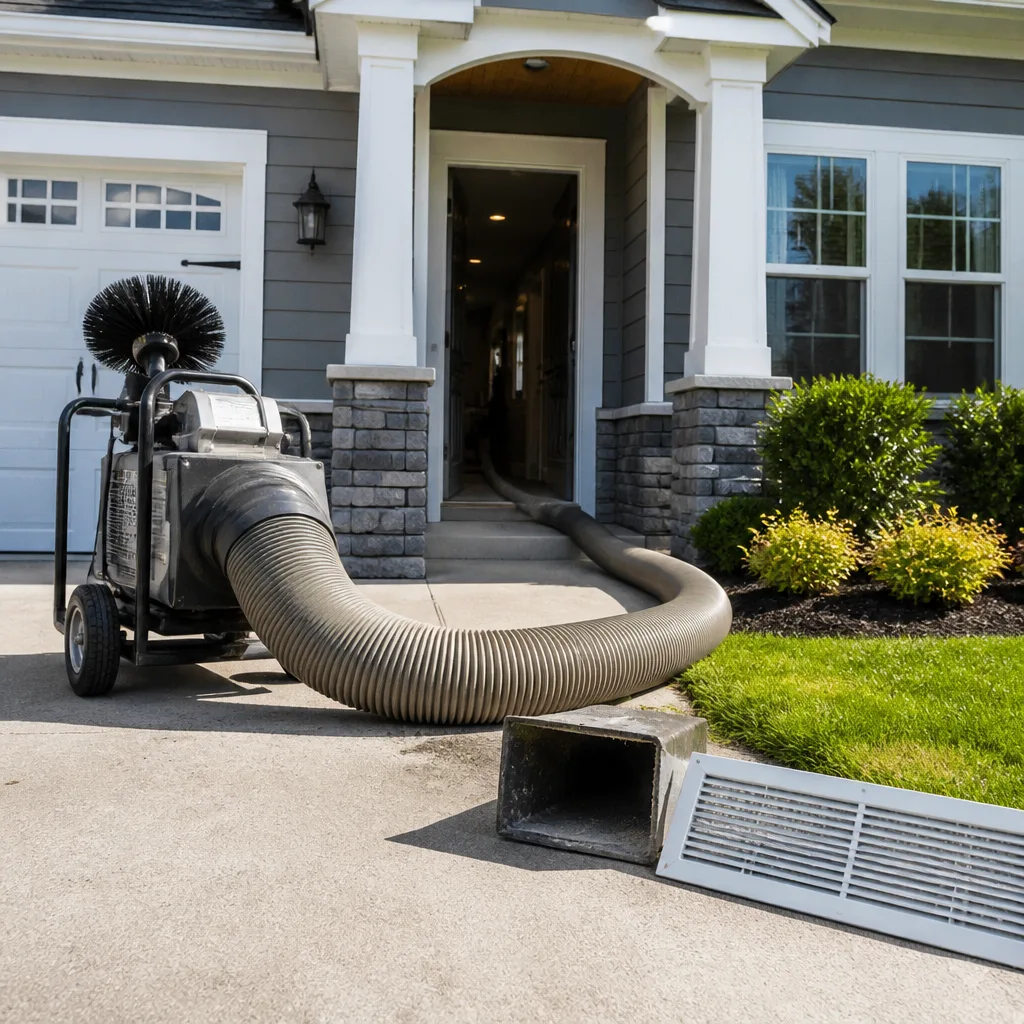 Whole-home duct cleaning
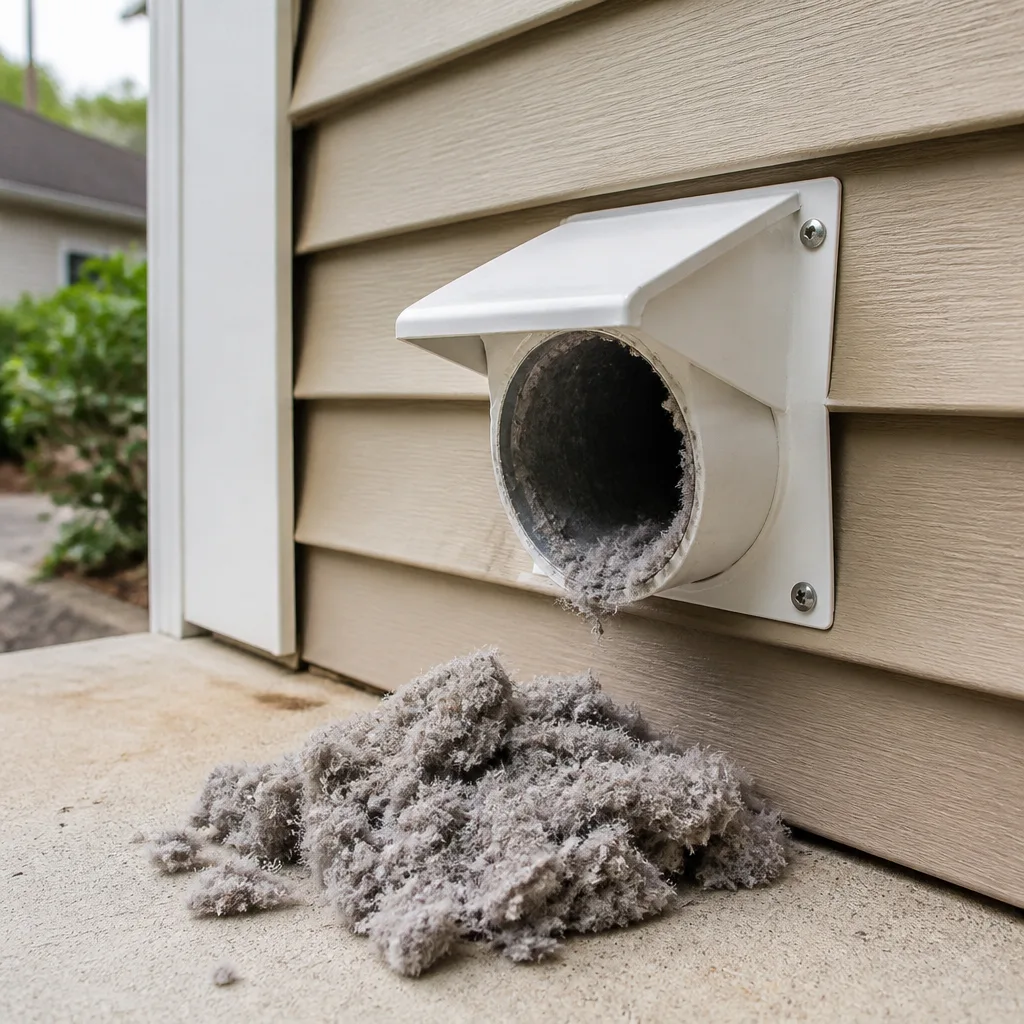 Dryer vent cleaning
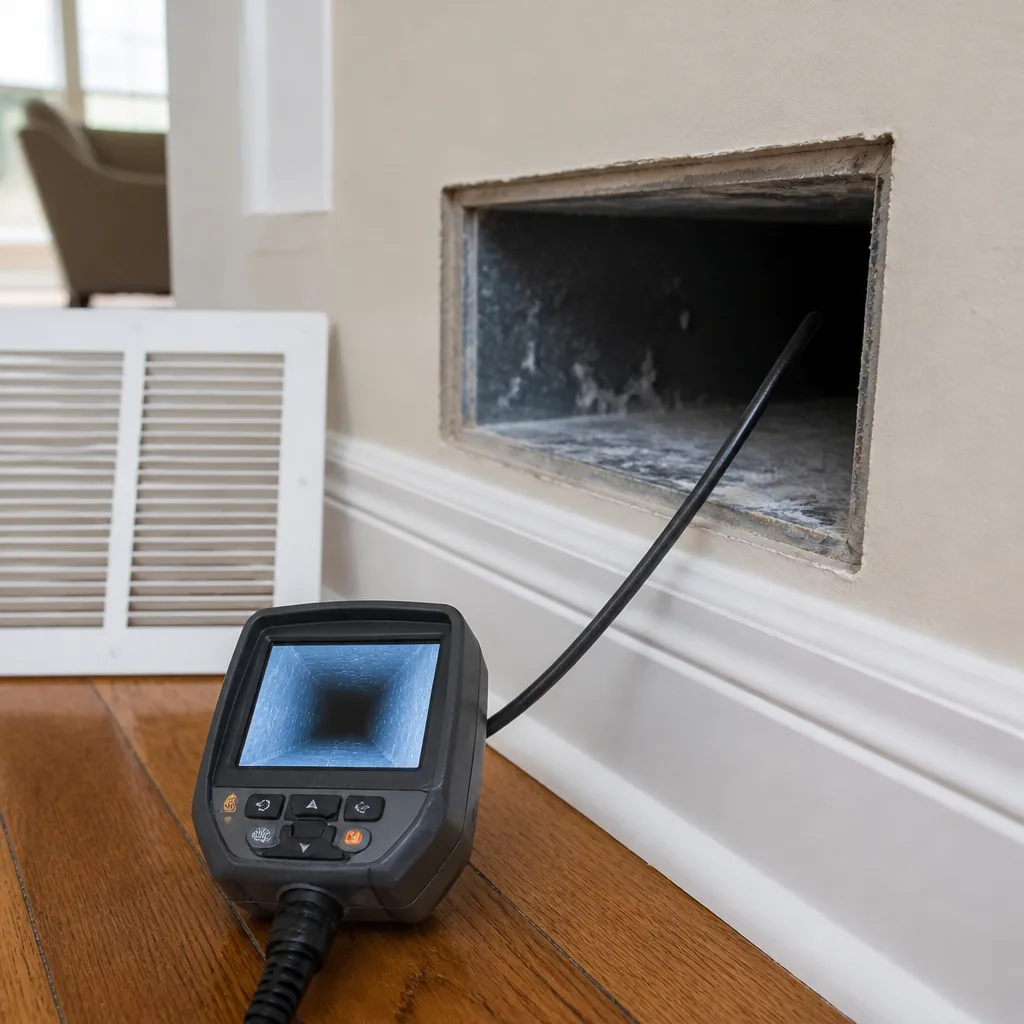 Camera inspection
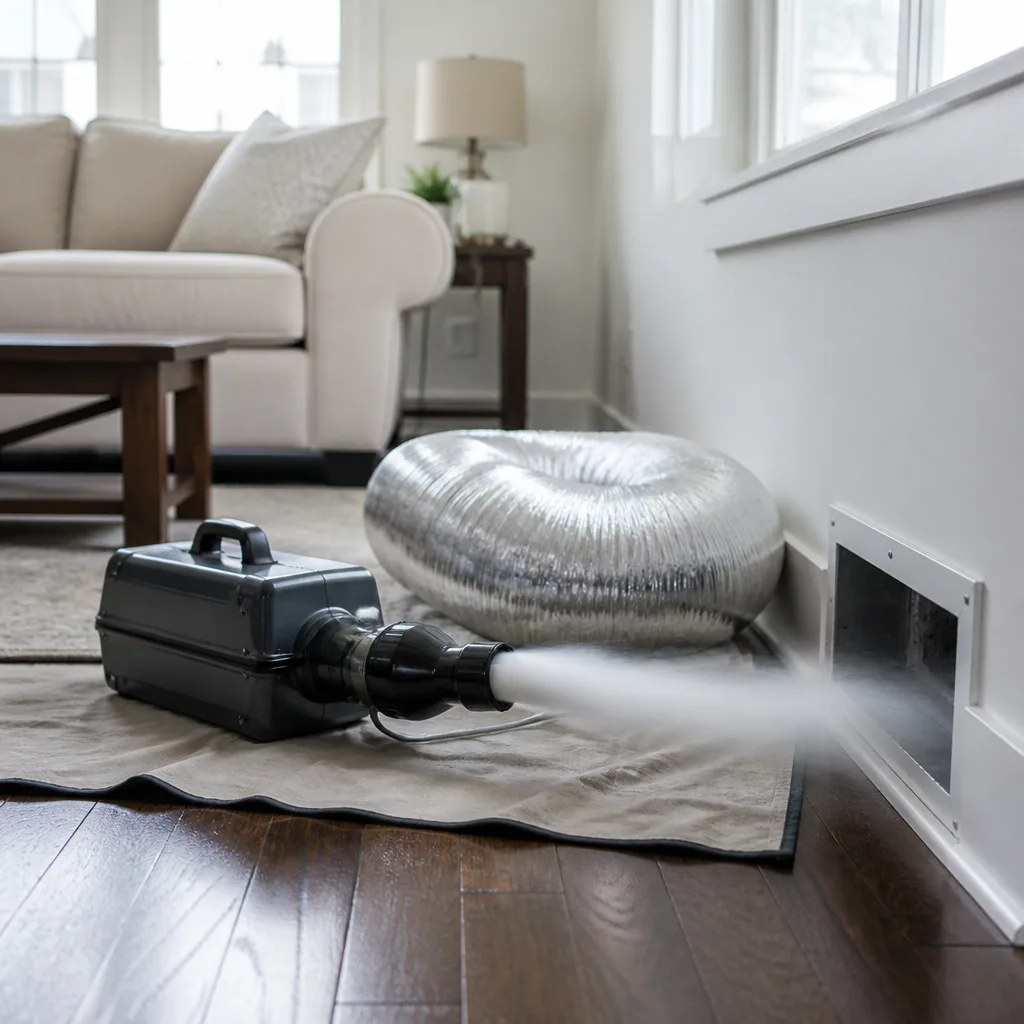 Sanitizing & deodorizing
Whole-system duct and dryer vent check with before-and-after photos - you see exactly what came out of your vents
That "$99 whole-house special" is a bait ad - the real number appears once they are in your hallway, or the "clean" is a shop-vac at the register. We photograph the inside of your ducts before and after instead.
Air Duct Cleaning Troubleshooting in Bay Ridge: Common Problems and How to Fix Them
If your ducts were cleaned recently and the musty smell is already creeping back, the cleaning probably didn’t fail. It likely solved the wrong problem. Most duct complaints in Bay Ridge fall into a handful of categories – contamination, leakage, airflow restriction, or equipment fault – and each one shows up with a different symptom. Clean a leaky system and the debris comes right back through the same breach. Treat a smell with sanitizer and skip the moisture source and the smell returns. This guide maps symptoms to their mechanical causes so you can describe what’s happening in your system accurately, decide what’s worth checking yourself, and avoid paying twice for the same problem.
Quick Answer
Most recurring duct problems in Bay Ridge are caused by one of four things: debris that was never fully removed, leaks and disconnected joints that pull contaminated air back into the system, undersized or blocked returns that starve airflow, or moisture feeding mold growth inside the ductwork. Cleaning helps only when the problem is actual contamination; sealing, repair, or airflow correction is the fix for the rest, and a camera inspection is usually what tells you which one you’re dealing with.
Styles & brands we work with
- Whole-home duct cleaning
- Dryer vent cleaning
- Camera inspection
- Sanitizing & deodorizing
Table of Contents
- Symptom-to-Cause Matrix: What Your Ducts Are Telling You
- Cleaning Problem vs. Sealing Problem: How to Tell the Difference
- Why Bay Ridge Buildings Get Recurring Contamination
- Musty Odors That Come Back After Cleaning
- Weak Airflow and Uneven Heating: The Return-Side Problem
- Rattles, Whistles, and Bangs: When Noise Points to a Duct Problem
- DIY-Diagnosable vs. Camera Inspection
- Red Flags That a Previous Cleaning Was Done Wrong
Symptom-to-Cause Matrix: What Your Ducts Are Telling You
The fastest way to narrow down a duct problem is to match the symptom to the system component most likely to produce it. Dust and odors point toward contamination or a breach. Airflow complaints point toward the return side or a crushed run. Noise points toward pressure or physical contact. Get the category right and the inspection gets short.
- Musty, earthy smell from vents: most often moisture in the duct system feeding microbial growth, sometimes on the interior liner of flex duct.
- Dust settling quickly on registers and furniture: a breach downstream of the air handler pulling attic, basement, or wall-cavity air into the supply.
- Weak airflow at registers furthest from the air handler: undersized return, crushed flex run, or a closed damper that was never reopened.
- Uneven heating or cooling room to room: duct leakage in one branch or an unbalanced return path.
- Whistling at a register: static pressure too high, usually from a restricted return or an undersized filter.
- Banging or popping when the system cycles: flex duct that’s undersized or poorly supported flexing under pressure changes.
- Chemical or smoky smell: oil-to-gas conversion residue, a failing heat exchanger, or an appliance exhaust issue – shut the system down and call a professional.
- Visible debris blowing out of a register: heavy contamination or a failed connection inside the wall or ceiling.
Any two or more symptoms from the same group together point to the same underlying cause. That’s when a real diagnosis is worth more than another cleaning. If you’re not sure which group you’re in, start with air duct cleaning as a diagnostic step – a professional assessment will tell you whether cleaning alone will help or whether you need sealing first.
Cleaning Problem vs. Sealing Problem: How to Tell the Difference
This is the single most important distinction in duct troubleshooting, and it’s the one most homeowners skip. Cleaning removes contamination. Sealing removes the path that lets contamination back in. If your ducts leak, cleaning them is a temporary fix at best – the system keeps pulling unfiltered air from unconditioned space and redepositing debris.
Here’s how to reason through it:
- Ask what came back. Dust and debris returning within months means leaks. Odor returning means moisture. Both returning means you have both problems.
- Check the unconditioned side. If your return runs through a basement, crawlspace, or attic with visible dust or moisture, contaminated air is being drawn into the system there.
- Look for disconnected joints. Flex duct that’s pulled loose at a boot or collar, sagging runs, or tape that’s given up are all failure points.
- Recognize that sealing is not cleanup. Mastic and proper mechanical fastening are the fix, but debris inside a leaky run needs to come out before or alongside the seal.
- Sequence them right. As a rule: inspect, clean, then seal. Cleaning after sealing can disturb the new seal if it’s done aggressively; sealing after cleaning means the debris is gone before the source is closed.
Duct Repair & Sealing exists as a service line for exactly this reason. A cleaning-only company can’t fix a leak, and a general HVAC contractor often won’t clean the run after sealing it. The two jobs belong together. Call (877) 938-5572 and describe the symptom – we can tell you on the phone which category you’re likely in before anyone shows up.
Why Bay Ridge Buildings Get Recurring Contamination
Bay Ridge’s housing stock drives a predictable set of duct problems. The row houses and early-to-mid-century apartment buildings that define the neighborhood were built long before flex duct became standard, so a lot of them got retrofitted in the 1970s and 1980s – and those retrofits are now forty to fifty years old. Flex duct has a realistic service life. Someone installed it quickly, it got sealed loosely if at all, and it’s been pulling from the wrong spaces ever since.
The other factor is fuel conversion. Many Bay Ridge homes started on heating oil and later switched to gas. A fuel conversion changes the combustion air pathway, changes the exhaust venting, and often changes the duct layout around the new equipment. Old sealed penetrations that used to be outside the air pathway end up inside it. That shows up as a metallic or smoky smell when the heat first comes on in fall, or as dust in rooms that share a wall with the old equipment closet.
Both patterns repeat block after block in this part of Brooklyn. A homeowner on one side of the neighborhood and a homeowner a mile away can have different symptoms that come from the same retrofit era. That’s why we start the conversation with the building’s era and heating history, not just the complaint.
Renovation work adds a third layer. Sanding, drywall dust, and debris from a bathroom or kitchen remodel get pulled straight into the return if it’s running nearby, and much of it settles inside the trunk line where a home shop vac can’t reach. In our experience, post-renovation cleanings in Bay Ridge routinely turn up construction dust that never came out of the system through normal use.
Musty Odors That Come Back After Cleaning
Odor is the most misdiagnosed duct complaint we deal with, because the odor source is rarely wherever the previous contractor cleaned. A musty smell that returns within a season means moisture is still present and was never addressed. Cleaning removed the mold growth but left the water or humidity source alone.
Where moisture comes from in a duct system:
- Condensation on cold supply runs in summer: high humidity in a duct that isn’t properly insulated will sweat, and the damp inner liner becomes a growth surface.
- Roof or plumbing leaks above a run: water enters the ceiling cavity and wicks into the duct insulation or jacket.
- Return ducts picking up basement or crawlspace air: those spaces hold steady humidity that feeds microbial growth.
- Oversized equipment short-cycling: the coil doesn’t run long enough to dehumidify, so the whole system stays damp.
The fix has to match the source. If the moisture is active, sanitizing with a product like Guardsman only buys you a few months before the growth returns. For persistent odors, the answer is usually a proper moisture diagnosis plus consideration of a whole-home dehumidifier or a better filtration setup – which is why we supply and install Aprilaire and Honeywell air quality products alongside cleaning, so the moisture piece gets solved in the same visit the contamination does. If you’re dealing with this in Bay Ridge, call us and describe the smell, the season it appears, and the room it’s strongest in. That narrows the cause faster than any single test.
Weak Airflow and Uneven Heating: The Return-Side Problem
Almost every weak-airflow complaint gets blamed on a dirty supply duct. The actual cause is far more often the return side. A system can’t push air out that it can’t pull in, and undersized or restricted returns are extremely common in retrofitted Bay Ridge homes.
Work through the return side first:
- Check the filter. A clogged or over-MERV filter is the single most common cause of low airflow. If the system uses a 1-inch filter and the rating is above the equipment, that’s your restriction.
- Count the returns. Small homes often have only one central return. That’s a design limit, and no amount of cleaning changes it.
- Look for crushed flex. A flex run that got stepped on in an attic or pinched behind a cabinet loses most of its capacity. A camera inspection finds these fast.
- Verify dampers are open. Every branch has one, and they get closed during balancing and never reopened.
- Check for disconnected boots. A register that’s blowing weakly may be leaking most of its air into the wall cavity.
If cleaning is overdue, get that done – a collapsed pile of debris in the trunk line is a real restriction. But if cleaning is recent and the problem persists, ask a technician to check static pressure before recommending anything else. If the numbers show excess static pressure, the fix is a return correction or a duct modification, not a second cleaning. That’s a different job, and it’s one we handle as HVAC cleaning and repair work rather than a duct-only service. Being able to say “the static pressure is high and I want the return evaluated” cuts straight to the cause when you call.
Rattles, Whistles, and Bangs: When Noise Points to a Duct Problem
Noise is the most useful diagnostic symptom and the most often ignored. A system that whistles at the register, pops at the boot, or bangs when the blower cycles is telling you something specific about pressure or physical support.
- Whistling at one register: high static pressure from a restricted return or an open supply with a closed return path. The whistle is the air forcing through a gap.
- Popping at a boot as the system starts: flex duct installed without enough support or with too tight a bend flexing under pressure.
- Loud rushing sound in a specific room: undersized branch duct pushing high velocity through a small run.
- Rattling that changes with fan speed: loose hardware or a duct touching framing. It’s a mechanical problem, not an airflow one.
- Deep banging or booming: the most serious kind – often indicates an oversized system fighting a restricted duct path, or a duct that’s collapsing slightly under pressure. Get it inspected.
Don’t assume these sounds are harmless “because it’s just the ducts.” They’re pressure signals, and unaddressed pressure problems accelerate the same leakage that causes contamination later. In older Bay Ridge properties with retrofitted ductwork, this tends to be where a cleaning appointment turns into a repair appointment – and that’s a good outcome if it means the underlying math gets fixed once.
DIY-Diagnosable vs. Camera Inspection
Some duct problems you can triage at home. Others, you can’t, and trying wastes time and money. Here’s the honest split.
What you can check yourself
- Filter condition and MERV rating.
- Whether every register is open and pushing air.
- Whether dust, odor, or a musty smell is stronger in one room.
- Visible flex duct runs in an attic, basement, or crawlspace – looking for disconnections and obvious crushing.
- The era of the equipment and heating system from the data plate.
What needs a camera inspection
- Any recurring odor. The growth site may be inside the trunk or a branch you can’t see.
- Leakage that isn’t obvious from a visible joint. Camera inspection finds breaches behind drywall and above ceilings.
- Suspected moisture. A camera plus a moisture meter tells you where the source is.
- Post-renovation contamination. Debris settles where the system can’t be opened easily from above.
- Any prior cleaning that “didn’t work.” You need to see what was left behind before another cleaning is justified.
Professional-grade equipment makes this fast. We run Rotobrush and Nikro rotary brush and vacuum systems, and we use Abatement Technologies air filtration equipment during the work so that dislodged contaminants are captured in the containment setup rather than pushed back into the home. That last part matters more than most homeowners realize – a cleaning that doesn’t contain what it disturbs can leave the air worse than it found it.
Red Flags That a Previous Cleaning Was Done Wrong
If a cleaning was done poorly, the evidence usually stays in the system. Here’s what we look for when a Bay Ridge homeowner tells us the last cleaning didn’t help.
- Access holes cut in the wrong place. Proper access goes where the technician can actually reach and seal properly. Holes cut in wet areas, hidden behind finished drywall with no cover, or left unsealed after the work are a tell.
- Disturbed insulation. Torn or shifted duct liner is a sign that the brush or vacuum head was run too aggressively on a run that needed a gentler approach.
- Fresh debris near the register. If dust blows out immediately after cleaning, the run wasn’t fully evacuated before the system was turned back on.
- No containment. If the technician didn’t set up negative pressure or filtration, the dislodged dust recirculated through the house during the job.
- Sanitizer without diagnosis. Spraying a deodorizer over an active moisture problem only masks it for a few weeks.
- No before-and-after photos. Any responsible cleaning company should be able to show you what was inside the duct before and what it looks like after.
If you find any of these after a recent job, don’t rush to hire another cleaner. Get the ductwork inspected, and if the report shows leakage or breach, plan for Air Duct Cleaning Bay Ridge plus a sealing scope rather than a repeat cleaning. The two-step approach is the only one that resolves the underlying issue.
A Note on the Dryer Vent Side of the System
Homeowners call about dryer problems in the same breath as duct problems, and the diagnosis logic is similar. Weak airflow is a lint accumulation signal. A dryer that takes two cycles to finish a load, or that gets hot on the outside of the cabinet, is telling you the vent path is restricted – and that restriction is a fire risk, not just a performance one. Dryer vent cleaning is a documented fire-risk reduction measure, and it belongs on the same schedule as the rest of your system checks. We treat it as a standalone service because it’s often overlooked by HVAC-only contractors, but the fix is the same discipline: find the restriction, remove it with proper equipment, and verify airflow afterward. If you’re wondering whether the problem you’re describing is duct-side or vent-side, call and describe it. We can tell you which service line will actually address it.
Common Mistakes to Avoid
- Cleaning before sealing. Debris comes right back through the same breach. If the system leaks, close the leak or the cleaning won’t last more than a season.
- Hiring the cheapest per-vent quote. Per-vent pricing encourages speed over coverage. Ask for a flat price for the full system, in writing, before any work starts.
- Spraying sanitizer on a smell you haven’t diagnosed. You’ll be masking moisture, not solving it. Find the source first, then sanitize as the last step instead of the first.
- Skipping the return side. A dirty supply is rarely the whole story in an older Bay Ridge home. Ask for a static pressure check.
- Not asking about containment. If the equipment doesn’t include filtration or negative pressure, dislodged dust redistributes through the home. Ask what the setup is.
- Reopening the filter question too late. A high-MERV filter in a system designed for a lower rating is a restriction, not a benefit. Match the filter to the equipment.
- Ignoring the dryer vent. It’s easy to lump into the duct job mentally and then skip. Treat it as its own service with its own schedule.
See the difference
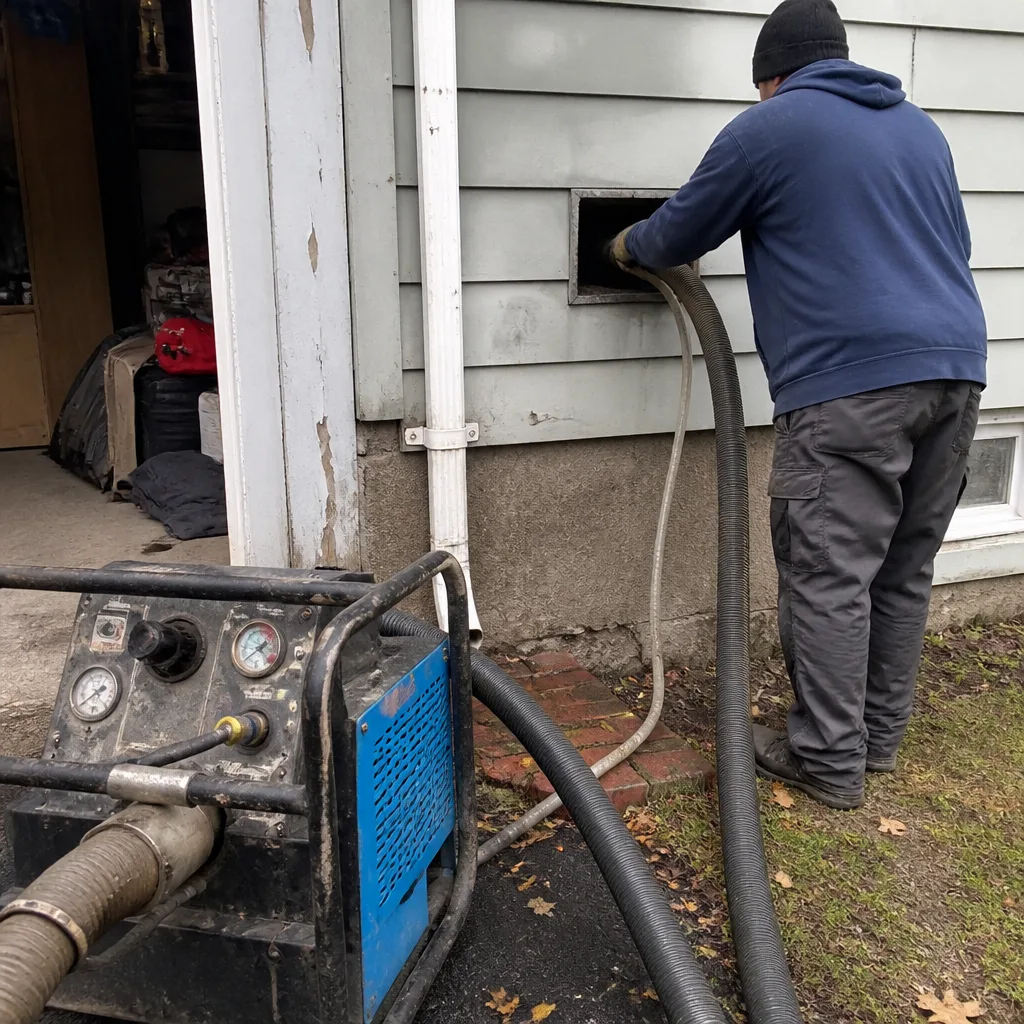 Before
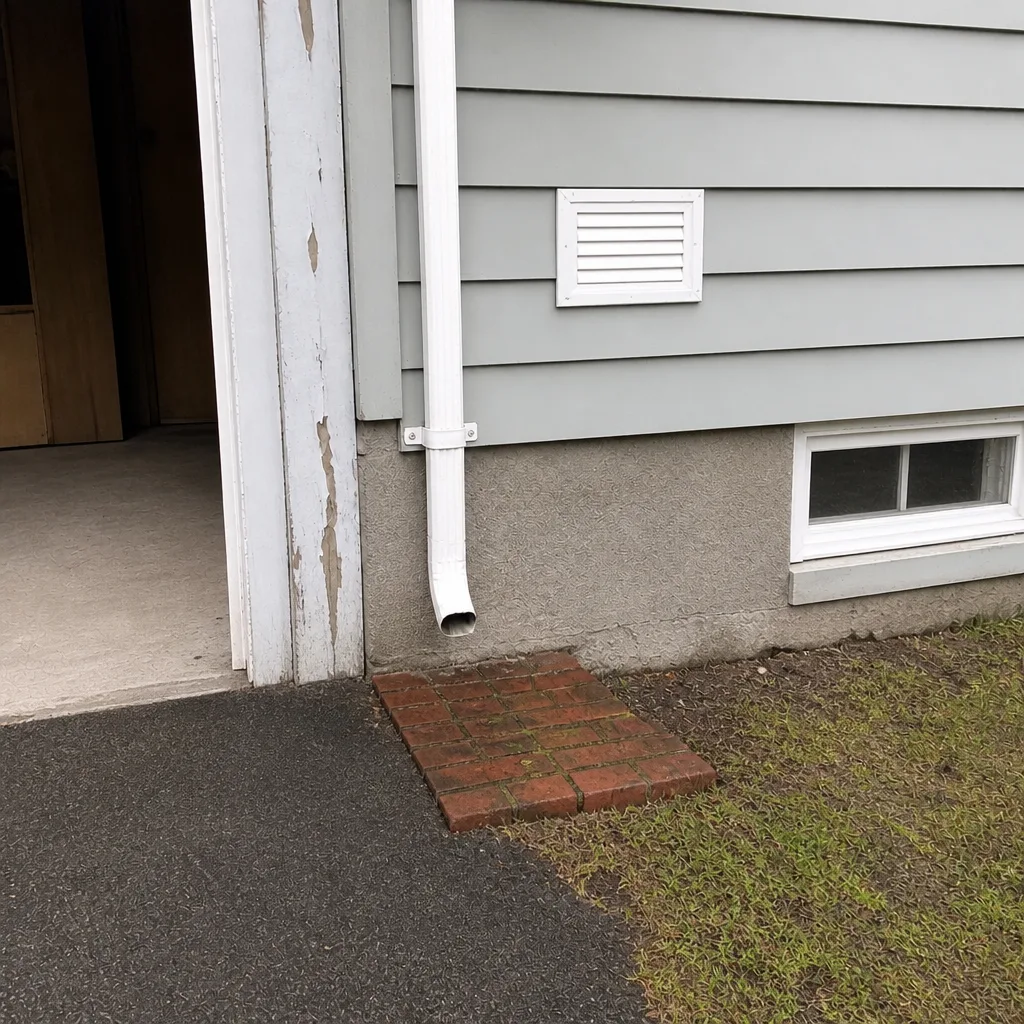 After
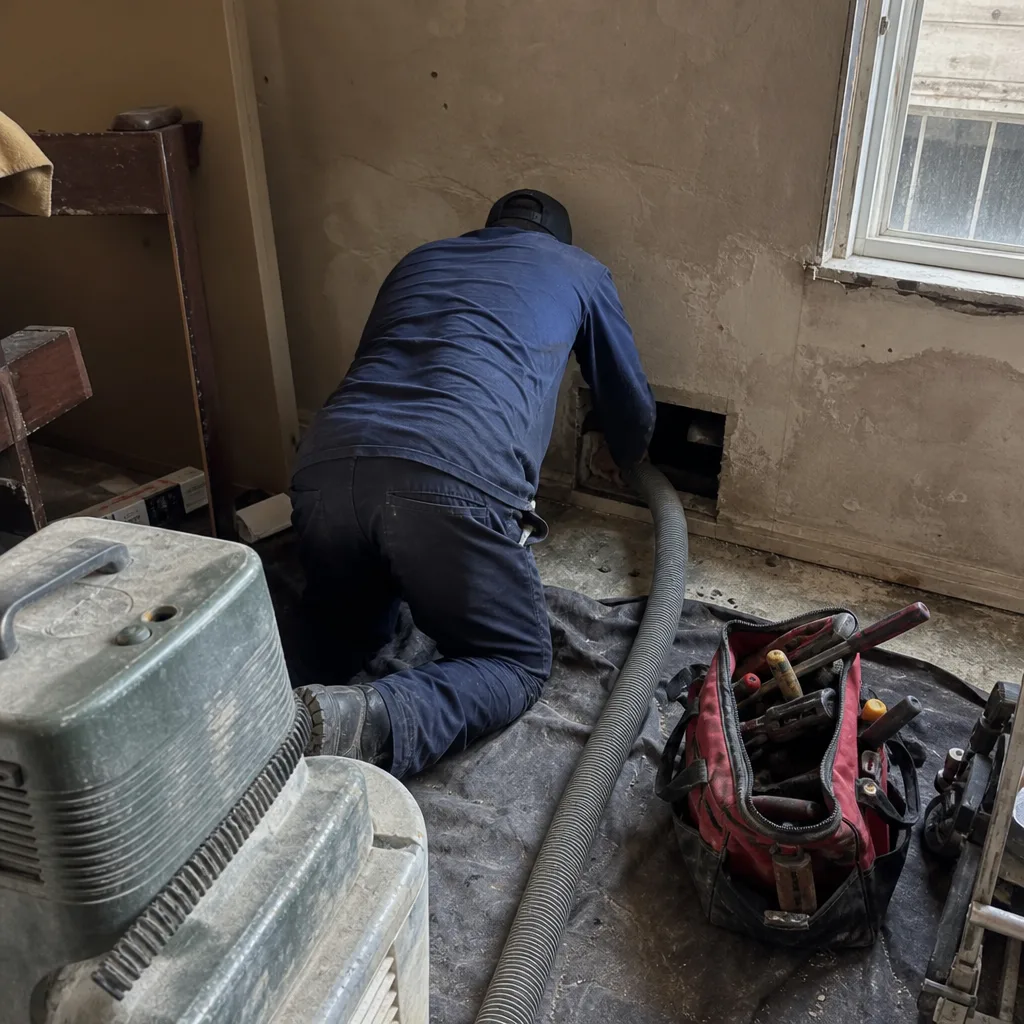 Before
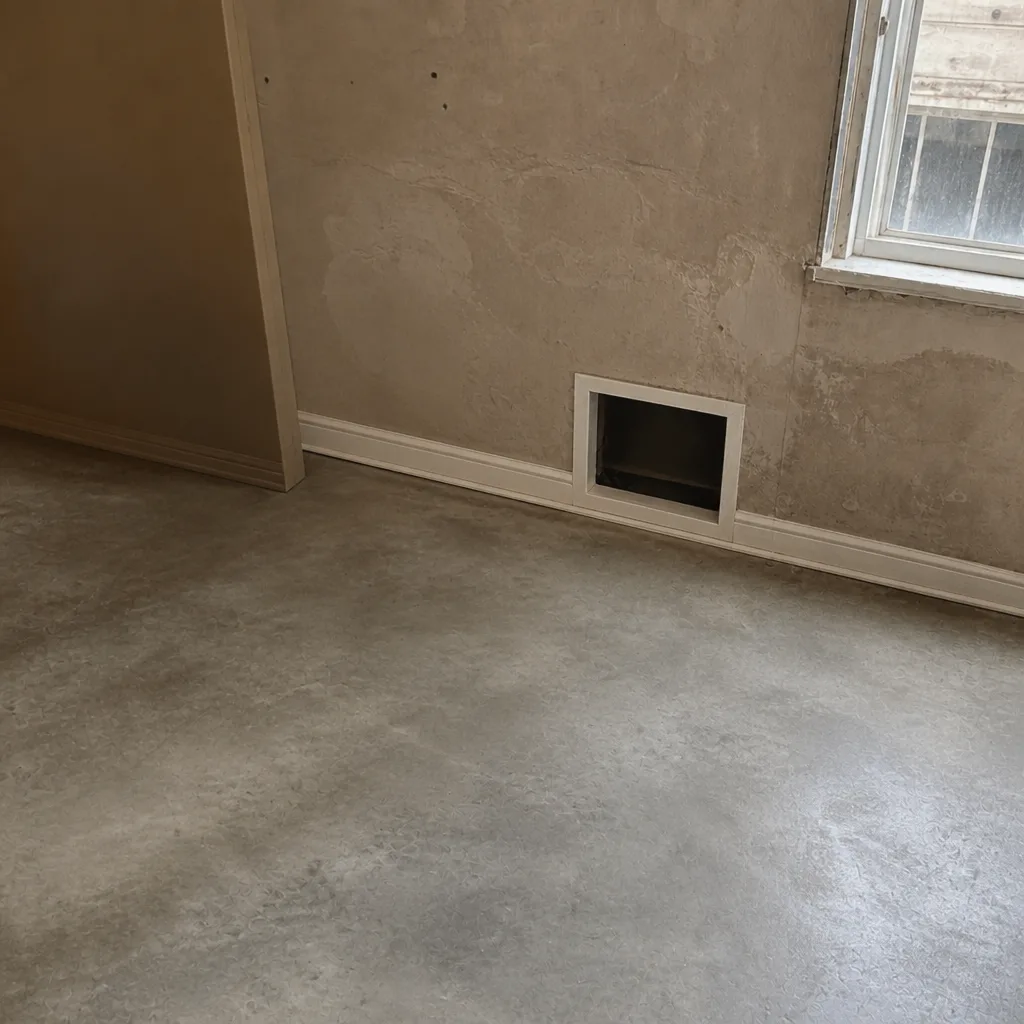 After
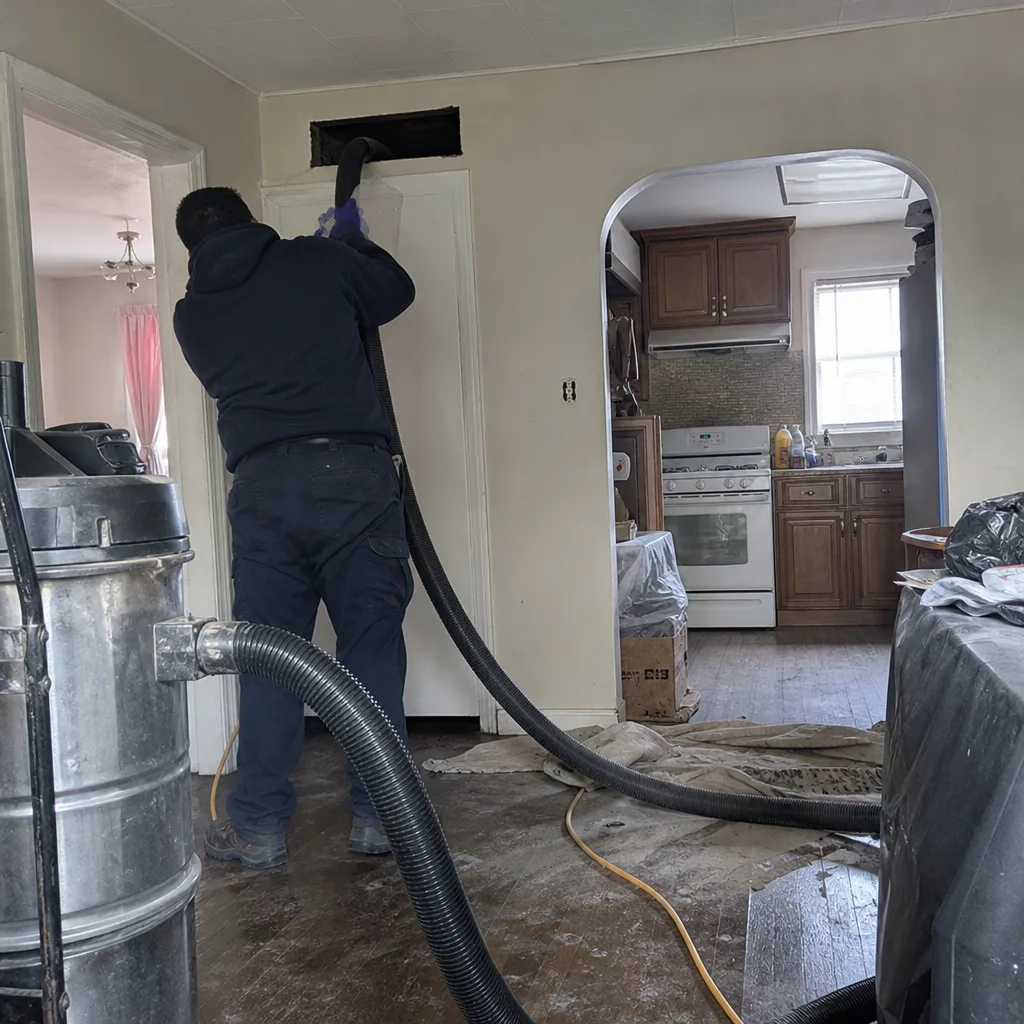 Before
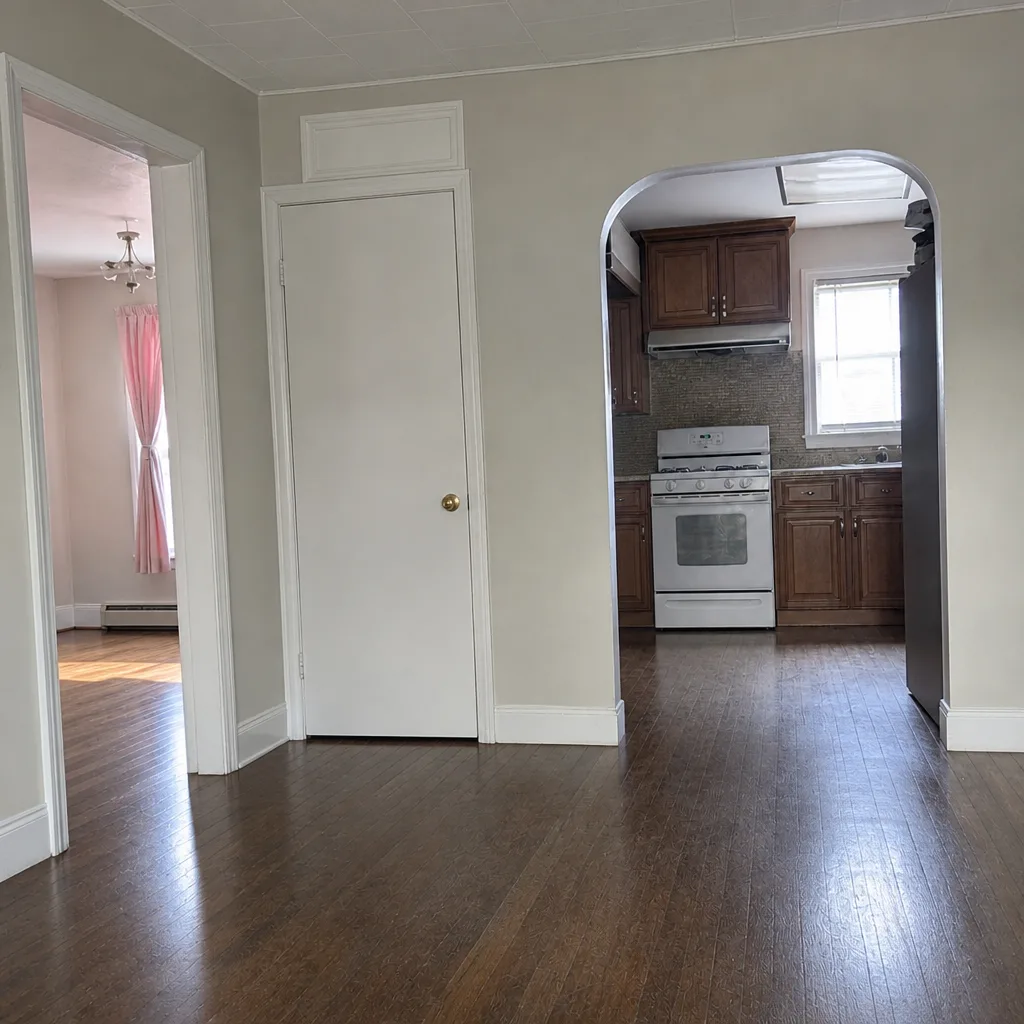 After
When to Call a Professional
Call for the following situations: a chemical or smoky smell at the registers (shut the system down first); visible debris blowing out of a supply; any recurring musty odor that survived a prior cleaning; weak airflow that didn’t improve after a filter change; noise that’s new or getting louder; any suspicion that a previous cleaning left disturbed insulation or unsealed access holes; and any crawlspace or basement flex duct that’s visibly disconnected. Those situations need a camera inspection and often a repair scope, not another cleaning.
Air Duct Cleaning Bay Ridge offers free estimates in Bay Ridge – call (877) 938-5572. We answer 24/7. Fast dispatch from 7am to 7pm, Sunday through Friday.
Frequently Asked Questions
Because cleaning removed the growth but not the moisture source. Odor that returns within a few weeks to a few months means the duct system is still damp – from condensation, a leak above a run, or a return pulling from a humid space. Solve the moisture before you sanitize; sanitizing without diagnosis is a temporary fix. Call (877) 938-5572 for an exact quote if the smell is back and you want it properly diagnosed – estimates are free.
Yes, in most cases where the cause isn’t visible from a register, filter, or basement flex run. Recurring odors, suspected leakage behind drywall, and post-renovation contamination all need a camera inspection to find the actual source. DIY inspection tells you what category you’re in, but not where the specific problem is.
Quotes vary with system size and scope, and we won’t quote a per-vent price because it rewards speed over coverage. Ask for a flat price per system, in writing, before work starts – that’s the price that holds. Call (877) 938-5572 for an exact quote; estimates are free.
Usually because they’re quoting less work: fewer runs covered, no containment equipment, no inspection, and sometimes a van-mounted shop vac instead of a rotary brush system. The flat price on a proper job costs more up front but it’s the only one that actually resolves the problem. Call for a scope you can compare line by line.
Not automatically. If the previous cleaning was recent and well done, a repeat is wasted money. If the system leaks or there’s an unresolved moisture problem, cleaning is only part of the fix – sealing and repair come first or alongside it. Get a camera inspection and a written scope before deciding.
Ask for before-and-after photos of your own ducts, then ask whether the equipment included containment and filtration during cleaning. A responsible job can show you both. Call (877) 938-5572 and we can walk you through what to expect from the visit before you schedule it.
The Bottom Line
Most duct problems in Bay Ridge come down to matching the symptom to the right cause before spending money. Dust and debris coming back means leakage – seal it. Odor coming back means moisture – find the source before sanitizing. Weak airflow means the return side or a crushed run – check static pressure, don’t clean again. Noise means pressure or physical support – get it inspected. And if the last cleaning didn’t work, look for the red flags before scheduling the next one. Our technicians have up to 15 years of experience, and we can tell you in a short call whether you’re looking at a cleaning, a sealing job, or a repair.
Ready to get a straight answer on what’s happening in your system? Call (877) 938-5572 for a free estimate. We answer 24/7. Fast dispatch from 7am to 7pm, Sunday through Friday. Our team handles dryer vent cleaning and every other service line on the same visit, so the whole air pathway gets addressed at once instead of one symptom at a time.
Written by the team at Air Duct Cleaning Bay Ridge.